The 1970s File Feature
Air Disaster
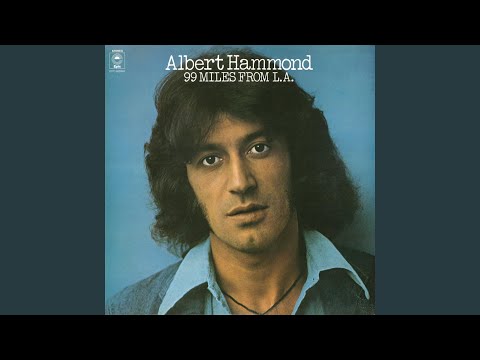
The Story Behind Air Disaster by Albert Hammond Not every hit song needs to be about love, longing, or the dance floor. In the summer of 1974, singer-songwri…
01 The Story
The Story Behind "Air Disaster" by Albert Hammond
Not every hit song needs to be about love, longing, or the dance floor. In the summer of 1974, singer-songwriter Albert Hammond, already established as one of the era's most reliable pop craftsmen following his breakthrough with "It Never Rains in Southern California," released a considerably stranger, more unsettling single: "Air Disaster," a song built around the anxious, very real fear of flying that had begun creeping into the cultural imagination as commercial air travel expanded.
A Hitmaker Taking a Risk
By 1974, Hammond had already proven himself a gifted songwriter both for himself and for other artists, having co-written hits across the pop landscape. His own recording career, kicked off by the massive success of his 1972 breakthrough single, gave him the commercial standing to experiment with subject matter well outside typical pop songwriting territory. "Air Disaster" took that opportunity, tackling the specific dread of catastrophic flight failure at a moment when jet travel had become common enough that its very real dangers weighed on the public consciousness.
A Brief But Real Chart Presence
The single debuted on the Billboard Hot 100 on June 29, 1974, at number 96, and climbed quickly to number 87 the following week, then reached its peak of number 81 on July 13, 1974. It slipped afterward, falling to number 92 before exiting the chart entirely, completing a brief four-week run. That short, modest performance reflects a song whose unusual subject matter likely limited its broader radio appeal even as it found a niche audience curious about its unconventional theme.
A Singer-Songwriter's Unconventional Detour
Musically, the track carries the polished, melodic sensibility that defined Hammond's work throughout the 1970s, even while wrapping that craftsmanship around lyrical content far removed from his more famous romantic and observational songs. That willingness to explore darker, more anxious territory speaks to Hammond's range as a songwriter, someone capable of turning almost any subject, however unlikely for pop radio, into a structured, melodic composition.
A Curious Footnote in a Prolific Career
Within Hammond's broader catalog, largely defined by his own hits and by the enormous list of songs he wrote for other major artists across multiple decades, "Air Disaster" remains one of the odder entries, a brief but genuine chart appearance built on subject matter few pop songwriters would have attempted. It stands today as a reminder of just how eclectic mainstream radio playlists could be in the mid-1970s.
Give it a spin and hear a pop craftsman venture into unexpectedly turbulent lyrical territory.
Craft Beneath the Surface
It is easy to overlook the sheer skill required to make a record that connects with a mass audience, however briefly. Behind every charting single stood songwriters, arrangers, and performers making countless deliberate choices about melody, phrasing, and feel. This recording reflects that invisible labor, the careful shaping of a few minutes of sound into something that could move listeners and earn its place on the national chart. Recognizing that craft deepens your appreciation of even the most modest hit, reminding you that no chart entry arrives entirely by accident.
A Place in the Record Books
Every entry on the national chart, no matter how high or low it climbed, becomes part of the permanent statistical history of popular music, a data point that researchers, collectors, and enthusiasts can return to for decades afterward. This recording earned exactly that kind of lasting documentation, its peak position and chart run now fixed forever in the archives. That permanence gives even a modest hit a certain dignity, ensuring that the effort behind it and the audience response to it are never entirely forgotten by history.
The Listener's Verdict
In the end, what placed this song on the chart was nothing more or less than the collective decision of countless individual listeners who chose to buy it, request it, and play it again. That grassroots verdict is the truest measure of a record's contemporary appeal, a direct reflection of what genuinely moved people at the time. The song's presence on the countdown stands as evidence of real human connection, the sum of many small moments when the music found its way to someone and made them want to hear it once more.
"Air Disaster" — Albert Hammond's singular moment on the 1970s charts.
02 Song Meaning
What "Air Disaster" Is Really About
Fear rarely makes for conventional pop material, yet Albert Hammond built an entire single around one of the most primal anxieties of the modern travel age: the terror of a plane going down. "Air Disaster" channels that specific dread into a song that functions almost like a cautionary narrative rather than a typical love song or dance track.
A Song Built on Modern Dread
By the early 1970s, commercial jet travel had become common enough that flying anxiety was a widely shared cultural experience, even as the statistics reassured that flying remained remarkably safe. The song taps directly into that gap between rational safety data and irrational, visceral fear, giving voice to the kind of catastrophic thinking that grips many passengers the moment turbulence hits or an engine sound changes pitch.
Vulnerability at 30,000 Feet
Part of what makes the theme resonate is the total loss of control it describes. Unlike most sources of everyday anxiety, being a passenger on a plane removes almost every form of agency; there is nothing to do but trust the machinery and the people flying it. The song leans into that helplessness, framing air disaster not just as a physical catastrophe but as an emotional one, the moment when control is entirely surrendered to forces outside oneself.
A Departure From Typical Romantic Songwriting
Coming from an artist best known for lush, romantic pop balladry, the shift toward this kind of anxious, almost cinematic subject matter stands out. It suggests a songwriter interested in stretching beyond expected genre conventions, using pop's melodic tools to explore fear and mortality rather than exclusively love and heartbreak. That range hints at why Hammond found such sustained success as a writer for other artists across varied genres and moods.
Why the Theme Connected
For listeners in the mid-1970s, an era when air travel was rapidly becoming a normal part of life for the middle class, a song naming that specific, widely shared fear likely felt oddly cathartic. Pop music rarely acknowledges the mundane terrors of modern convenience, and hearing that anxiety given melodic shape offered a strange kind of validation, proof that the dread wasn't irrational or unique, but a shared feature of living in an increasingly air-connected world.
Ultimately, the enduring resonance of the song rests on its emotional truth. Trends come and go, production styles date, and chart positions fade into history, but a genuine feeling honestly expressed retains its power indefinitely. That is the quiet achievement of a recording like this one, capturing something real about the human experience and preserving it in a form that continues to speak across the years.
Why the Message Endures
The song's meaning has outlasted its era precisely because it speaks to something permanent in the human heart. Trends fade and production styles date, but a genuine emotion honestly expressed retains its power indefinitely. That is the quiet triumph of a recording like this one, capturing a true feeling and preserving it in a form that continues to move listeners who discover it, decade after decade, long after it first appeared.
The Emotional Core
The heart of the song lies in its sincerity, the sense that it means every word of what it expresses. That authenticity is what separates a merely competent recording from one that genuinely connects, and it is precisely what allows the song to reach listeners on a level deeper than simple entertainment. The feeling at its center is one that people recognize instinctively, and the honesty with which it is delivered gives that feeling real weight and staying power across the years.
A Feeling Made Universal
What gives the song its lasting resonance is the way it takes a specific sentiment and makes it feel universal, something any listener can recognize and inhabit as their own. The emotion at its core belongs to no single time or place; it is part of the shared human experience, surfacing in every generation anew. That universality is what allows the recording to keep finding fresh audiences long after the moment of its release.
→ More from Albert Hammond
View all Albert Hammond hits →



→ More from the 1970s File
View all 1970s hits →




Keep digging