The 1960s File Feature
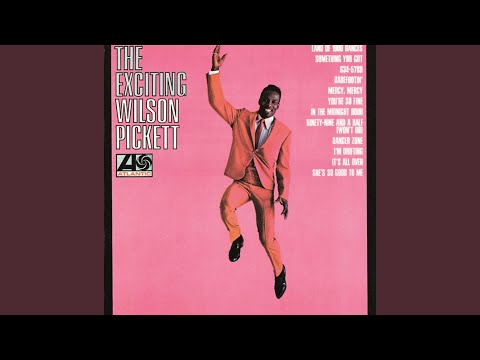
Ninety-Nine And A Half (Won't Do)
"Ninety-Nine And A Half (Won't Do)" — Wilson Pickett's Stax-Powered Anthem of Total Commitment The Wicked Pickett in His Prime The spring and early summer of…
01 The Story
"Ninety-Nine And A Half (Won't Do)" — Wilson Pickett's Stax-Powered Anthem of Total Commitment
The Wicked Pickett in His Prime
The spring and early summer of 1966 found Wilson Pickett operating at a level of raw, combustive power that few artists in any genre could match. He had already scored with "In the Midnight Hour" and "634-5789 (Soulsville, U.S.A.)" on Atlantic Records, establishing himself as one of the most visceral and uncompromising voices in American soul music. "Ninety-Nine And A Half (Won't Do)" arrived in May 1966 as another dispatch from a performer who understood that the best soul music demanded complete physical and emotional commitment from everyone in the room, performer and listener alike.
Stax and the Memphis Sound
Wilson Pickett's work of this period was recorded at Stax Studios in Memphis, where the house band that would become known as Booker T. and the MGs provided an instrumental foundation of exceptional authority. The Stax approach to rhythm section recording was distinctive: a tight, punchy sound with the drums and bass locked into each other with near-mechanical precision, over which horn lines punched and stabbed rather than decorating. The Memphis horns were not embellishment; they were structural. The rhythm section and horns together created a groove architecture that was simultaneously economical and irresistible.
Pickett worked with producer Jerry Wexler, the Atlantic Records figure who was instrumental in the label's relationship with Stax and who understood how to capture Pickett's ferocious energy without over-polishing it into something academic. Wexler knew that Pickett's value was in the uncontrolled intensity of his performances, the sense that he might blow the walls off at any moment, and the production preserved that quality.
The Song's Origins
"Ninety-Nine And A Half (Won't Do)" drew on a gospel tradition that Pickett, who had sung in churches in Alabama before pursuing a secular career, knew in his bones. The phrase itself, the idea that giving less than everything is insufficient, was rooted in the theological demand for total consecration that gospel music expresses repeatedly. Pickett and his collaborators translated that demand into a secular context where the total commitment required was romantic rather than spiritual, but the emotional intensity remained fully gospel in its fervor. The connection between gospel's demand for total surrender and soul music's expression of romantic devotion was one of the defining creative tensions of 1960s soul, and "Ninety-Nine And A Half (Won't Do)" embodied it with unusual clarity.
The Chart Performance
The single debuted on the Billboard Hot 100 on May 28, 1966, entering at position 76. Its climb through the summer was steady if unhurried, the track spending multiple weeks at similar positions before accelerating. By late June, the track had reached the fifties, and it peaked at number 53 on July 9, 1966. The single spent eight weeks on the Hot 100. On the R&B chart, the track performed significantly better, as would be expected for material of this intensity aimed squarely at the Black radio audience that was the core of Atlantic Records' soul market.
The Hot 100 position reflected partial crossover success rather than full pop penetration. Pickett was never primarily a pop artist in the crossover sense; his power and approach were calibrated for audiences who wanted maximum intensity, and the percentage of the pop mainstream that sought that quality was substantial but not universal.
Pickett's Voice as an Instrument
The most important thing about any Wilson Pickett record is the voice. Pickett's instrument was not merely powerful; it was precise in its deployment of power, capable of controlled shouts, of held notes that built in intensity, of sudden dynamic drops that made the returns to full volume more impactful. His delivery of "Ninety-Nine And A Half (Won't Do)" communicated the song's demand for total commitment not through lyrical argument alone but through the physical fact of a performance that itself gave everything, holding nothing in reserve.
Soul music scholars often cite this track as one of the period's clearest demonstrations of how gospel vocal technique was adapted for secular material: the preacher's ability to communicate absolute conviction through voice alone, applied to the domain of human relationships.
A Permanent Entry in the Soul Canon
Over the subsequent decades, "Ninety-Nine And A Half (Won't Do)" has been recognized as a prime example of mid-1960s deep soul at its most uncompromising. Wilson Pickett's catalog from this period, produced at Stax with a band and producer who knew exactly how to channel his energy, remains some of the most vital recorded music of the era. This track is essential listening for anyone who wants to understand what made the Memphis soul sound so durable and so influential on every form of rhythm-based music that followed. Press play and feel what total commitment sounds like.
"Ninety-Nine And A Half (Won't Do)" — Wilson Pickett's singular moment on the 1960s charts.
02 Song Meaning
"Ninety-Nine And A Half (Won't Do)" — Absolute Devotion and the Gospel of Total Love
The Demand at the Center
The title of Wilson Pickett's track states its thesis with the precision of a mathematical proposition. If ninety-nine and a half is insufficient, only the full hundred is acceptable. The lyric builds from this simple arithmetic into a comprehensive demand for total romantic commitment, the insistence that love cannot be hedged, qualified, or partially rendered. Everything or nothing is the proposition. The absolutism of this demand gives the song its enormous emotional charge and connects it directly to the religious tradition from which the phrase and the feeling were drawn.
In gospel music, this demand for totality is addressed to the divine. The theological proposition that God requires complete devotion, that partial commitment is a form of rejection, animates much of the tradition's most powerful vocal expression. Soul music translated this imperative into the human domain of romantic love, asking of a partner what the gospel singer asked of God: everything, held back nothing, total surrender to the relationship.
Soul Music and the Gospel Inheritance
Wilson Pickett came directly out of the gospel tradition, having sung in church contexts before pursuing secular music. This biographical fact is not merely biographical; it shaped his vocal approach, his understanding of performance intensity, and his grasp of how music creates communal experience through the shared physical response to sound. When Pickett demanded one hundred percent in "Ninety-Nine And A Half (Won't Do)," he was drawing on a tradition of musical demand-making that was emotionally coherent to his core audience in ways that purely secular constructions of the same idea could not match.
The tension between sacred and secular that ran through 1960s soul was itself a source of creative energy. Artists who had been raised in church communities and who then applied gospel intensity to non-religious subject matter were working with a productive dissonance that gave their recordings unusual power. Listeners could feel the gospel underneath the love song, could sense the weight of a tradition behind what might otherwise have been a simple pop expression of romantic expectation.
Performance as Argument
The song makes its case through the performer's commitment as much as through its lyrical content. Pickett's vocal performance on the track is itself an act of total giving: he holds nothing back, pushes the voice to its limits, creates an experience of intensity that makes the song's demand for complete devotion feel not merely reasonable but necessary. The performance is the argument. A vocalist who sang these lyrics with casual ease would undermine the proposition; Pickett's evident total investment makes it credible.
This alignment between lyrical content and performance mode is one of the hallmarks of great soul music. The song says you must give everything; the singer demonstrably gives everything. The message and the medium become identical.
Total Commitment as a Cultural Value
The aspiration to total devotion in love has been one of popular music's most persistent themes across every era and genre. It reflects something deep in human romantic experience: the desire to be loved completely, without reservation, without the hedge of partial attention or provisional commitment. "Ninety-Nine And A Half (Won't Do)" articulated this desire with unusual force and clarity, using the resources of gospel intensity to give weight to what might otherwise have been a conventional romantic expectation.
For 1966 audiences navigating the complexities of personal relationships in a society undergoing rapid social transformation, the song's demand for a love that was unqualified and absolute may have carried extra resonance. In a period of uncertainty, the fantasy of total romantic commitment had particular appeal.
Lasting Significance
The song has been recognized across the decades since its release as one of the essential documents of deep soul's relationship with gospel tradition. It appears regularly on lists of key recordings from the mid-1960s Atlantic soul catalog, and its influence on subsequent soul, funk, and R&B has been acknowledged by many artists who grew up absorbing Pickett's catalog. The track's argument for total commitment, delivered with the full force of one of the era's most powerful vocal instruments, has lost none of its force. The demand it makes of love is not a historical curiosity; it is a permanent feature of human emotional life, and Wilson Pickett gave it a voice that the decades have not been able to quiet.
→ More from Wilson Pickett
View all Wilson Pickett hits →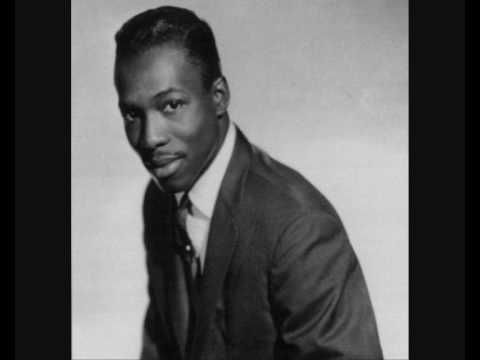

→ More from the 1960s File
View all 1960s hits →




Keep digging