The 1960s File Feature
Mustang Sally
Mustang Sally — Wilson Pickett's Barnstorming Soul Classic The Wicked Pickett at His Peak There are soul records that defined an era, and then there are soul…
01 The Story
Mustang Sally — Wilson Pickett's Barnstorming Soul Classic
The Wicked Pickett at His Peak
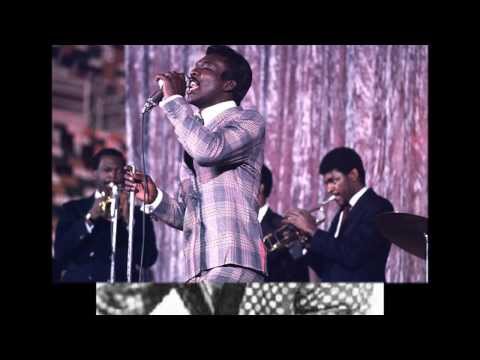
There are soul records that defined an era, and then there are soul records that defined a voice, an attitude, a way of being in the world. Wilson Pickett's Mustang Sally falls into the second category. By the time it was released in late 1966, Pickett had already established himself as one of the most powerful and viscerally exciting vocalists in American music. His nickname, the Wicked Pickett, was not marketing hyperbole. It was an accurate description of a man who attacked a microphone with the kind of physical intensity that made other R&B singers seem polite by comparison.
Pickett had come up through gospel in Alabama before making the transition to secular soul, and that church upbringing never left his voice. He could preach, holler, plead, and command within a single song, and Mustang Sally gave him room to do all of it. The recording captured him at a moment when his career and his confidence were simultaneously at their highest point.
From Mack Rice to Muscle Shoals
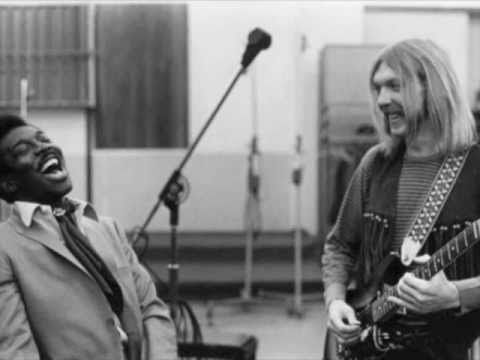
The song was written by Mack Rice, a musician and songwriter who had originally recorded it himself in 1965 under the title Mustang Mama before revising the lyrics and title. When the song reached Pickett, it was transformed. Wilson Pickett recorded Mustang Sally at the Fame Recording Studios in Muscle Shoals, Alabama, one of the most important recording environments in the history of American soul music. The session musicians at Muscle Shoals, a group of white musicians who could channel deep Southern soul with extraordinary fluency, provided the foundation for Pickett's vocal assault.
The production had the characteristic Muscle Shoals combination of tight rhythm work, punchy horn arrangements, and a slightly raw, live-feeling energy. Rick Hall produced the recording at Fame Studios, maintaining the gritty, direct sound that had become the studio's hallmark. The groove sat in that specific pocket that made Muscle Shoals records so distinctive: heavy enough to move, loose enough to breathe.
A Steady Climb on the Hot 100
Released on Atlantic Records, Mustang Sally entered the Billboard Hot 100 on November 26, 1966, debuting at number 66. Over the following weeks it climbed with conviction, moving steadily through the chart until it reached its peak of number 23 during the week of December 24, 1966. The single spent nine weeks on the chart in total, a solid run that reflected consistent radio support and genuine consumer enthusiasm. Its holiday season peak meant it competed with Christmas novelties and year-end favorites without losing momentum, which speaks to the sheer force of the recording.
The track also performed strongly on the R&B chart, where it reached the top ten, reflecting the deep resonance it found with Black American radio audiences who understood the specific tradition Pickett was working in. Its Hot 100 performance was simply the mainstream commercial reflection of a song that had already earned deep cultural approval.
The Song in the Culture
Few songs from the 1960s have maintained Mustang Sally's specific cultural omnipresence. It became a staple of live performance sets across multiple genres, covered extensively by white rock and country artists through the 1970s, 1980s, and beyond. The Commitments (1991 film) introduced it to an entirely new generation of listeners, and its placement in that movie gave it a second life as a gateway song for younger audiences discovering 1960s soul. The track functioned, and continues to function, as a kind of informal ambassador for the entire Muscle Shoals sound and for Wilson Pickett's particular genius.
The lyrical concept, a narrator imploring a woman who has received a new car to slow down and reconsider her independent ways, reflected the complex gender dynamics of mid-1960s America without being entirely comfortable from a contemporary perspective. Yet the music's irresistible energy has consistently overridden that discomfort, keeping the song in heavy rotation across decades.
Pickett's Enduring Monument
Wilson Pickett was inducted into the Rock and Roll Hall of Fame in 1991, and Mustang Sally remains among the handful of recordings most consistently cited when his legacy is discussed. The song survived its creator by decades, continuing to appear at weddings, sporting events, cover band sets, and classic soul radio playlists long after Pickett's death in 2006. Put the original on and hear what it means when someone truly, completely owns a song from the first note to the last.
"Mustang Sally" — Wilson Pickett's singular moment on the 1960s charts.
02 Song Meaning
Mustang Sally — Freedom, Control, and the Power of a Groove
The Automobile as Symbol
In mid-1960s America, the automobile carried a symbolic weight that went far beyond practical transportation. Cars represented freedom, status, independence, and modernity all at once, and popular music had been exploring that symbolism since Chuck Berry put cars and rock and roll together in the previous decade. Mustang Sally placed itself firmly in that tradition, using the specific cultural resonance of a Ford Mustang, a car that had launched in 1964 and immediately became a symbol of youthful energy and female independence, as the central image around which its lyrical tension turned. The song's title character had acquired something that changed her social position, and the narrator's reaction illuminated the anxieties that such changes could provoke.
Gender Dynamics in a Transitional Era
The lyrics operated on a level of romantic tension that reflected genuine social friction. A woman with a car, with mobility, with the capacity to come and go on her own terms, represented something genuinely novel and somewhat threatening to traditional expectations about gender roles. The narrator's plea for her to slow down carried an edge of control alongside its surface-level romantic concern. Whether listeners heard that edge or simply felt the groove depended on what they brought to the listening experience, and the song's genius was that both responses were equally available.
By 1966, the women's liberation movement was still a few years from its most visible peak, but the cultural conditions that would produce it were already in place. Young women were entering the workforce in larger numbers, gaining economic independence, and resisting the domestic arrangements that previous generations had accepted without question. A song about a woman who won't stop driving could be heard as a small but vivid piece of that larger story.
What Pickett's Voice Added
Whatever the song's lyrical complexities, Wilson Pickett's vocal performance transformed the material into something beyond social commentary. His delivery was so exuberant, so physically committed, that the song communicated joy as much as frustration. The call-and-response structure of the arrangement, with horn stabs answering his vocal phrases, created a sense of community and celebration that undercut any reading of the lyrics as purely restrictive. The groove made you want to move. The horns made you feel included. The voice made you feel something almost primal. Together, they produced a record that operated at a frequency beyond rational analysis.
Cross-Genre Endurance
The song's survival across six decades of popular music speaks to the universality of its core components. The groove works in any setting, the structure is simple enough for any competent band to replicate, and the emotional arc is immediately legible to any listener regardless of cultural background. Every cover version that has achieved success has done so by leaning into the track's fundamental warmth and energy rather than trying to reinvent its message. That stability is a mark of genuine compositional quality, a song that knows exactly what it is and cannot be made into something else without losing the thing that made it matter.
Mack Rice wrote something durable, and Wilson Pickett proved it by transforming a relatively modest original into something that outlived every chart position and every contemporaneous debate about what it meant. The song simply kept moving, the way a good car does, and the way the best records always do.
→ More from Wilson Pickett
View all Wilson Pickett hits →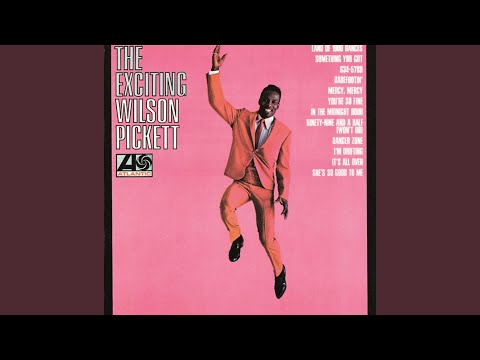

→ More from the 1960s File
View all 1960s hits →




Keep digging