The 1960s File Feature
Land Of 1000 Dances
Land Of 1000 Dances — Wilson Pickett's Soul Machine in Top Gear The Man They Called Wicked There are performances that simply overpower everything around the…
01 The Story
Land Of 1000 Dances — Wilson Pickett's Soul Machine in Top Gear
The Man They Called Wicked
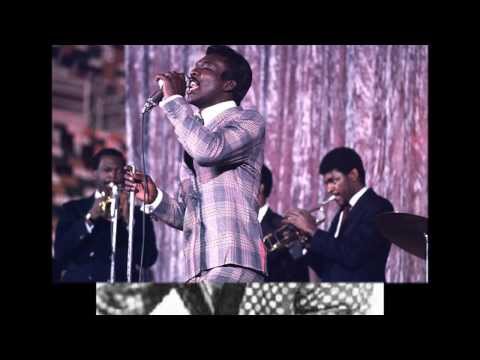
There are performances that simply overpower everything around them. Wilson Pickett's recording of "Land of 1000 Dances" is that kind of performance, a full-throated, physically overwhelming display of soul singing that left competing records sounding tentative by comparison. When it hit radio in the summer of 1966, it felt less like a song and more like a weather event, something you felt in your chest before you heard it with your ears. Pickett had already established himself as one of the most electrifying voices in American music, and this record gave him the vehicle his talent demanded.
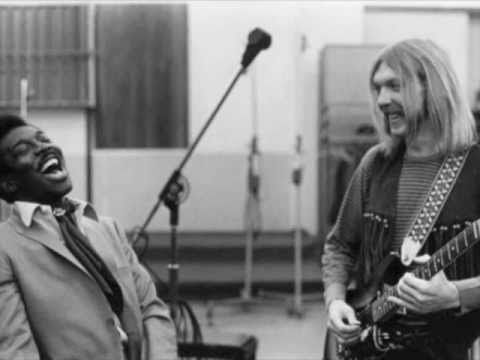
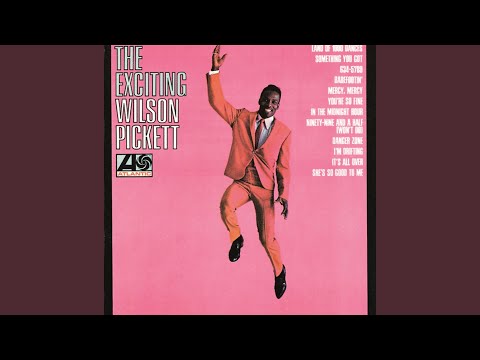
By 1966, Pickett was recording for Atlantic Records and making regular trips to Muscle Shoals, Alabama, where the Fame Studios rhythm section had developed a sound that merged deep blues feeling with the crisp, forward momentum of pop production. The results were recordings of unusual intensity. "In the Midnight Hour" had introduced Pickett to a wide audience in 1965; "Land of 1000 Dances" was the logical next escalation.
The Song and Its History Before Pickett
The track had a life before Pickett reached it. Chris Kenner wrote "Land of 1000 Dances" and recorded it in 1962, releasing it as a dance novelty that catalogued popular moves of the early rock and roll era. Fats Domino also recorded a version. Cannibal and the Headhunters made the track more widely known in 1965, their version introducing the now-famous chant near the opening that became the record's signature. Pickett took all of this raw material and rebuilt it into something categorically more powerful.
The Muscle Shoals session brought together musicians whose combined feel for groove was among the finest available anywhere. The track was tightened, the tempo adjusted, and the arrangement built to support Pickett's voice without crowding it. The famous repeated syllable near the track's opening, a wordless sound of pure excitement, became the most memorable moment in any version of the song. Pickett delivered it with a spontaneity that sounded uncalculated even after hundreds of listens. That quality, the impression that something dangerous and joyful might happen at any moment, was the essential Wilson Pickett effect.
Riding the Hot 100
The single debuted on the Billboard Hot 100 on July 30, 1966, at position 76. Over the following weeks it climbed efficiently: 43, then 25, then 20, then 15. It reached its peak position of number 6 on September 10, 1966, spending eleven weeks on the chart in total. That summer was peak competition on the Hot 100, with British Invasion holdovers, Motown releases, and folk-rock crossovers all competing for the same radio slots. A number 6 peak in that environment represents genuine commercial force.
The record performed strongly on the R&B charts as well, where Pickett's audience was already committed. His crossover appeal, connecting Black radio listeners with white pop buyers, was part of what made Atlantic Records' southern soul strategy so commercially effective in this period. "Land of 1000 Dances" exemplified that crossover in practice.
Muscle Shoals and the Sound of 1966
It is impossible to discuss the record without acknowledging the environment that produced it. Fame Studios in Muscle Shoals, Alabama, was by 1966 one of the most productive recording locations in popular music, despite being far from the urban centers where most of the industry operated. The studio's house musicians, sometimes called the Swampers, understood the relationship between tension and release in a way that made every track they played on feel physically urgent. The guitars locked into the bass in ways that created a propulsive forward motion; the drums sat in the pocket without losing energy. Pickett's voice, which needed nothing tentative beneath it, found exactly the support it required.
The production's directness is one of the track's lasting qualities. Nothing about the record feels ornate or calculated. The arrangement exists to deliver the performance, and the performance exists to make the listener move. That clarity of purpose gives the recording a freshness that production trends have not managed to date.
The Record's Permanent Place
Few recordings from 1966 have retained this level of recognition. "Land of 1000 Dances" appears in film soundtracks, advertising campaigns, and retrospective compilations with a frequency that reflects its status as a kind of standard for the genre. Pickett went on to have many more hits, but this record captures something elemental about his appeal: the sense that here was a man singing as if his life depended on it, and that urgency was entirely contagious. Put it on and try to stay still.
"Land Of 1000 Dances" — Wilson Pickett's singular moment on the 1960s charts.
02 Song Meaning
Land Of 1000 Dances — Movement, Community, and the Body as Expression
Dancing as a Democratic Act
Catalogues of dances make for unusual song subject matter, but in the early 1960s the naming of popular moves carried genuine social weight. Each dance on the list had a community attached to it, a neighborhood, an age group, a radio station that championed it. "Land of 1000 Dances" treated the floor as a kind of census, acknowledging all these communities at once. Chris Kenner's original conception was playful and inclusive, and Pickett's 1966 version retained that spirit while amplifying it into something more ecstatic.
The Voice as Instrument of Liberation
Wilson Pickett's interpretive approach to the material adds dimensions that a reading of the song's lyrics alone would not predict. His delivery communicates something more primal than a list of dances: the sounds he makes are expressions of release, of the body's right to move freely and without apology. In the context of 1966 America, that message carried resonance beyond the dance floor. Black popular music of this period was engaged in a constant negotiation between entertainment and assertion, between the demands of the pop marketplace and the authentic expression of a community's emotional life. Pickett's performances sat firmly on the side of authentic expression, whatever crossover success they also achieved.
The wordless syllable near the opening of Pickett's version, borrowed from Cannibal and the Headhunters' approach, functions as an invitation that bypasses the intellect entirely. It speaks directly to the body, communicating the music's intention before any specific dance has been named. This is the record's most sophisticated moment: the message is delivered before the content begins.
Dance as Social Memory
The Pony, the Mashed Potato, the Alligator, the Watusi: each name in the song's catalogue is a timestamp, a marker of a moment when a specific community invented a shared language of movement. The song's impulse to preserve these names is essentially archival, recognizing that popular dances fade as quickly as they emerge and that naming them might extend their life. From the vantage point of decades later, the list reads as a social document of early-1960s Black American leisure culture, a period when the politics of public gathering were themselves contested terrain.
Pickett brings no academic distance to any of this. His performance is entirely participant, not observer. He sounds like a man who knows these dances not as cultural artifacts but as living practices, and that insider energy is what makes the track feel communal rather than nostalgic even to listeners encountering it long after its time.
Why It Still Works
The track's endurance owes something to the simplicity of its emotional proposition. Dancing is good, the record says. Moving your body in company with others is good. There is pleasure available here, right now, without prerequisite. That message does not become dated because the human need it addresses does not become dated. Each new generation of listeners who discovers "Land of 1000 Dances" through a film soundtrack or a compilation rediscovers the same thing: that Pickett's voice, that rhythm section, that opening sound all reach directly into the nervous system and instruct it to respond. The dances named in 1966 are gone. The impulse to dance remains fully intact.
→ More from Wilson Pickett
View all Wilson Pickett hits →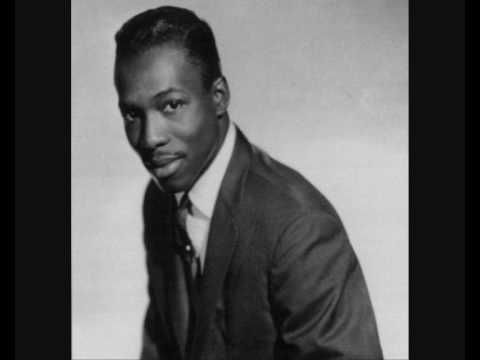

→ More from the 1960s File
View all 1960s hits →




Keep digging