The 1960s File Feature
It's Too Late
Wilson Pickett's Early Soul: The Story of "It's Too Late" (1963) Wilson Pickett's "It's Too Late" arrived on the Billboard Hot 100 in the summer of 1963, deb…
01 The Story
Wilson Pickett's Early Soul: The Story of "It's Too Late" (1963)
Wilson Pickett's "It's Too Late" arrived on the Billboard Hot 100 in the summer of 1963, debuting at number 96 on July 27 and climbing steadily to a peak of number 49 during the week of September 7, 1963. The song spent ten weeks on the chart, a notable showing for a young artist whose most celebrated work still lay several years in the future. This recording must be clearly distinguished from Carole King's celebrated 1971 song of the same title: this is Pickett's early soul single, recorded before his legendary Atlantic Records period that would produce "In the Midnight Hour" and "Mustang Sally."
Wilson Pickett was born in Prattville, Alabama, in 1941 and moved to Detroit as a teenager, where he encountered the gospel and R&B scenes that would shape his development as a singer. Before his solo career began in earnest, he sang with the Falcons, a Detroit vocal group that had achieved success with "You're So Fine" in 1959. Pickett's raw, emotionally intense vocal style was evident even in those early ensemble recordings, and his departure for a solo career was a logical consequence of the power he brought to lead vocal performances.
"It's Too Late" was recorded for Double L Records, a small independent label, and represented one of Pickett's early attempts at establishing a solo identity in the competitive landscape of early-1960s rhythm and blues. The record captured Pickett's distinctive vocal approach: the urgency, the edge, the quality of emotional desperation channeled through a voice of remarkable physical power. These characteristics would become the defining features of his Atlantic Records work, but they were already present in the Double L recThe early 1960s represented a crucial transitional period in Black American popular music. Gospel-infused soul was emerging as a dominant commercial and cultural force, with artists like Ray Charles, Sam Cooke, and James Brown establishing a template that younger vocalists like Pickett would inherit and extend. The market for emotionally intense, gospel-rooted rhythm and blues was growing, and labels like Double L were positioned to capture some of that commercial activity even without the promotional infrastructure of major companies. major companies.
The chart trajectory for "It's Too Late" demonstrated consistent upward movement through its first several weeks: from 96 at debut, to 84 in week two, 71 in week three, 60 in week four, 57 in week five, and eventually to the peak of 49. That steady climb reflected genuine audience engagement with the material rather than a promotional spike followed by rapid decline. Ten weeks on the Hot 100 was a meaningful run for an independent release with limited national promotion.
The summer of 1963 placed the record within a particular historical moment in American culture. The civil rights movement was building toward the March on Washington, which occurred on August 28, 1963, while the record was still charting. The relationship between Black popular music and the broader social movement that was transforming American society was complex and contested, but the commercial success of soul records on integrated charts was itself a form of cultural visibility with real significance.
Wilson Pickett's vocal performance on "It's Too Late" carried the emotional conviction that would make him one of the defining voices of soul music across the following decade. The rawness of his delivery, the way he moved between controlled melodic singing and the near-shouting intensity that became his signature, was already fully developed in this early recording. What the Atlantic Records years would add was a production environment commensurate with his abilities, surroundings that could showcase and amplify what was already present in these Double L recordings.
The peak of 49 for "It's Too Late" placed Pickett in the middle section of the Hot 100 during a summer when the chart was absorbing the full range of American popular music: pop orchestrations, early British Invasion harbingers, folk revival crossovers, and the emerging soul music that would come to define the decade's most powerful musical contributions. That a young soul singer from Alabama, recording for a small Detroit-area label, could reach number 49 on the national chart in 1963 was itself a testament to the commercial viability of the sound Pickett was developing, a sound the world would hear at full strength within two years when "In the Midnight Hour" arrived.
02 Song Meaning
Emotional Finality in Wilson Pickett's "It's Too Late" (1963)
Wilson Pickett's 1963 recording of "It's Too Late" belongs to a category of soul and rhythm and blues songs built around the theme of romantic closure: the moment when reconciliation is no longer possible, when whatever damage has occurred has passed the point of repair. The title declares this finality with a directness that leaves little interpretive ambiguity, and Pickett's vocal performance made that finality physically felt rather than merely stated.
This record should not be confused with Carole King's celebrated 1971 composition of the same title, which is a different song with a different emotional architecture. Pickett's "It's Too Late" is a pre-Atlantic soul record rooted in the gospel-inflected rhythm and blues tradition of the early 1960s, where emotional extremity was the expected register and vocal demonstration of that extremity was the measure of a singer's authenticity and power.
The concept of "too late" in soul music carries particular weight. The genre's roots in gospel music meant that its emotional vocabulary was drawn from contexts where stakes were existential: salvation and damnation, mercy and judgment, hope and despair. When those registers were transferred to romantic subject matter, they retained their intensity even as the subject became interpersonal rather than spiritual. A relationship that has ended irrevocably, in the soul tradition, is not simply an inconvenience but a genuine loss requiring genuine mourning.
Pickett's vocal style was ideally suited to this material. His voice at its most powerful had a quality of barely contained grief and anger, a combination that made romantic finality sound as significant as the musical tradition insisted it was. The rawness of his early recordings, before the sophisticated Atlantic productions that would come later, meant that the emotional content was more directly exposed, with less sonic mediation between the singer's feeling and the listener's reception.
The theme of irreversibility is central to the song's meaning. Unlike songs that dwell in the ambiguity of relationships that might yet be saved, or that appeal for reconciliation, "It's Too Late" arrives at a point of settled knowledge. The possibility of hope has been foreclosed, and the singer is left with the task of articulating what that foreclosure means emotionally. This is a more difficult artistic challenge than the expression of hope or desire, because it requires conveying an emotional state that is essentially static: grief without the forward motion of pursuit or the comfort of resolution.
In the context of early-1960s soul, the song occupied a recognizable emotional geography. The tradition from which Pickett drew, encompassing Ray Charles's secular gospel experiments, the raw blues-soul of early James Brown, and the smooth but emotionally loaded R&B of the Motown machine, had established an audience capable of receiving and appreciating maximum emotional intensity in romantic subject matter. "It's Too Late" was made for listeners who understood that love songs could be as serious and as painful as any other form of human expression.
The record's modest chart peak of number 49 reflected the commercial realities of an independent label release rather than the quality of the performance. The meaning embedded in Pickett's vocal approach on this early recording was already fully realized; what would change in subsequent years was the scale and sophistication of the production environment surrounding it. The emotional core of the song, the declaration of finality by a voice that made finality sound like something seismic, was present from the beginning.
→ More from Wilson Pickett
View all Wilson Pickett hits →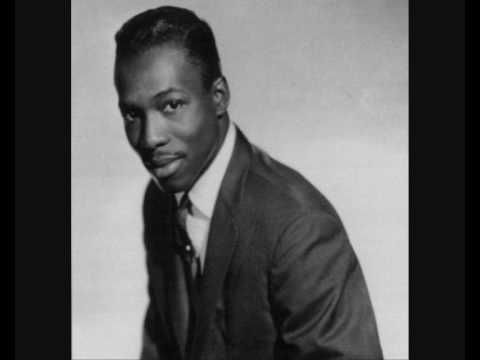

→ More from the 1960s File
View all 1960s hits →




Keep digging