The 1960s File Feature
I'm In Love
"I'm In Love" — Wilson Pickett's Late-1967 Soul Dispatch The Wicked One at His Peak Picture the final weeks of 1967: radio waves crackling with ambition, the…
01 The Story
"I'm In Love" — Wilson Pickett's Late-1967 Soul Dispatch
The Wicked One at His Peak
Picture the final weeks of 1967: radio waves crackling with ambition, the soul genre in full bloom, and Wilson Pickett standing at the absolute center of American rhythm and blues. By that autumn, Pickett had already earned his nickname, "the Wicked Pickett," through a succession of barnstorming singles that rearranged what people thought a voice could do. He had recorded at Fame Studios in Muscle Shoals, Alabama, pioneering a sound that married Southern grit to Northern urgency. Wilson Pickett was one of the defining voices of Atlantic Records' golden era, a singer whose raw physical intensity separated him from every contemporary who tried to occupy similar territory.
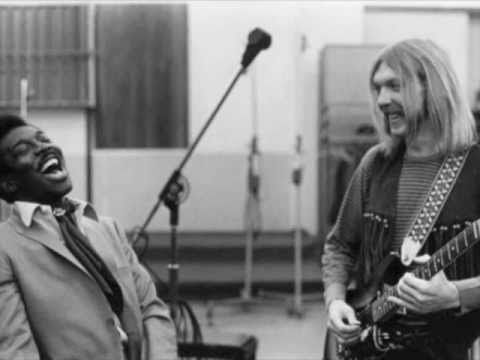
The Muscle Shoals connection mattered enormously. When Jerry Wexler brought Pickett to Rick Hall's Fame Studios starting in 1966, the sessions produced a string of recordings that crackled with the particular electricity of Memphis-influenced players meeting a Detroit-trained singer. By the time late 1967 arrived, Pickett was operating with tremendous confidence, backed by musicians who understood exactly how to frame his voice.
The Record Itself
Released on Atlantic Records, I'm In Love arrived as the year closed out and the cultural temperature kept rising. The track sits squarely within the soul gospel tradition that Pickett had mastered: a churning rhythm section, insistent horns, and that unmistakable vocal delivery that could shift from tender pleading to full-throated exultation within a single bar. The song's production carries the hallmarks of mid-period Atlantic soul, with a rhythm guitar pattern locking against the bass in a way that made it impossible not to move.
Pickett's treatment of a romantic declaration like this title was characteristically unsubtle in the best sense. Where other singers might approach a love song with caution or restraint, he threw himself entirely into the material, treating each verse as a proclamation rather than a confession. The production deployed the familiar call-and-response dynamics that gospel music had refined over decades, giving the track both emotional depth and physical momentum.
The Chart Journey
The single entered the Billboard Hot 100 on December 2, 1967, debuting at number 82. Over the following weeks it climbed steadily, reaching number 80 the second week, then jumping to 64 by mid-December. The ascent continued through the holiday season, with the record hitting number 57 on December 23 and peaking at number 45 on December 30, 1967. The ten-week chart run placed it firmly among the respectable if not blockbuster entries in Pickett's catalog, and on the rhythm and blues charts, where his core audience lived, the reception was considerably warmer.
Context matters here: late 1967 was an extraordinary moment for soul music, with competition from James Brown, Aretha Franklin, Otis Redding, and dozens of others who had turned the genre into the most vital American pop form of the era. Charting at all in that environment required genuine commercial appeal. Pickett delivered it consistently.
A Career in Full Stride
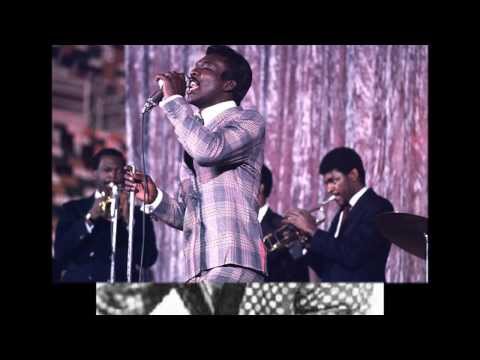
The release of I'm In Love came at the midpoint of what music historians have recognized as Pickett's most commercially productive stretch, roughly spanning 1965 through 1969. During those years he placed more than a dozen singles on the Hot 100, each building on the last, each reinforcing his reputation as one of the most reliably exciting live performers in popular music. His shows during this period were legendary events, and the recordings captured at least some of that electricity for listeners who couldn't get to a concert hall.
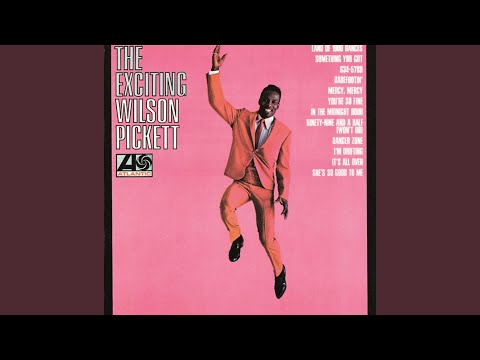
Atlantic Records understood what they had in Pickett and promoted his releases accordingly. The label's rhythm and blues roster during this period represented an embarrassment of riches, and the fact that Pickett remained one of its flagship artists speaks to the commercial consistency he maintained. I'm In Love contributed to that track record even if it didn't reach the heights of "Mustang Sally" or "In the Midnight Hour."
The Lasting Resonance
Decades on, Wilson Pickett's catalog reads as essential American music. The recordings he made for Atlantic during the 1960s influenced generation after generation of soul, funk, and rock performers who recognized in his voice something fundamental about what popular music could convey. I'm In Love occupies a particular place in that legacy as evidence of his consistency, the steady output of high-quality material that kept his name on radio and his audience engaged between the bigger moments.
Collectors and soul enthusiasts have kept these deep-catalog Pickett tracks circulating through reissue programs and streaming platforms, ensuring that the full arc of his Atlantic years remains audible rather than consigned to archival footnotes. The energy preserved on this recording, that combination of technical mastery and emotional commitment, rewards any listener willing to meet it on its own terms. Press play and find out what a truly committed soul performance sounds like.
"I'm In Love" — Wilson Pickett's singular moment on the 1960s charts.
02 Song Meaning
"I'm In Love" — Desire, Declaration, and the Soul Tradition
The Love Song as Proclamation
Soul music in 1967 was operating at a frequency that most other genres couldn't match. The love song, that ancient form, had been transfigured by the previous decade of rhythm and blues into something with enormous emotional urgency, and Wilson Pickett understood that urgency better than almost anyone working in the genre. I'm In Love sits within this tradition as an example of what happens when a singer treats romantic feeling not as a private confession but as a public event worth celebrating at full volume.
The lyrical territory here is familiar enough: the singer announces his emotional state, positions himself as transformed by affection, and invites the listener into that experience. What elevates the material is Pickett's particular relationship to sincerity, his vocal approach carrying the full weight of emotional investment, so that even well-traveled romantic ground sounds freshly discovered under his delivery.
Gospel Roots and Secular Feeling
Pickett grew up in the church, and that formation never left him. The gospel tradition treats declarations of feeling as communal acts: the singer speaks, the congregation responds, and the shared experience becomes something larger than what any individual could generate alone. The soul music of this era carried that structure into secular life, and I'm In Love draws on it fully. The call-and-response elements in the arrangement, the way the music seems to push the singer toward climax rather than simply accompanying him, all of this descends from the black church traditions that shaped every major soul artist of the 1960s.
This context matters for understanding why the track resonated. Listeners who had grown up in those same church traditions recognized the emotional grammar being deployed even in a secular love song. The feeling was familiar; only the object of devotion had changed.
The Social World of Late 1967
The song arrived during one of the most turbulent years in American postwar history. Cities had burned through the summer. The civil rights movement had entered more contested territory. Against that backdrop, black popular music carried complex freight: it was entertainment, certainly, but it was also evidence of cultural vitality and artistic excellence at a moment when those things mattered politically. A Wilson Pickett single on the radio in December 1967 was a small assertion of continuing creative power in a landscape that offered plenty of reasons for exhaustion.
The love song as a form provided breathing room, a space where the full complexity of political reality could be temporarily set aside in favor of something more personal. That breathing room was not escapism so much as a different register of experience, one that soul audiences needed and demanded alongside the more explicitly engaged music of the era.
Why It Still Resonates
The fundamental appeal of I'm In Love lies in its commitment. Pickett did not make half-hearted recordings. Every track in his Atlantic catalog displays the same total investment in the material, and listeners across generations have responded to that quality even when they couldn't articulate precisely why it holds their attention. The emotional honesty of a great soul performance transcends its original moment, which is why records from this era continue to find new audiences decades after the charts have faded.
The song also documents a particular approach to romantic feeling that the era specialized in: direct, unguarded, unironic. Later decades would complicate that directness with self-consciousness and ironic distance. The soul tradition that produced this track had not yet made those moves, and in retrospect that quality looks less like naivety than like courage.
"I'm In Love" — Wilson Pickett's singular moment on the 1960s charts.
→ More from Wilson Pickett
View all Wilson Pickett hits →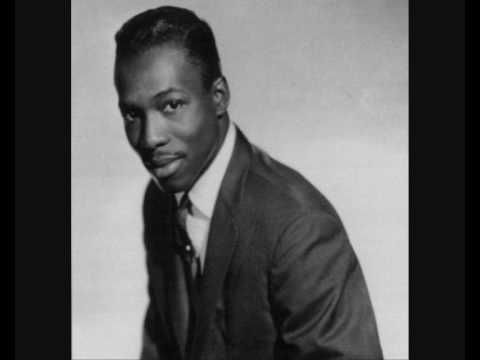

→ More from the 1960s File
View all 1960s hits →




Keep digging