The 1960s File Feature
Funky Broadway
Wilson Pickett Tears Up Funky Broadway There was a moment in the late 1960s when soul music seemed to get harder, sweatier, and more insistent almost by the …
01 The Story
Wilson Pickett Tears Up "Funky Broadway"
There was a moment in the late 1960s when soul music seemed to get harder, sweatier, and more insistent almost by the week, and few artists embodied that toughening sound like Wilson Pickett. Nicknamed the Wicked Pickett, he sang like a man who refused to be ignored, and "Funky Broadway" is one of his most gloriously raw statements. It is a record that grabs you by the collar from the first beat and does not let go until the horns finally fade.
The Wicked Pickett in His Prime
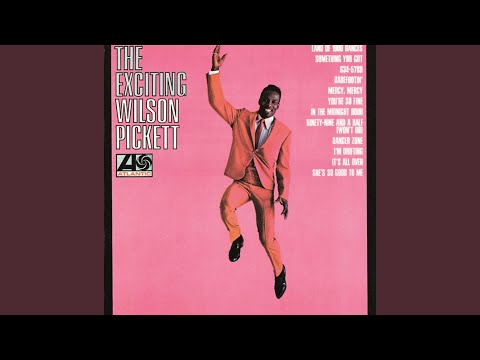
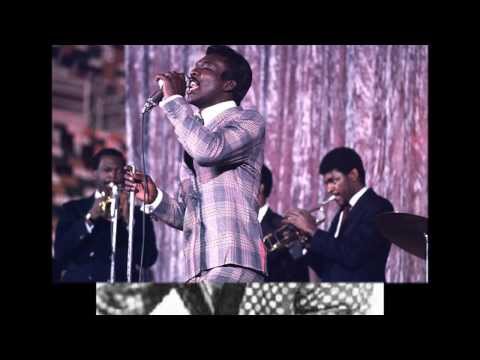
By 1967, Wilson Pickett was riding one of the great hot streaks in soul. Recording largely in the South, he had already delivered "In the Midnight Hour" and "Land of 1000 Dances," building a reputation as one of the most electrifying performers in the business. His voice combined gospel fervor with a streetwise grit that made every line sound like a demand. Pickett worked with some of the finest studio talent of the era, and the funk-drenched grooves underneath him gave his ferocity a perfect launching pad. He had built his sound in the crucible of Southern soul studios, where players prized feel and fire over polish, and that environment was tailor-made for a singer who attacked every song like a man with something to prove. Pickett never coasted; he sang as if the microphone itself were a challenge to be conquered, and audiences could feel that intensity radiating off the vinyl.
A Dance, a Place, a Whole Attitude
The song is built around the idea of a dance and a feeling rolled into one word, funky. The arrangement is lean and propulsive, all rhythm and punch, with stabbing horns answering Pickett's shouts. There is very little subtlety here, and that is precisely the point. The track exists to move bodies and raise temperatures, a celebration of groove for its own sake. Pickett's vocal is pure exhortation, more bandleader than crooner, urging the listener onto the floor with every roar.
A Climb Into the Top Ten
This was a major hit for Pickett. The single debuted on the Billboard Hot 100 dated August 5, 1967, at number 92, and from there it surged. It climbed week after week before reaching its peak of number 8 on September 30, 1967, and it stayed on the chart for an impressive twelve weeks. Cracking the top ten with a record this raw and uncompromising was a testament to how completely Pickett had captured the public's appetite for hard, danceable soul.
A Cornerstone of the Funk Transition
"Funky Broadway" arrived at a pivotal time, as soul began evolving toward the harder, more rhythm-focused sound that would soon be called funk. Pickett was right at the leading edge of that shift, and this record helped point the way. The word funky itself was becoming a badge of authenticity in Black music, and few songs flew that banner more proudly. Its success kept Pickett near the top of the soul world and reinforced his standing as a defining voice of the genre. The record is sometimes cited as one of the earliest mainstream hits to put the word funky right in its title, a small but telling marker of where popular music was heading. As the late sixties gave way to a new emphasis on rhythm and groove, songs like this one helped lay the groundwork for the funk explosion still to come.
Turn It Up and Hold On
This is not a song for quiet contemplation. It is meant to be played loud, with the bass rattling the room and the horns slicing through. Drop into it today and you will feel the same restless energy that filled dance floors decades ago, the sound of a singer at the absolute height of his powers, daring you to stay still. Few records capture the swagger of late-sixties soul quite this vividly.
"Funky Broadway" — Wilson Pickett's singular moment on the 1960s charts.
02 Song Meaning
The Meaning Behind "Funky Broadway"
On the surface, this is a song about a dance and a street, a simple invitation to cut loose. Dig a little deeper, though, and "Funky Broadway" captures a whole cultural moment, one where a single word came to carry pride, identity, and the irresistible pull of the groove.
The Power of One Word
The genius of the song lies in how it celebrates the very idea of funkiness. In the language of the era, funky meant real, earthy, unpolished, and proudly so. The word was a declaration of authenticity, a rejection of anything slick or watered down. Wilson Pickett shouts it like a rallying cry, and in doing so he turns a dance number into a statement of cultural self-assurance, music that refuses to apologize for its rawness.
The Body as the Message
This is a song that lives entirely in motion. There is no complex narrative, no tortured romance, just an insistent command to move. The meaning is communicated through rhythm rather than story, which is exactly how a great deal of dance music works. The lyric points to a place, a scene, a feeling, but the body understands it long before the brain bothers to analyze. In that sense, the song argues that joy and release are meaning enough.
A Snapshot of a Scene
By naming a street and a dance, the song roots itself in a specific kind of urban Black social life of the 1960s, the clubs and corners where new dances were born and spread by word of mouth. It functions as a celebration of community and shared release, the collective energy of people gathering to move together. The record bottles that communal electricity and ships it out to anyone with a radio.
Why It Connected
Listeners responded to the sheer physical conviction of it. Pickett's ferocious delivery made the invitation impossible to refuse, and the groove did the rest. People did not need to decode a hidden message; they needed only to feel the pulse and answer it. That immediacy is why the song became a top-ten smash and a dance floor staple.
The Sound of Liberation
Ultimately, "Funky Broadway" means freedom of a very specific kind, the freedom found in unselfconscious movement and shared rhythm. It stands as an early monument in the funk tradition, where groove itself became a form of expression and even resistance. Pickett's record reminds you that sometimes the most profound thing a song can do is simply make you dance. There is a quiet power in music that asks nothing of you except your full physical surrender, and this song demands exactly that. In an era when Black artists were claiming new ground both culturally and commercially, a record that celebrated funkiness on its own terms carried a confidence that went well beyond the dance floor.
→ More from Wilson Pickett
View all Wilson Pickett hits →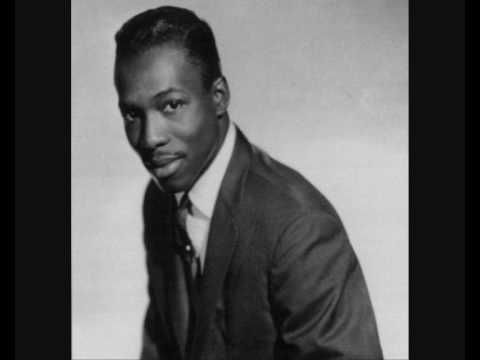

→ More from the 1960s File
View all 1960s hits →




Keep digging