The 1960s File Feature
Everybody Needs Somebody To Love
Everybody Needs Somebody To Love Wilson Pickett s 1967 Gospel Shout The Wicked Pickett at Full Power Picture the winter of 1967: soul music is at the height …
01 The Story
Everybody Needs Somebody To Love — Wilson Pickett’s 1967 Gospel Shout
The Wicked Pickett at Full Power
Picture the winter of 1967: soul music is at the height of its first great commercial wave, Aretha Franklin is about to explode into the mainstream, and at Atlantic Records, Wilson Pickett is the label's most ferocious and dependable hit-maker. When Everybody Needs Somebody To Love arrived on the Billboard Hot 100 in February of that year, it landed with the same combination of raw power and gospel authority that had defined Pickett's recordings throughout the mid-1960s. Pickett's voice was one of the genuine wonders of American soul, capable of moving from a whisper to a full-throated shout in a single breath, and this recording deployed that instrument at full strength.
The Song’s Origins and Gospel Connection
The song had been written and previously recorded by Solomon Burke, one of the foundational figures of Atlantic soul, who had cut his version in 1964. Burke’s recording was itself rooted in the gospel tradition, the call-and-response structure, the communal declaration of need, the almost liturgical repetition of the central phrase. When Pickett took up the material, he brought those same elements while adding his own particular ferocity to the delivery. The result was a recording that felt simultaneously like church and like a Saturday night at a packed dance club, which was precisely the combination that defined Atlantic soul at its best.
Seven Weeks and a Peak at 29
The single debuted on the Billboard Hot 100 on February 4, 1967, entering at number 77. It climbed steadily through February and into March, reaching its peak of number 29 on March 11, 1967. The song spent seven weeks on the chart in total, a solid showing that reflected Pickett’s consistent commercial traction during this period. That peak placed it comfortably in the top 30, a strong result for a cover version entering a market where Pickett’s own original material was already well established.
Atlantic Records and the Memphis Sound
Pickett’s recordings from this period were largely made at FAME Studios in Muscle Shoals, Alabama, and at Stax in Memphis, working with session musicians whose playing defined the Southern soul sound for an entire decade. The combination of Pickett’s vocal intensity with the controlled groove of these players created a signature that was immediately identifiable and enormously influential. The recording infrastructure surrounding him was as important as the vocal itself: rhythm sections that knew how to build tension and release it, horn arrangers who understood exactly how much was too much.
A Song That Has Never Stopped Being Performed
Few songs from the 1960s soul canon have had as long a performance life as this one, in part because its structure invites participation and in part because the emotional premise, the universal need for connection, is impossible to argue with. The Blues Brothers’ famous 1980 film version introduced the song to an entirely new generation, and countless subsequent uses in film, television, and live performance have kept it in continuous circulation. Pickett’s version remains among the most powerful, a performance that captures the song’s essence without domesticating it. Press play and feel the power of one of soul’s great vocalists fully committed to material worthy of his gifts.
The Atlantic Records infrastructure that surrounded Pickett during this period was one of the finest in the American music industry. Producer Jerry Wexler understood exactly how to record Southern soul with commercial effectiveness without stripping it of the raw energy that made it powerful, and the combination of that production intelligence with Pickett's volcanic vocal gifts produced a remarkable series of recordings across the mid-1960s. Everybody Needs Somebody To Love benefited from all of that accumulated craft, arriving as a polished but genuinely powerful piece of studio soul that could hold its own in any company. The song's enduring life in popular culture, its appearances in countless films and concert performances across six decades, confirms that the recording captured something more durable than a commercial moment.
“Everybody Needs Somebody To Love” — Wilson Pickett’s singular moment on the 1960s charts.
02 Song Meaning
The Universal Plea: What Wilson Pickett Understood About Need
A Theological Statement in Popular Form
At its core, Everybody Needs Somebody To Love is making a claim with the confidence of self-evident truth: that human beings require love the way they require food and water, that the need for connection is not a weakness or a want but a fundamental condition of existence. This is not a complicated philosophical proposition, but it is a profound one, and soul music has always been one of the more honest vehicles for stating profound things plainly. Wilson Pickett’s delivery of this claim leaves no room for irony or detachment; he sings it as if he means it absolutely, and that absolute commitment is where the song’s power originates.
Gospel Structure and Secular Feeling
The call-and-response architecture of the song is inherited directly from African American church music, where the preacher calls out a phrase and the congregation confirms it, the dialogue between individual voice and communal response creating a shared emotional experience that is larger than either part alone. When this structure is transposed into secular soul music, it retains its communal function. The audience becomes the congregation, and the singer becomes the voice calling out an experience that everyone in the room recognizes as their own. Pickett understood this dynamic intuitively and exploited it completely.
Need as Dignity Rather Than Weakness
One of the most interesting aspects of the song’s emotional logic is its treatment of need as a universal condition rather than a personal failure. To say that everybody needs somebody is to say that the need itself is nothing to be ashamed of, that it is in fact the common ground on which all human beings stand. Soul music in the 1960s was particularly good at this kind of reframing, taking experiences that polite society sometimes treated as embarrassing or private and declaring them publicly, defiantly, and with great joy. The need for love is not a secret; it is the most basic fact of being human.
The Performance as Event
What distinguishes Pickett’s version of this song from more passive recordings of the same period is its quality as an event rather than simply a performance. Pickett performs as if the stakes are genuinely high, as if the declaration he is making matters in a way that goes beyond entertainment. That quality of urgency, the sense that something real is being communicated rather than professionally executed, is what separates great soul performances from competent ones. The listener does not feel observed but addressed, spoken to directly across whatever distance might otherwise separate performer from audience.
Why the Song Has Never Grown Old
The reason this song has circulated continuously across six decades of popular music is not primarily its musical structure, though that structure is excellent, but its emotional premise, which remains stubbornly true regardless of cultural moment or stylistic fashion. People in 2026 need somebody to love for precisely the same reasons people in 1967 did, and a song that states that need with honesty and power will find its audience in any era. Pickett’s recording is one of the most forceful statements of that need in the soul canon, a performance that has not diminished with time because the truth it contains has not diminished.
→ More from Wilson Pickett
View all Wilson Pickett hits →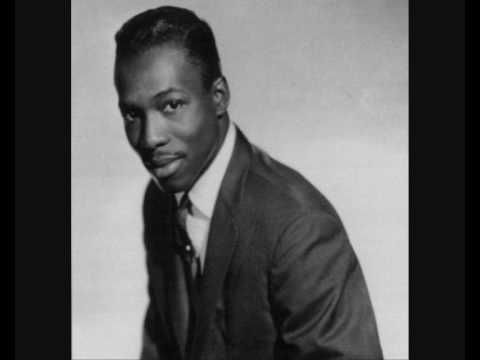

→ More from the 1960s File
View all 1960s hits →




Keep digging