The 1960s File Feature
I Can See For Miles
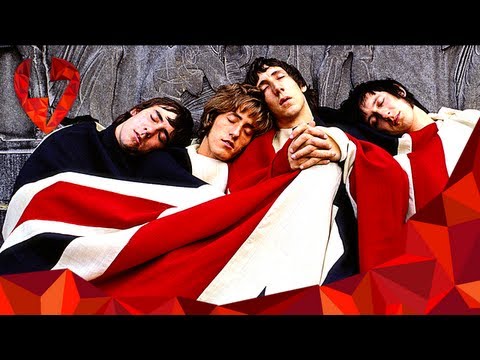
"I Can See For Miles" — The Who's Psychedelic Power Surge A Band Hungry for the Number One Slot Picture London in 1967, when Carnaby Street was exporting its…
01 The Story
"I Can See For Miles" — The Who's Psychedelic Power Surge
A Band Hungry for the Number One Slot
Picture London in 1967, when Carnaby Street was exporting its fashions to the world, psychedelia was seeping into rock music from every direction, and the Who were furious. Not artistically lost, not commercially confused, just straightforwardly angry that their records were not reaching the top of the charts despite their status as one of the most electrifying live acts on either side of the Atlantic. Pete Townshend had been sitting on "I Can See For Miles" for some time, holding it back deliberately as what he considered the band's strongest piece of songwriting to date, waiting for the right moment to deploy it as a weapon aimed squarely at the top of the British and American charts.
When the Who released it in October 1967, Townshend genuinely expected it to reach number one. It did not, and his frustration at that outcome became one of the more colorful footnotes in rock history. But in the United States, the track did considerably better than its UK performance, and its impact on the sound of rock music proved more durable than any chart position could fully capture.
Recording a Track Built for Maximum Impact
The song was recorded across sessions in London and at Gold Star Studios in Los Angeles, a facility famous for the "Wall of Sound" productions engineered by Phil Spector. The Who used those sessions to construct a track of considerable sonic density. Keith Moon's drumming was particularly aggressive, layering overdubs to create a percussion sound that hit harder and wider than standard rock production of the period.
Townshend's guitar work on the track incorporated feedback and distortion in ways that drew from the psychedelic currents running through 1967 rock while remaining anchored in the raw energy that distinguished the Who from more florid contemporaries. Roger Daltrey's vocal was delivered with controlled ferocity, matching the lyrical content's themes of surveillance and exposed deceit with an intensity that made the narrator's certainty feel genuinely threatening. John Entwistle's bass provided a melodic counterweight to the aggressive upper frequencies, a characteristic touch that distinguished Who recordings from the period.
The Chart Performance in Context
"I Can See For Miles" debuted on the Billboard Hot 100 on October 14, 1967, entering at position 72. Its climb was methodical: 48 the following week, then 38, 23, 11, before reaching its peak of number 9 on November 25, 1967. The song spent 11 weeks on the Hot 100, a strong performance that confirmed the Who's American commercial viability at a moment when British acts were still navigating the complex dynamics of transatlantic success.
In the UK, the single reached number 10 on the charts, a result that disappointed Townshend given his expectations for the track. His publicly expressed dismay became a kind of legend, a story about the gap between artistic ambition and commercial outcome that resonated with musicians and fans alike. The irony is that the song's cultural longevity has far exceeded what a number one placement would have guaranteed.
1967: The Year That Changed Rock
The context of 1967 is essential for understanding where "I Can See For Miles" sat in the broader musical landscape. The Beatles had released Sgt. Pepper's Lonely Hearts Club Band that summer, effectively raising the conceptual and sonic ambitions of an entire generation of rock musicians. The Rolling Stones, the Kinks, and Cream were all navigating the intersection of psychedelia and harder rock sounds. Jimi Hendrix was dismantling conventional ideas about what a guitar could do.
Into that context, the Who released a track that was simultaneously of its moment and slightly outside it. The psychedelic touches were present but not dominant; the aggression was more pronounced than the dreamy experimentation characterizing much of the era's output. "I Can See For Miles" occupied a distinct position in 1967's sonic landscape, pointing more directly toward the harder rock that would emerge in the late 1960s and early 1970s.
An Enduring Piece of Their Canon
The track appeared on the American version of the album The Who Sell Out, one of the more adventurous album-format statements of 1967, a record that framed its songs within a satirical pirate-radio broadcast context. Within that construction, "I Can See For Miles" provided the commercial center of gravity, the track with enough radio-ready energy to function as a single while the album's more experimental elements surrounded it.
Townshend's eventual assessment of the song as one of the best things the Who ever recorded aligns with the opinion of generations of rock listeners and critics who have returned to it across the decades. The track's combination of lyrical paranoia, production density, and sheer musical aggression made it a template for rock ambition. Press play and hear what it sounds like when a band decides to show everyone exactly what they are capable of.
"I Can See For Miles" — The Who's singular moment on the 1960s charts.
02 Song Meaning
"I Can See For Miles" — Clarity, Paranoia, and the Watching Eye
The Lyrical World of Total Surveillance
At the center of "I Can See For Miles" is a narrator who knows everything. Not in a comforting, protective sense, but in a cold, forensic one: this is a voice that sees through deception, tracks movement, and processes information with unsettling precision. The song's protagonist claims an almost supernatural perceptual ability, one that cuts through attempts at concealment to expose the truth beneath them. The narrative positions omniscience as a form of emotional power, with the speaker using their clarity of vision as leverage in a relationship defined by distrust and implied betrayal.
Pete Townshend's lyrical framework here is interesting precisely because it refuses to present the narrator's perceptiveness as entirely sympathetic. The certainty with which the speaker observes and judges carries an edge of obsession, a quality that makes the song more psychologically complex than a straightforward story of catching a partner in deceit.
Psychedelic Consciousness and Expanded Perception
The song's emphasis on extreme perceptual clarity places it squarely within the broader psychedelic culture of 1967, even as its musical energy was harder and more aggressive than much of the era's psychedelic output. The idea of seeing further, perceiving more, and penetrating surface realities to reach hidden truths was central to the countercultural imagination of that moment. LSD had introduced millions of young people to experiences of altered perception, and the cultural language of expanded consciousness permeated the music, art, and writing of the period.
"I Can See For Miles" engages with this cultural context while channeling it through a distinctly aggressive emotional register. The expanded vision is not euphoric or transcendent in the manner of more obviously psychedelic songs from the same year; it is cold, precise, and threatening. That reorientation of psychedelic imagery toward confrontation rather than revelation gives the song a quality that set it apart from contemporaries operating in adjacent territory.
Trust, Betrayal, and the Emotional Stakes
Underneath the track's psychedelic posturing, the emotional content is recognizable and direct: a person believes they are being deceived by someone close to them, and they are determined to make clear that the deception has failed. The song's emotional energy comes from the tension between this certainty and the implied vulnerability beneath it. Someone who needs to announce so forcefully that they cannot be fooled is, by implication, someone who has been invested enough to care about the potential deception.
This interior contradiction, the wounded pride beneath the confident surface, gives "I Can See For Miles" a psychological depth that extends beyond its immediate narrative. The listener can sense what is not being said, the feeling that lies under the aggressive posturing, and that subtext is part of what makes the track compelling decades after its release.
Why It Has Endured
The track's durability in the Who's catalog and in the broader rock canon rests on several converging qualities. The production's density and the band's performance ferocity make it physically satisfying in a way that purely cerebral songs often are not. The lyrical content is specific enough to feel real but universal enough to apply to countless emotional situations. And the song's positioning at the intersection of psychedelic ambition and raw rock energy gave it a quality that neither genre alone could have produced.
For listeners discovering the Who through decades of classic rock radio exposure, "I Can See For Miles" often serves as the entry point that makes the band's larger achievement legible. It contains in compact form the qualities that made them one of the most important rock groups of their era: technical ferocity, emotional intelligence, and a willingness to push sonic expectations past their apparent limits.
→ More from The Who
View all The Who hits →



→ More from the 1960s File
View all 1960s hits →




Keep digging