The 1970s File Feature
Who Are You
Who Are You — The Who (1978) By the summer of 1978, The Who had spent more than a decade redefining what rock music could demand of its audience. Their catal…
01 The Story
Who Are You — The Who (1978)
By the summer of 1978, The Who had spent more than a decade redefining what rock music could demand of its audience. Their catalogue stretched from the mod fury of the mid-1960s through the towering concept albums Tommy and Quadrophenia, and into the arena-filling mid-1970s. "Who Are You" arrived as the title track of their eighth studio album, released on August 18, 1978, on Polydor Records in the United Kingdom and MCA Records in the United States. It would prove to be the last song the original four-piece lineup would ever release together.
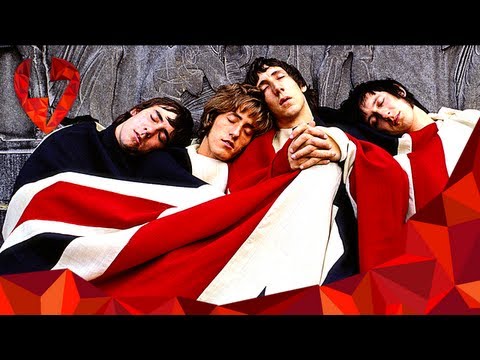
The recording sessions took place at Ramport Studios in Battersea, London, a facility the band had built for themselves in the early 1970s. Producer Jon Astley and Glyn Johns shared production duties, with Astley handling the bulk of the work alongside engineer Bill Price. The sonic texture of "Who Are You" marked a departure from the band's earlier pure rock approach: Pete Townshend integrated synthesizer sequences and layered keyboard textures into a song that still crackled with the kinetic energy audiences expected from the group. Keith Moon's drumming remained thunderous, though those closest to the sessions noted that he was struggling physically. He died of an accidental drug overdose on September 7, 1978, just weeks after the album's release, making the photograph on the album sleeve, in which Moon sat in a chair marked "Not to be taken away," one of rock history's most haunting images in hindsight.
The song's origins lay partly in a real incident. Pete Townshend has spoken in interviews about an evening in 1977 when he encountered a recording industry figure and had a disorienting, drunken conversation about the nature of identity and creative integrity. That encounter fed directly into the song's thematic core, even as Townshend shaped it into something universal. Roger Daltrey delivered the vocal performance with characteristic intensity, his voice by this point carrying a weathered authority that younger imitators could not replicate.
On the Billboard Hot 100, "Who Are You" peaked at number 14 in September 1978, a commercially solid result for a band that had never been primarily oriented toward the singles chart. In the United Kingdom, the track reached number 18 on the UK Singles Chart. The parent album performed considerably better, reaching number 2 on the Billboard 200 and earning the band their highest-charting American album to that point. It was certified platinum in the United States.
Radio programmers embraced the track for its propulsive synthesizer hook and the urgent, hectoring quality of Daltrey's delivery. Classic rock stations adopted it immediately into heavy rotation, a presence that never really diminished. Album-oriented rock (AOR) formats, which were then consolidating their dominance over American FM radio, found in "Who Are You" exactly the kind of big, textured production they were built to showcase.
The cultural footprint of "Who Are You" expanded dramatically decades after its release when the opening synthesizer riff was licensed as the theme music for the television series CSI: Crime Scene Investigation, which premiered on CBS in October 2000. The show became one of the most-watched programs in American television history, running for fifteen seasons and spawning multiple spin-offs, and the song's hook became genuinely inescapable. Younger generations who had no frame of reference for The Who's 1978 output nonetheless recognized those opening bars instantly. The licensing deal introduced the track to an audience that dwarfed the song's original chart performance many times over.
Critical reappraisal has been generous to "Who Are You." Early reviewers sometimes noted a slight unease with the synthesizer elements as a commercial concession, but later scholarship placed the track within a broader argument about the band's willingness to absorb contemporary production techniques without abandoning their identity. The song's density, its multi-layered arrangement, and the sheer force of Daltrey's vocal placed it comfortably among the strongest work of the band's later period.
The Who continued after Moon's death, recruiting Kenney Jones as drummer and recording further albums, but "Who Are You" stands as a genuine endpoint in a biographical sense. It captures the original band at a moment of creative confidence even as the circumstances around them were unraveling. The track remains a staple of classic rock radio, a fixture in retrospective lists of the band's essential recordings, and a document of one of rock's most consequential groups working at the edge of their own era.
02 Song Meaning
What "Who Are You" Is Really About
The central question posed by "Who Are You" operates on multiple levels simultaneously. On its most direct surface, the song dramatizes a confrontation with identity, the kind of raw, demanding inquiry that arrives in moments of exhaustion or disorientation. The narrator is not asking a philosophical question in the calm of a seminar room. The demand feels urgent, almost aggressive, as if the speaker has reached a point where comfortable vagueness about who one is or what one stands for has become intolerable.
Pete Townshend rooted the song in a specific autobiographical moment involving the music industry, and that context lends the track an undercurrent of disillusionment with commercial culture. The rock star who has achieved everything the industry promised and still finds himself asking fundamental questions about purpose and self-definition is a recurring figure in Townshend's songwriting. It connects "Who Are You" to a long thread running through the band's catalogue, from the youthful alienation of their earliest singles through the spiritual searching of Tommy and the generational despair of Quadrophenia. Townshend was constitutionally unable to write a simple love song; his material consistently returned to questions of authenticity, spiritual longing, and the anxiety of selfhood in a noisy, distracted world.
The song's emotional register is one of controlled aggression softened by genuine bewilderment. Daltrey's delivery captures both dimensions: there is menace in the repeated central question, but also something closer to genuine puzzlement, as if the speaker is not entirely sure whether he is interrogating another person or himself. That ambiguity is one of the song's greatest strengths. Listeners have heard it as an anthem of self-assertion, as a love song with a confrontational edge, and as a meditation on the impossibility of knowing another person fully.
For The Who as a group, the track carried a particular weight because it arrived at a moment of genuine biographical crisis. The band's internal tensions, Keith Moon's deteriorating health, and the broader sense that the original rock generation was running out of road all converge in the song's atmosphere of driven, almost desperate energy. Roger Daltrey's vocal performance on the track is widely considered among the finest of his career, precisely because it communicates something beyond theatrical rock-star posturing. There is real feeling in the delivery, a quality that gives the abstract question at the song's core a human weight.
The synthesizer textures that Townshend introduced into the arrangement also carry meaning. By 1978, electronic instruments were reshaping popular music rapidly, and The Who's incorporation of these sounds signaled their awareness that the world they had helped create in the 1960s was changing. The tension between the song's hard rock bones and its synthesized surface mirrors the thematic tension between the old self and the new, between the identity one constructed and the one that daily life imposes.
In the context of the band's full catalogue, "Who Are You" functions as a kind of reckoning, an artist reaching middle career and demanding, with considerable ferocity, that the noise of success and commerce not obscure whatever essential truth motivated the work in the first place. Its adoption as the CSI theme added a layer of irony that Townshend himself has acknowledged: a song about the difficulty of knowing who anyone truly is became the signature of a television franchise devoted to forensic certainty. That irony did not diminish the track but deepened it, giving a new generation a reason to sit with the question the song asks.
→ More from The Who
View all The Who hits →



→ More from the 1970s File
View all 1970s hits →




Keep digging