The 1970s File Feature
Join Together
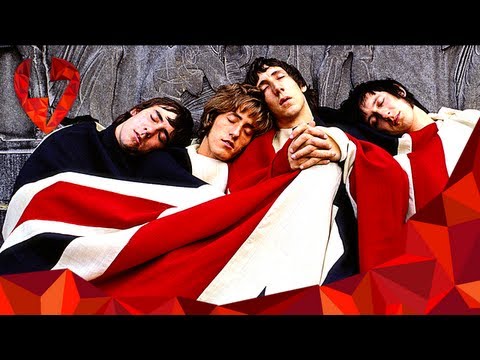
Join Together — The Who (1972) "Join Together" arrived in 1972 as something of a surprise: a Who single that was neither an excerpt from one of Pete Townshen…
01 The Story
Join Together — The Who (1972)
"Join Together" arrived in 1972 as something of a surprise: a Who single that was neither an excerpt from one of Pete Townshend's grand concept projects nor a straightforward rock statement, but instead a call to communal action built around an insistently repeated invitation and a hypnotic, synthesizer-driven groove. It was the product of an intense creative period for the band, one that followed the commercial and critical triumph of Who's Next in 1971 and preceded the release of Quadrophenia in 1973. In that interstitial moment, "Join Together" demonstrated the band's willingness to pursue ideas that did not fit neatly into any of their established categories.
The single was released in June 1972 on Track Records in the United Kingdom and Decca Records in the United States. It was not drawn from an album but instead functioned as a standalone single, a relatively unusual commercial strategy for a band that had, by this point, primarily built their reputation through album-length statements. The decision reflected Townshend's belief that the song's communal message warranted immediate release rather than being held back for a larger project.
The production was handled by The Who themselves, continuing the self-production approach they had developed on Who's Next. The track featured a prominent synthesizer ostinato that provided its harmonic and rhythmic foundation, while Keith Moon's drumming supplied the physical energy that kept the piece from feeling static. Roger Daltrey's vocal was characteristically forceful, delivering the repeated central phrase with the kind of conviction that made even potentially naïve sentiments feel earned. John Entwistle's bass work was, as always, more melodically adventurous than the track's basic description might suggest.
On the UK Singles Chart, "Join Together" reached number 9, a solid commercial result that kept the band's profile high in the period between major albums. Its American performance was more modest, reaching number 17 on the Billboard Hot 100, but the track received substantial FM radio play on both sides of the Atlantic, sustaining its presence in the culture beyond what the singles chart position alone would suggest. It was the kind of record that worked better in the album-rock radio context than in the singles market.
The song grew out of Townshend's long-running engagement with the teachings of the Indian spiritual master Meher Baba, whose concept of universal love and communal spiritual life had been a significant influence on the songwriter since the late 1960s. That influence was audible in the track's central idea: the invitation to set aside individual differences and come together in some larger shared project, whether spiritual, political, or simply human. Townshend was careful not to be programmatically specific about the nature of this coming-together, leaving room for listeners to apply the invitation to whatever context felt most relevant.
Critical response was generally positive, with reviewers noting the track's effectiveness as a piece of sustained groove while acknowledging that its message was somewhat less complex than Townshend's best work. Some pointed out that the repeated invitation at the song's core was more incantation than argument, that the track worked on listeners through repetition and rhythmic insistence rather than through the kind of detailed emotional narrative that characterized the band's most celebrated recordings. This was not necessarily a criticism but an accurate description of the song's method.
The track has been performed by The Who throughout their subsequent touring career, maintaining a place in their live repertoire that reflects its status as a fan favorite even if it has never been among the band's most critically celebrated recordings. It captures a particular moment in their development, after the extraordinary peak of Who's Next and before the complex ambitions of Quadrophenia, and documents a band comfortable enough in their abilities to pursue a single idea, insistently and at length, without needing to prove anything beyond what the groove itself delivered.
02 Song Meaning
Unity and the Spiritual Impulse in "Join Together"
"Join Together" operates on a level of deliberate simplicity that is both its primary strength and the source of some of the ambivalence with which it has been assessed critically. Pete Townshend was, by 1972, one of the most analytically sophisticated songwriters in rock music, a writer capable of sustained narrative complexity and philosophical nuance over album-length canvases. That he chose, in "Join Together," to reduce his message to its most elementary form, a single repeated invitation to come together, was itself a statement about what kind of communication he was attempting.
The spiritual context matters here. Townshend's engagement with the teachings of Meher Baba had been shaping his songwriting in various ways since the late 1960s, but "Join Together" was perhaps the most direct translation of Baba's concept of universal love into a commercial rock format. The invitation at the song's center is not addressed to any particular political constituency or social group. It is addressed to everyone, and the absence of specific conditions on the invitation is deliberate: whatever differences separate people in the world outside the music, the invitation does not acknowledge those differences as relevant.
This universalism was both sincere and, in context, slightly utopian. 1972 was a year of significant political polarization in the United States and sustained social conflict in the United Kingdom, and the idea that a rock song could transcend these divisions by simply insisting on their irrelevance was open to skepticism. Townshend was aware of this: his broader career was marked by a consistent engagement with the gap between idealism and reality, and "Join Together" exists in that gap without pretending to resolve it.
Roger Daltrey's delivery gives the song its emotional credibility. A more tentative vocal performance might have exposed the naivety of the central message; Daltrey's absolute conviction makes it feel like something worth hearing even to a listener who brings considerable skepticism to communal utopian sentiments. The performance is itself an act of joining together, the four members of the band locking into a groove that demonstrates, through purely musical means, what genuine collective action can produce.
The synthesizer at the song's heart carries meaning in the context of the band's development. The Who had been among the first major rock bands to integrate synthesizer sounds into their music, and by 1972 they were using the instrument with enough sophistication to make it a central compositional element rather than a novelty. The choice to build a communal anthem on a synthesized foundation rather than on the traditional guitar-bass-drums format of rock was quietly radical, suggesting that the new technologies were not threats to human connection but potential tools for it.
The track ultimately proposes that the act of listening together to music is itself a form of the joining that the song advocates. The communal experience of a rock concert, which The Who had consistently pursued throughout their career with a theatrical ambition that few other bands matched, is the most immediate demonstration of what the song is asking for. In that context, "Join Together" functions as both a statement and a self-fulfilling prophecy: the gathering of an audience around a shared musical experience is precisely the joining together that the song invites. The simplicity of the message reflects an understanding that the most important ideas are often the ones that need the least elaboration.
→ More from The Who
View all The Who hits →



→ More from the 1970s File
View all 1970s hits →




Keep digging