The 1960s File Feature
You're The One
Pittsburgh Harmony: The Vogues and the Making of "You're The One" The Vogues were a vocal harmony group from Turtle Creek, Pennsylvania, a small community in…
01 The Story
Pittsburgh Harmony: The Vogues and the Making of "You're The One"
The Vogues were a vocal harmony group from Turtle Creek, Pennsylvania, a small community in the Pittsburgh metropolitan area, whose clean-voiced, pop-oriented approach to harmony singing placed them at a crossroads between the doo-wop tradition that had shaped American vocal groups in the previous decade and the more polished pop sound that was emerging in the mid-1960s. Their single "You're The One" (not to be confused with other songs of similar title in the pop catalog) reached the upper levels of the Billboard Hot 100 in 1965, becoming their breakthrough commercial success and establishing them as a genuine presence on the national chart.
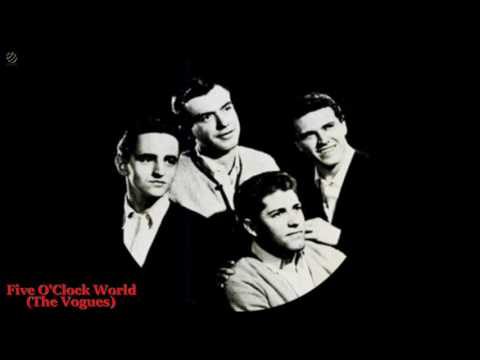
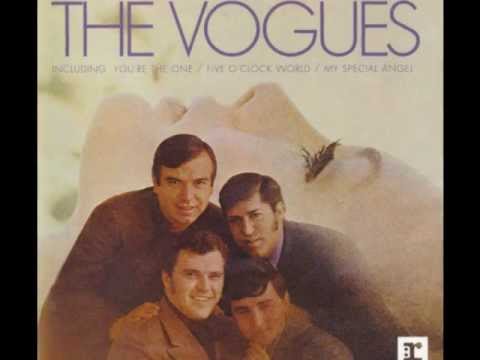
The group consisted of Bill Burkette, Don Miller, Hugh Geyer, and Chuck Blasko, four vocalists whose blend was tight and precise, shaped by years of singing together in western Pennsylvania before they came to the attention of record producers. Their harmonies had a brightness and clarity that was well-suited to the AM radio environment of the mid-1960s, when clarity and definition in a recording's top frequencies were essential to cutting through the noise of a busy broadcast spectrum.
"You're The One" was written by Petula Clark and Tony Hatch, the British songwriter and producer who had collaborated with Clark on her massive international hits of the period. Hatch was one of the most commercially astute pop craftsmen of the 1960s, capable of writing melodies with the combination of accessibility and musical distinction that allowed them to reach large audiences without sacrificing quality. The song had been recorded by Clark herself in a version that circulated in Europe, but it was The Vogues' recording that would carry it to its greatest American success.
The Vogues recorded "You're The One" for Co and Ce Records, a small Pittsburgh-area label that had signed the group and released their early material. The recording was produced with the polished, treble-bright sound that characterized the best American vocal group pop of the period, and it demonstrated that The Vogues' voices were capable of carrying sophisticated material without losing the commercial accessibility that made them attractive to radio programmers and record buyers.
The single climbed to number four on the Billboard Hot 100, a performance that confirmed The Vogues as a commercially viable act at the national level rather than a regional phenomenon. The chart success attracted attention from larger labels and positioned the group for the next phase of their career. They would subsequently move to Reprise Records, where they would record the recordings that brought them their broadest audience, including the lushly orchestrated pop of "Five O'Clock World" and "Turn Around, Look at Me."
The timing of "You're The One" was significant. By 1965, the American pop charts were increasingly dominated by British Invasion artists and by the Motown sound emanating from Detroit. An American vocal harmony group rooted in the older traditions of pop harmony singing faced a complicated commercial environment, one in which their skills were valued but their stylistic position was under pressure from newer sounds and newer approaches. The Vogues navigated this environment with considerable commercial success, finding audiences who responded to the quality of their harmony work even in a landscape that was rapidly changing around them.
Pittsburgh and the surrounding industrial communities of western Pennsylvania had produced a series of vocal groups in the doo-wop and early pop era, reflecting the region's diverse working-class communities and the central role of group singing in their social and recreational life. The Vogues were among the most commercially successful of these groups, and their success gave them a visibility that exceeded the normal reach of acts from non-metropolitan markets.
"You're The One" has continued to be recognized as one of the finest examples of mid-1960s American vocal group pop, a recording that captures a particular moment when the harmonic traditions of an earlier era were being applied to contemporary pop sensibilities with skill and commercial intelligence. The Vogues' catalog from this period remains a rewarding area of exploration for listeners interested in the craft of harmony singing and the history of the American pop single in its most productive decade.
02 Song Meaning
Devotion in Harmony: The Meaning of "You're The One" by The Vogues
"You're The One" is a declaration of singular devotion, a song that positions its subject as uniquely important, as the one person among all possible persons who matters most to the narrator. The emotional logic is one of exclusivity, of a love that has selected one person and found in that selection the entire world. This is a common territory for pop song, but what distinguishes the treatment is the quality of the musical setting, the way the harmony arrangement amplifies the lyric's declaration of devotion through the convergence of multiple voices on a single sentiment.
When a vocal harmony group performs a song of this type, the musical form reinforces the emotional content in a way that a solo performance cannot replicate. Multiple distinct voices agreeing that "you're the one" creates a sense of confirmed truth, of a statement that has been considered from multiple perspectives and found equally valid from each of them. The harmonic convergence is, in a sense, a metaphor for the certainty of the narrator's feeling, a certainty robust enough to sustain agreement across the different voices of the arrangement.
The Vogues were particularly well-suited to this kind of material because their harmonies had a quality of warmth and precision that made the group blend feel like genuine agreement rather than mere unison. Each voice in their recordings retains its individual quality while contributing to a texture that is greater than the sum of its parts, and this quality of individual distinctness within collective agreement is itself a kind of emotional statement about the nature of devotion: singular in its object, but rich in the variety of ways it can be felt and expressed.
The songwriting of Tony Hatch, who had an exceptional gift for melodies that felt both inevitable and surprising, provided the Vogues with a melodic vehicle whose accessibility was matched by genuine musical interest. The song does not make demands on the listener but rewards close attention, revealing harmonic movement that becomes more satisfying the more familiar the song becomes. This quality of musical depth that does not announce itself is characteristic of the best mid-1960s pop craftsmanship.
Within the context of 1965 American pop, "You're The One" represented a particular kind of continuity with an older pop tradition at a moment when that tradition was under increasing pressure from newer sounds. The British Invasion had introduced to the American market a set of aesthetic values that placed a premium on energy, on rhythmic drive, on a kind of rough directness that was different from the polished harmony of a group like The Vogues. The record's commercial success demonstrated that there was still a substantial audience for the older approach, for vocal craft and harmonic beauty as primary values in a pop recording.
The song also participates in the broader tradition of pop music's engagement with the experience of romantic singularity, the feeling that the person one loves is categorically different from everyone else, that the selection of a particular beloved is an act of recognition rather than arbitrary preference. This is a feeling that pop music has always known how to express with particular efficiency, and "You're The One" is among the cleaner and more effective examples of that expression from its era.
For listeners encountering The Vogues' recording decades after its original release, the meaning has acquired an additional layer of historical significance. The record sounds like a very specific moment in American pop, a moment when a certain style of vocal harmony and arrangement was at its commercial peak, and it captures that moment with the fidelity of a genuine artefact. The emotional content of the song is timeless, but the sound world in which it is delivered is precisely dated, and that combination of timeless feeling and historical specificity is part of what makes the recording continue to resonate.
→ More from The Vogues
View all The Vogues hits →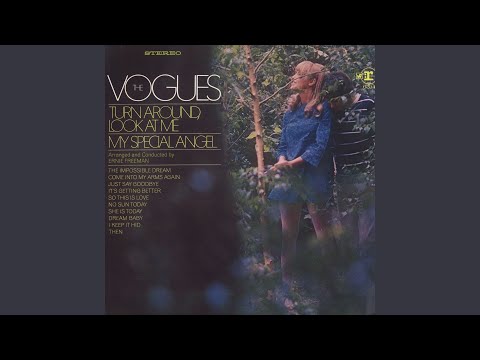

→ More from the 1960s File
View all 1960s hits →




Keep digging