The 1960s File Feature
Magic Town
The Vogues and "Magic Town": Pittsburgh Harmony in the Mid-1960s Pop Landscape The Vogues were not a group that arrived at their sound through experiment or …
01 The Story
The Vogues and "Magic Town": Pittsburgh Harmony in the Mid-1960s Pop Landscape
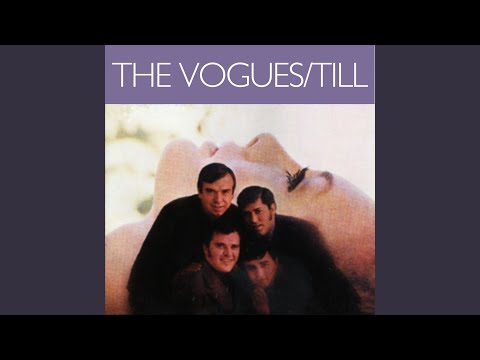
The Vogues were not a group that arrived at their sound through experiment or accident. The quartet from Turtle Creek, Pennsylvania, a suburb southeast of Pittsburgh, built their identity around close vocal harmony of a particular sweetness and precision, applying that toolkit to carefully selected material that showcased those qualities without straining them. "Magic Town," released in early 1966 and eventually peaking at number 21 on the Billboard Hot 100, was among the clearest demonstrations of that approach in the group's catalog.
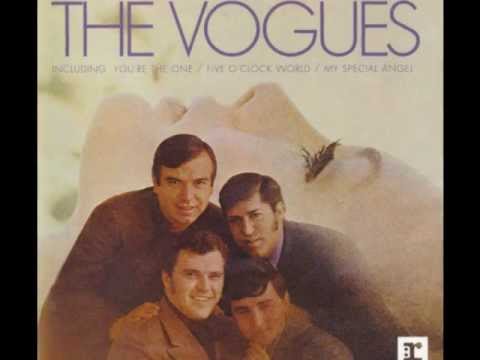
The group formed in the early 1960s, initially calling themselves the Val-Aires before settling on The Vogues. The core lineup consisted of Bill Burkette, Hugh Geyer, Chuck Blasko, and Don Miller, four young men whose musical backgrounds were shaped by the vocal harmony traditions that had dominated the late 1950s and remained influential even as the British Invasion was transforming the pop landscape. While the Beatles and their contemporaries were bringing a new emphasis on rhythm, amplification, and raw energy, The Vogues represented a strand of American pop that valued refinement and melodic clarity above all else.
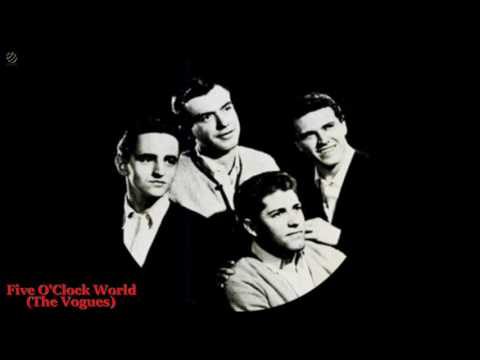
Their debut major hit, "Five O'Clock World," had reached number four on the Billboard Hot 100 in late 1965, establishing the group as a commercial force and demonstrating that their style of polished vocal pop had a substantial audience even in the midst of the rock transformation. "Magic Town" followed as the next significant single and built on that foundation, offering a similar emotional register in a slightly different melodic frame.
"Magic Town" was written by Barry Mann and Cynthia Weil, one of the most productive songwriting partnerships to emerge from the Brill Building era. Mann and Weil had already contributed material to a remarkable range of artists, and their work for The Vogues fit the group's aesthetic precisely. The song offered the kind of romantic idealism that the group's sound was built to convey, combining a memorable melodic line with lyrics that traded in the language of enchantment and possibility.
The single entered the Billboard Hot 100 on February 26, 1966, debuting at number 71. Over the following weeks it climbed with consistent momentum through positions 56, 44, 33, and 26 before reaching its peak of number 21 on April 2, 1966. The nine-week chart run was solid by the standards of the period and confirmed that the group had built a genuinely loyal following rather than benefiting from a single lucky breakthrough.
The production of "Magic Town" reflected the prevailing studio practices of mid-1960s pop, with orchestral accompaniment supporting rather than competing with the vocal arrangement. The strings and brass that characterized much of the Brill Building-adjacent output of the period provided a lush sonic frame that suited the song's optimistic character. The Vogues' blend sat precisely in that frame, the four voices creating a unified texture that was their central commercial asset.
Pittsburgh's pop music heritage has been less celebrated than that of cities like Detroit, Memphis, or New York, but The Vogues' success in the mid-1960s demonstrated that the regional talent pool extended well beyond the major music industry centers. Turtle Creek and the wider Pittsburgh metropolitan area produced a working-class music culture that valued craftsmanship and consistency, qualities that The Vogues embodied throughout their commercial peak.
The group continued releasing material through the late 1960s and into the 1970s, achieving several additional chart entries including "Turn Around, Look at Me" and "My Special Angel." But "Magic Town" occupied a specific place in their catalog as a record that captured the group at full strength, working with first-class material from two of the era's finest songwriters, in a production environment calibrated to maximize the impact of their defining characteristic. For listeners who encountered the song on radio in the spring of 1966, it represented pop music at its most crafted and its most immediately pleasurable, a balance that proved difficult to sustain as the decade's aesthetic preferences shifted but that remained genuinely satisfying on its own terms.
02 Song Meaning
The Meaning of "Magic Town": Romantic Idealism and the Promise of Perfect Places
"Magic Town" by The Vogues inhabits the tradition of mid-1960s pop songs that locate romantic fulfillment within a specific, idealized place. The town of the title is not a real geography but an emotional one: a space defined entirely by the presence and feeling of being loved, where everything outside that feeling recedes into irrelevance. This mapping of emotion onto place was a device used throughout the Brill Building era, and Barry Mann and Cynthia Weil, who wrote "Magic Town," employed it with particular fluency.
The premise of the song is simple but carefully constructed. The narrator has found, through love, a state of existence that feels qualitatively different from ordinary life. The word "magic" in the title is doing precise work: it names something that cannot be explained through ordinary causation, something that operates by different rules from the everyday world. The magic town exists not as a destination one travels to but as a condition one inhabits through the presence of another person.
This romantic idealism was the native vocabulary of a generation of songwriters who built careers on the premise that popular music could give direct, accessible expression to emotional experience that resisted ordinary language. Mann and Weil's partnership was particularly successful at this work because they understood how to construct songs that felt simultaneously specific in their emotional detail and universal enough to allow listeners to project their own experiences onto them. "Magic Town" achieved that balance, which was the fundamental requirement for pop songs intended to reach a mass audience.
The Vogues' performance of the song was itself part of its meaning. Close vocal harmony has always carried an implicit message about community and togetherness: the sound of multiple voices blending precisely suggests cooperation, attentiveness, and mutual support. When four voices merge as seamlessly as The Vogues could achieve at their best, the sonic experience reinforces the lyric's premise that love creates a kind of perfect, unified state that ordinary life does not provide.
The song also participated in a mid-1960s pop discourse about the nature of happiness and its conditions. A significant strand of popular music from the period was concerned with identifying what made life good: what kind of place, what kind of relationship, what kind of moment constituted the highest available human experience. "Magic Town" offered one answer to that question — not a material answer about wealth or status, but a relational one. The best possible condition was being in the right emotional space with the right person, and that condition could transform any ordinary setting into somewhere magical.
The optimism of the song was characteristic of its moment. In early 1966, the full weight of the decade's later turmoil had not yet arrived. The escalation of the Vietnam War was underway but had not yet produced the sustained public trauma that would define 1967 and 1968. The social upheavals of the civil rights movement were changing the country's political landscape, but pop music was still largely operating in a register of aspiration rather than confrontation. "Magic Town" belonged to that pre-disruption moment, expressing a confidence in love's transformative power that would become harder to sustain as the decade proceeded.
For audiences who encountered "Magic Town" in the spring of 1966, it offered something genuinely valuable: a well-made, emotionally honest expression of the feeling that love could reorganize one's entire experience of the world. The Vogues' harmonies carried that message with the warmth and precision it required, making the song a small but genuine contribution to the vocabulary of romantic idealism that has always been one of popular music's most enduring functions.
→ More from The Vogues
View all The Vogues hits →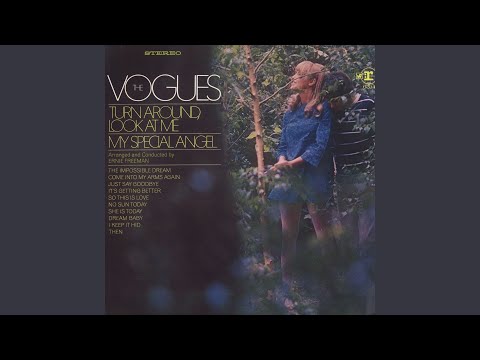
→ More from the 1960s File
View all 1960s hits →




Keep digging