The 1960s File Feature
My Special Angel
"My Special Angel" — The Vogues and the Pop Ballad at Full Orchestral Tilt From Pittsburgh to the National Charts The autumn of 1968 had a particular sonic t…
01 The Story
"My Special Angel" — The Vogues and the Pop Ballad at Full Orchestral Tilt
From Pittsburgh to the National Charts
The autumn of 1968 had a particular sonic texture on the American charts: a mix of soul power, psychedelic residue, and, nestled among the more aggressive sounds, a current of richly orchestrated pop that continued to serve a large and loyal audience. The Vogues belonged firmly to that last category. A vocal group from Pittsburgh, Pennsylvania, they had spent the mid-1960s building a following through tight harmonies and a commitment to melodic accessibility that never wavered.
By 1968 they had signed with Reprise Records and found a working relationship with producer Nick Venet. Their instinct was to take well-known songs and render them with maximum vocal and orchestral ambition, a approach that suited the era's adult pop market perfectly. My Special Angel was not a new composition when the Vogues recorded it; the song had already had a distinguished history. What the group did was make it theirs.
A Song With Heritage
Jimmy Duncan wrote "My Special Angel", and the song had already produced a significant hit when Bobby Helms recorded it in 1957, reaching the top five on the Hot 100. A decade later, the Vogues approached the material with full awareness of its track record, which gave them a degree of creative confidence. They were not trying to introduce an unknown quantity; they were making a case for a beloved song at a particular moment, and the approach paid off.
The arrangement built around the Vogues' version leaned heavily into orchestral production, with strings that sweep generously beneath the vocal performance. The group's multi-part harmonies interlock with the instrumental backdrop in a way that rewards the listener's attention: there are layers to what seems at first like a simple love song, vocal textures that reveal themselves gradually over repeated listens. The production quality for the era is notable, achieving a richness that smaller budgets and less experienced studios could not have matched.
The Chart Climb
The single debuted on the Billboard Hot 100 on September 7, 1968, entering at number 62. From there it moved with consistent purpose through the following weeks, climbing through the 50s, pausing briefly in the high teens, and then continuing its advance. The song reached its peak position of number 7 on October 12, 1968, spending ten weeks on the chart before its run concluded.
A peak of number 7 represented a genuine commercial breakthrough for the Vogues at this stage of their career. The Hot 100 in the fall of 1968 was fiercely competitive: Marvin Gaye, The Beatles, The Rascals, and Sly and the Family Stone were all active presences on the chart. To crack the top ten under those conditions required something beyond competence; it required a record that connected.
The Vocal Group Tradition in Late-1960s Pop
The Vogues operated within a tradition that stretches from the great doo-wop ensembles of the 1950s through the Four Seasons, the Four Tops, and beyond. The art of the close-harmony vocal group required a specific kind of musicianship: the ability to subordinate individual expression to collective blend, to hear the total sound rather than just one's own part, and to maintain intonation and precision across what were often demanding arrangements.
In 1968, that tradition was under pressure from the rising dominance of the singer-songwriter and the rock band, forms that emphasized individual voice and attitude over collective precision. The Vogues represented a counterargument: that the pleasures of choral blend and melodic lushness were not exhausted, that an audience existed for music that aspired to a different kind of beauty than the one rock was offering.
Legacy and Lasting Warmth
The Vogues never became household names in the same way that some of their contemporaries did, but their recordings from the Reprise era hold up with genuine distinction. My Special Angel in particular has been well served by the nostalgia market that has kept 1960s pop in active circulation for decades. Its combination of familiar melodic material, warm production, and accomplished vocal performance gives it an immediate appeal that crosses generational lines.
The song appears regularly in retrospective compilations of late-1960s pop, which speaks to both its chart success and its enduring listenability. Put it on and let the strings find you; the Pittsburgh vocal group at the peak of their craft, doing what they loved best.
"My Special Angel" — The Vogues' singular moment on the 1960s charts.
02 Song Meaning
"My Special Angel" — Devotion, Idealization, and the Language of Sacred Love
The Metaphor at the Center
The title of this song announces its central move immediately: the beloved is not merely loved but elevated to the status of something beyond the human. Describing a romantic partner as an angel is among the oldest moves in the popular song tradition, but the way Jimmy Duncan's lyric deploys the metaphor gives it more weight than it might initially seem to carry. The song is not simply calling a girlfriend angelic by way of flattery; it is making a more serious claim about the transformative power of love to sanctify ordinary experience.
This is a song about how loving someone changes the emotional texture of the world around you. The narrator does not just feel good; the things the beloved does become, in the lover's perception, acts of grace. That is a genuinely affecting psychological observation wrapped in the accessible language of popular song, and it is part of why the material has proven durable across multiple recordings and decades.
Devotion as a 1968 Counter-Statement
The late 1960s were a period in which romantic love was being reexamined in several different directions at once. The counterculture's embrace of free love pushed against monogamous convention. Soul music was exploring sexuality with a directness that had no precedent on mainstream radio. Rock and roll was making increasingly complex demands of its emotional content. Into all of this, a song of simple, reverential devotion landed with a certain defiant innocence.
The Vogues were not engaging with the cultural upheavals of 1968 in any explicit way, and that is precisely the point. Their performance of the song offered listeners who were exhausted by turbulence a form of emotional shelter. Sometimes the most meaningful artistic statement is the decision to hold open a door to something quiet and clear.
Harmony as Spiritual Analogy
There is a dimension to this song that becomes audible when you consider the form the Vogues gave it. A love song about idealization and elevation, rendered by a multi-voice harmony group, enacts its own metaphor in sound. Multiple human voices choosing to blend, subordinating individual distinctiveness to collective beauty, resembles nothing so much as a choir. The choral quality of the Vogues' arrangement gives the sacred metaphor of the lyrics a sonic correlative, making the listener feel the transcendence the words describe.
This is more than a technical observation. The great vocal group recordings of the era, from the Four Tops to the Beach Boys, derived much of their emotional power from this alignment of form and content. When the sound itself embodies the meaning, the listener does not need to think about the relationship; they experience it directly.
Why It Still Speaks
The desire to describe a beloved as something more than merely human is perennial. Every generation finds its own language for the experience of loving someone so completely that ordinary vocabulary feels inadequate. The word "angel" carries layers of cultural weight, from religious iconography to pop-song tradition, that make it simultaneously a cliche and a genuine reach for something beyond the everyday.
The song's longevity comes from the sincerity with which both songwriter and performers commit to that reach. There is no irony in the Vogues' delivery, no winking at the audience about the extravagance of the sentiment. They mean it, and that unguarded sincerity is the source of the song's considerable and enduring charm.
→ More from The Vogues
View all The Vogues hits →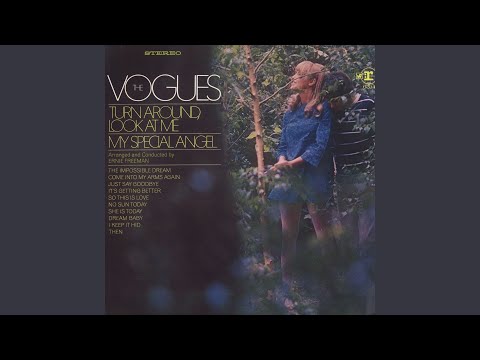

→ More from the 1960s File
View all 1960s hits →




Keep digging