The 1960s File Feature
Slaughter On Tenth Avenue
Slaughter on Tenth Avenue — The Ventures (1964) The Ventures were the most commercially successful American instrumental rock group of the 1960s, and their r…
01 The Story
Slaughter on Tenth Avenue — The Ventures (1964)
The Ventures were the most commercially successful American instrumental rock group of the 1960s, and their recording of "Slaughter on Tenth Avenue" in 1964 represented their engagement with a piece of music that predated rock and roll entirely. The composition was written by Richard Rodgers, the dominant figure in American musical theatre, as a ballet sequence for the 1936 Broadway production On Your Toes. Choreographed by George Balanchine, the original piece was a dramatic centerpiece of the show, depicting a gangland murder set in the world of ballet. By the time The Ventures adapted it nearly three decades later, the piece had already passed through multiple arrangements and interpretations in both classical and popular idioms.
The Ventures, formed in Tacoma, Washington in 1959, had established themselves through a string of instrumental hits including their signature recording "Walk, Don't Run," which had reached the top of the charts in 1960. The group, centered on guitarists Bob Bogle and Nokie Edwards with Mel Taylor on drums and Don Wilson on rhythm guitar, brought a distinctively clean, reverb-heavy electric guitar sound to their material that was immediately recognizable on radio and enormously influential on the developing rock guitar aesthetic in both the United States and Japan, where they became extraordinarily popular.
Their recording of "Slaughter on Tenth Avenue" was released on Dolton Records in 1964, the label that had been their commercial home since their earliest hits. The adaptation translated Rodgers's original theatrical piece into the surf rock and electric instrumental idiom that The Ventures had made their own, substituting the dramatic orchestral swells and string-led passages of the original with electric guitar melody lines, twangy reverb, and the propulsive rhythm section that was the foundation of their sound. The result was a recognizable transformation of a sophisticated theatrical composition into the popular instrumental vocabulary of the early 1960s.
The recording reached the top 40 of the Billboard Hot 100, a respectable showing that confirmed the group's continued commercial viability in a market that had been significantly disrupted by the arrival of the Beatles and the British Invasion in early 1964. The timing of the release placed it in one of the most competitive moments in American pop history, as domestic artists across all genres scrambled to maintain chart presence in the face of British competition that had dramatically reshaped radio programming and consumer buying habits.
That The Ventures were able to chart at all through 1964 speaks to the strength of their audience base and the distinctiveness of their sound. Unlike vocally driven pop acts, The Ventures competed on the basis of instrumental craft and a recognizable sonic identity that could not be directly replicated by British groups working in vocal formats. Their guitar-centered approach remained appealing to the significant portion of the American record-buying public that valued instrumental virtuosity and the tactile, physical pleasures of well-played electric guitar music.
The choice of "Slaughter on Tenth Avenue" as recording material also reveals something about The Ventures' curatorial instincts. They consistently sought out material that translated effectively into their instrumental format, whether that material came from pop songwriting, film scores, or in this case the legitimate theatrical tradition. Richard Rodgers's composition, with its clear melodic lines, dramatic dynamic contrasts, and inherent theatrical momentum, provided excellent raw material for the kind of narrative instrumental performance that The Ventures executed with consistent skill.
Nokie Edwards's lead guitar work on the recording carries the melodic responsibilities of what would have been multiple orchestral voices in the original, demonstrating the kind of economical but expressive playing that made him one of the most admired instrumental rock guitarists of the era. Mel Taylor's drumming on Ventures recordings was widely cited by contemporaries as a model of propulsive, supportive rock drumming, and the recording showcases his ability to maintain forward momentum while accommodating the dramatic tempo and dynamic variations that the Rodgers composition required.
In Japan, where The Ventures developed their largest and most devoted international following, recordings like "Slaughter on Tenth Avenue" contributed to a profound influence on the development of electric guitar culture that continues to be felt in Japanese popular music decades later. The group's Japanese fan base generated enormous record sales and concert attendance that sustained their commercial career long after their American chart presence had faded, and their full catalog, including this recording, remains well known and highly regarded in Japan as foundational documents of electric guitar music.
02 Song Meaning
Meaning and Context of "Slaughter on Tenth Avenue" by The Ventures
"Slaughter on Tenth Avenue" is a piece that arrives in The Ventures' catalog carrying decades of accumulated meaning from its original theatrical life. Richard Rodgers composed it as a murder narrative told entirely through music and movement, a piece designed to communicate violence, dramatic tension, and tragic finality without any words at all. When The Ventures adapted it into an electric guitar instrumental in 1964, they inherited all of that dramatic DNA and translated it into a popular music form that was itself built around the expressive capacity of the unaided instrument.
The significance of the source material is not incidental. By choosing a piece from the legitimate American theatrical tradition rather than from pop songwriting or rhythm and blues, The Ventures positioned themselves as a group capable of operating across genre boundaries and treating popular music performance as a form of musical interpretation rather than mere commercial product creation. This was consistent with their broader practice of arranging existing compositions from diverse sources, but "Slaughter on Tenth Avenue" was among the most ambitious and culturally elevated of their source choices.
Richard Rodgers's original composition was notable for its dramatic structure, which built tension through harmonic instability, then released it through rhythmic and melodic resolution, enacting the arc of a narrative with purely musical means. The Ventures preserved this structural logic in their adaptation, translating the dramatic contrasts into the vocabulary of electric guitar dynamics, reverb depth, and rhythmic intensity. A listener familiar with neither the Broadway original nor the rock adaptation could still sense the narrative arc embedded in the music's structure.
The recording also functions as a document of The Ventures' particular conception of what an instrumental rock group could and should do. Where many instrumental acts of the era were content to provide pleasant background music or simple dance accompaniment, The Ventures consistently sought material that made meaningful demands on both the performers and the listeners. Their arrangement of "Slaughter on Tenth Avenue" required genuine musical attention to pull off convincingly, and the fact that they succeeded demonstrates the serious musicianship underlying their commercial presentation.
The 1964 context is essential to understanding what the recording meant at the moment of its release. The British Invasion had arrived in February of that year with the Beatles' first American television appearances, and the American music industry was scrambling to understand what had changed. For instrumental groups like The Ventures, the challenge was acute because the British groups competed primarily on the strength of vocal personality and songwriting, both areas where instrumentalists were structurally disadvantaged. By reaching into the theatrical canon for material with proven dramatic power, The Ventures were emphasizing a dimension of their craft that British beat groups could not easily replicate.
For audiences in 1964, "Slaughter on Tenth Avenue" offered the specific pleasure of recognizing a famous piece of music in an unexpected new form. Those who knew the piece from its theatrical or orchestral contexts could enjoy the transformation, while those encountering it for the first time through The Ventures' adaptation received a piece of dramatic instrumental music with a depth and seriousness of purpose that distinguished it from lighter pop fare. This dual accessibility, satisfying to the knowledgeable and compelling to the uninitiated, was one of the Ventures' consistent skills as a recording act and one of the reasons their catalog has sustained critical and popular interest across multiple generations of listeners.
→ More from The Ventures
View all The Ventures hits →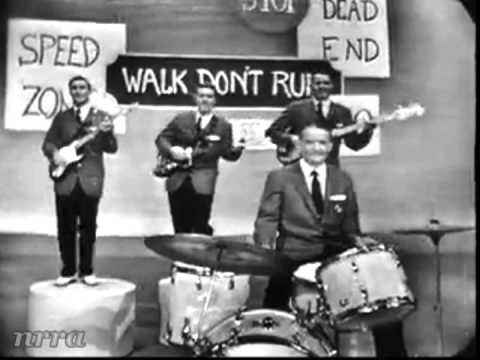



→ More from the 1960s File
View all 1960s hits →




Keep digging