The 1960s File Feature
Diamond Head
"Diamond Head" — The Ventures Surf's Up in the Pacific Northwest There is something almost paradoxical about the fact that the defining sound of California b…
01 The Story
"Diamond Head" — The Ventures
Surf's Up in the Pacific Northwest
There is something almost paradoxical about the fact that the defining sound of California beach culture in the early 1960s was largely perfected by a group from Tacoma, Washington. The Ventures, formed by Don Wilson and Bob Bogle in 1959, built an empire out of electric guitar instrumental music, a sound that evoked sun, saltwater, and open sky with a precision that seemed to require no lyrics at all. By 1965, when "Diamond Head" appeared, the group had already sold millions of records and established themselves as the bestselling instrumental rock act of the era.
"Diamond Head" took its name from the famous volcanic crater on the island of Oahu, Hawaii, and the track delivered on that geographical promise with a sound that captured the exotic, sun-drenched quality of the Islands as filtered through the Ventures' signature electric guitar approach. The Ventures had always been drawn to musical evocations of place and atmosphere, and Hawaii provided a particularly rich set of associations to work with: lush, tropical, unhurried, suffused with the kind of beauty that pop music loves to translate into melody.
The Ventures Sound in 1965
By early 1965, the instrumental surf sound was in the midst of a transition. The British Invasion had shifted the landscape dramatically, with vocal groups from Liverpool and London claiming enormous amounts of radio real estate that had previously gone to American instrumental acts. The Ventures navigated this shift with considerable resourcefulness, continuing to release records that found audiences even as the market's center of gravity moved elsewhere.
"Diamond Head" was released on Dolton Records, the label that had been home to the Ventures since their breakthrough years, and it carried the production characteristics that fans had come to associate with the group: a clean, ringing guitar tone, a tight rhythm section, and the kind of melodic clarity that made the records instantly recognizable on the radio. The lead guitar work built a sense of tropical grandeur, all sweeping lines and bright attack, while the rhythm parts kept everything grounded in the rock and roll vernacular that gave the Ventures their commercial backbone.
Chart Performance
The single debuted on the Billboard Hot 100 on January 30, 1965, at position 86. It climbed steadily, reaching position 74 the following week and arriving at its peak of number 70 on February 13, 1965. The three-week chart run was relatively brief, reflecting the increasingly competitive environment for instrumental singles in a chart landscape dominated by British vocal acts, but the peak position demonstrated that the Ventures still possessed real commercial pull even in changed circumstances.
Three weeks on the Hot 100 in early 1965 placed the record in a fascinating historical context: the Beatles had dominated the chart for most of the previous year, and artists across every genre were having to adapt to a radically altered pop landscape. The Ventures' ability to chart at all during this period speaks to the loyalty of their audience and the durability of their sound. Peak position 70 may look modest on paper, but in the context of early 1965, it represented a genuine commercial achievement.
Guitar Craft and Instrumental Identity
The Ventures were enormously influential as instrumental craftsmen, and "Diamond Head" offers a clear demonstration of why. The guitar playing throughout the track shows the combination of technical precision and melodic invention that made the group such an important reference point for subsequent generations of players. In Japan especially, the Ventures developed a cult following that bordered on the extraordinary; they are widely credited with sparking a nationwide wave of interest in electric guitar playing that helped shape Japanese rock culture for decades.
The group at this time featured Nokie Edwards on lead guitar, whose fluid, lyrical approach gave the Ventures' instrumental work much of its distinctive personality. Edwards had joined the group in the early 1960s and quickly became the sonic heart of the enterprise, his playing a central reason why Ventures records had a warmth and expressiveness that set them apart from more technically focused instrumental acts of the era.
Legacy of the Ventures' Instrumental Catalog
The Ventures released an almost staggering volume of material across their career, and "Diamond Head" sits within a catalog that spans everything from pop covers to original compositions to film and television themes. Their recording of "Hawaii Five-O" in 1969 would become perhaps their most enduring cultural artifact, but the original instrumentals from the early years like "Diamond Head" represent the purest expression of what they were about.
The track has aged beautifully. Strip away the historical context and what remains is a piece of melodic guitar music that captures a particular kind of American optimism, expansive and sun-warmed and quietly thrilling. Put it on and hear what electric guitar sounded like when it still felt like a new and limitless instrument.
"Diamond Head" — The Ventures' singular moment on the 1960s charts.
02 Song Meaning
"Diamond Head" — Themes and Cultural Significance
Music as Landscape
Instrumental music occupies a unique space in the pop tradition precisely because it demands that the listener do a certain amount of interpretive work. Without lyrics to guide the emotional response, the melody and arrangement carry all the weight of meaning. "Diamond Head" by the Ventures succeeds as an evocation of place, conjuring the volcanic silhouette and tropical sweep of Hawaii's most recognizable landmark through guitar tone and melodic construction alone.
This capacity for sonic geography was central to the Ventures' appeal throughout their career. Their records functioned as postcards from imagined or real destinations, giving listeners who might never see California's Malibu or Hawaii's Oahu an experience of those places mediated through electric guitar. In the early 1960s, when jet travel was still a luxury available to relatively few Americans, music like this carried a particular charge of escapism and aspiration.
The Surf Instrumental Genre and Its Emotional Register
The surf instrumental tradition that the Ventures helped establish is sometimes described purely in terms of style and technique, but its emotional register is equally important. These records were about freedom, movement, and the sensation of being somewhere beautiful and open. The guitar tones were bright and ringing rather than heavy or distorted; the rhythms were energetic but never frantic; the melodies tended toward the lyrical rather than the aggressive.
"Diamond Head" sits squarely within that emotional territory. The track communicates something uncomplicated and joyful, an invitation to the listener to imagine themselves in the presence of natural grandeur. The melodic generosity of the lead guitar gives the piece its primary feeling, a sense of expansiveness that the rhythm section supports without crowding.
Hawaii as Cultural Symbol in 1960s America
Hawaii had become the fiftieth American state only in 1959, and by 1965 it was still something of a new addition to the national imagination. For mainland Americans, the islands represented an idealized form of paradise, tropical and distant and glamorous in a way that few domestic destinations could match. This cultural status made Hawaii a rich source of imagery and reference for pop music, and the Ventures were among the artists who drew on it most effectively.
The choice of Diamond Head as a title was evocative in a very specific way. The crater is one of Hawaii's most visually striking features, recognizable from tourist photographs and travel posters, and its name carries connotations of both natural drama and precious elegance. By naming an instrumental track after it, the Ventures gave listeners an immediate visual anchor for the music's emotional content.
Why Instrumental Pop Matters
In an era dominated by vocal performances, instrumental tracks like "Diamond Head" occupied an interesting cultural position. They demonstrated that melody and arrangement could carry emotional weight without the interpretive anchor of lyrics, and they often found audiences across age groups and demographic lines that vocal pop sometimes struggled to reach.
The Ventures' chart presence in early 1965, with "Diamond Head" reaching number 70 on the Billboard Hot 100, showed that this appetite for instrumental pop persisted even as the British Invasion was reshaping American tastes. Their ability to translate geography and feeling into pure guitar music created a template that influenced countless players and producers across the following decades. The track remains a compact and vivid example of what the surf instrumental genre at its best could accomplish.
→ More from The Ventures
View all The Ventures hits →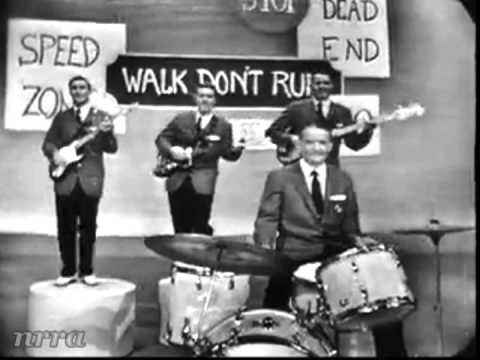


→ More from the 1960s File
View all 1960s hits →




Keep digging