The 1960s File Feature
Hawaii Five-O
"Hawaii Five-O" — The Ventures and the Instrumental That Became a Cultural Institution The Theme That Preceded the Show Most television themes exist to serve…
01 The Story
"Hawaii Five-O" — The Ventures and the Instrumental That Became a Cultural Institution
The Theme That Preceded the Show
Most television themes exist to serve the programs they introduce, fading from consciousness the moment the opening credits give way to the story. A small number of themes transcend that relationship and become cultural objects in their own right, pieces of music that people hum and recognize long after the specific episodes they announced have been forgotten. The Ventures' recording of "Hawaii Five-O" belongs firmly to that second category. What Morton Stevens composed as a television introduction became, in the Ventures' hands, one of the definitive surf rock instrumental recordings of the late 1960s, a piece of music with a commercial life entirely separate from the CBS crime drama it served.
The Ventures occupied a specific and important position in American rock history by 1969. Formed in Tacoma, Washington in the late 1950s, the group had helped define the instrumental rock format with their 1960 recording of "Walk, Don't Run," a track that introduced the clean, reverb-touched guitar sound that would become foundational to surf rock. Through the 1960s, they had maintained a prolific output and a devoted following, particularly in Japan, where their popularity reached levels that made them arguably the most influential American rock act in that market during the decade. By 1969, the Ventures were veteran hitmakers with the institutional confidence to recognize a great piece of music when one landed in front of them.
Morton Stevens and the Original Composition
The theme to Hawaii Five-O was composed by Morton Stevens for the CBS drama that premiered in September 1968. Stevens' composition had a structure that was unusually suited to the Ventures' approach: a driving main riff built around a memorable melodic hook, a key change that propelled the energy forward, and an overall architecture that felt more like a rock instrumental than a conventional orchestral television cue. The composition's inherent rock-friendliness made the Ventures' adaptation feel natural rather than like a genre translation.
The Ventures recorded their version with the crisp, clean guitar tones and propulsive rhythm that defined their house sound. The arrangement stayed close to Stevens' original design while inflecting it with the specific qualities of their instrumental approach: the reverb-touched lead guitar, the locked-in rhythm section, the sense of controlled momentum that their best recordings always carried. Producer Bob Bogle and the group's collective sensibility shaped a recording that honored the source material while making it unmistakably theirs.
The Chart Ascent Through Spring 1969
The single entered the Billboard Hot 100 on March 8, 1969, at position 100, and its climb from there was one of the more dramatic ascents of that spring. By late March it had reached 70; by early April it was at 51. The acceleration continued through April, the track climbing steadily as radio play built on itself and the connection between the recording and the increasingly popular television program drove listener curiosity. The single peaked at number 4 on the Hot 100 on May 10, 1969, after fourteen weeks on the chart. A number 4 peak for an instrumental recording in 1969 was a significant commercial achievement, at a time when rock vocal singles dominated the upper chart positions and purely instrumental recordings faced significant competition for airplay.
The record also performed well on the adult contemporary chart, which demonstrated its crossover appeal to listeners who might not have identified primarily as rock fans but who recognized and responded to the connection between the music and the television program they were watching weekly. That dual audience, rock enthusiasts and television viewers, gave the track an unusual breadth of commercial support.
The Ventures' Singular Career Position
The success of "Hawaii Five-O" in 1969 arrived at an interesting juncture in the Ventures' career. The surf rock wave that had carried them to their initial prominence in the early 1960s had crested; rock music by 1969 was a far more diverse and experimental form than it had been when "Walk, Don't Run" first charted. The Ventures had adapted, expanding their sonic palette while maintaining the instrumental rock format that had always been their identity. Their willingness to engage with television themes, film music, and popular song arrangements kept them commercially viable through a period when many of their contemporaries had faded.
The Japanese market continued to embrace them with remarkable enthusiasm throughout this period and beyond. The Ventures are widely credited with influencing the development of Japanese rock and pop, their guitar-centric sound having inspired generations of Japanese musicians who heard in it a model for what electric guitar music could achieve. "Hawaii Five-O" was among their biggest Japanese hits as well, reinforcing a transatlantic popularity that made their career geography more complex than their Pacific Northwest origins might suggest.
Five-O at Fifty-Plus
The television series Hawaii Five-O was rebooted in 2010 and ran for ten more seasons, each episode still introducing itself with a version of Morton Stevens' theme. Every new generation of viewers encountered that iconic opening and, somewhere in the cultural atmosphere, the Ventures' version was always present as the definitive popular music translation of that motif. The riff has become genuinely inescapable, one of those cultural touchstones so thoroughly absorbed into the common vocabulary that it registers even with people who have never consciously sought out either the show or the record.
Press play on the Ventures' version and understand what 1969 sounded like when it was fully committed to a hook. The guitar tone alone is worth the journey.
"Hawaii Five-O" — The Ventures' singular moment on the 1960s charts.
02 Song Meaning
"Hawaii Five-O" — The Power of the Riff and the Myth of Place
What an Instrumental Communicates
Songs with words make arguments; instrumentals paint atmospheres. The Ventures' "Hawaii Five-O" accomplishes something that lyric-driven pop rarely manages as efficiently: it evokes a specific emotional and geographic space in under three minutes using nothing but electric guitars, bass, and drums. The opening riff, those four ascending notes followed by the broader melodic sweep, functions less like a composed melody and more like a declaration. It says: somewhere dramatic is about to happen, and it is happening in the sun.
The surf rock tradition that the Ventures helped establish was built on exactly this capacity for place-evocation. The genre's signature sounds, reverb-soaked guitars, clean picking, a certain buoyant rhythm in the drums, functioned collectively as a sonic postcard from coastal California and the broader Pacific imagination. "Hawaii Five-O" extends that geography eastward across the ocean, bringing the surf rock framework to the most romantically imagined of the American states, a place that existed for most mainland listeners primarily as an idea: warmth, ocean, otherness, something vaguely exotic at the edge of the familiar world.
Television, Music, and Mutual Amplification
The relationship between the Ventures' recording and the television series it came from is more reciprocal than simple adaptation usually implies. The show Hawaii Five-O gave the recording its immediate context and initial audience, but the recording returned the favor by giving the show a sonic identity that made it instantly recognizable and culturally durable. When viewers heard those opening notes, they experienced a kind of immediate transportation to the world of the show, its sun-drenched locations, its moral clarity, its particular brand of 1960s procedural drama.
This mutual amplification between recorded music and visual media is one of the most powerful mechanisms in popular culture, and "Hawaii Five-O" is among its clearest demonstrations. The music needed the image to establish its initial context; the image needed the music to achieve its emotional impact. Neither would have had exactly the same cultural staying power without the other.
The Instrumental as Democratic Form
One of the underappreciated aspects of successful instrumental recordings is their accessibility across language and cultural boundaries. A song with English lyrics requires English comprehension for full engagement; an instrumental asks nothing of the listener but ears. This quality is part of what explains the Ventures' extraordinary popularity in Japan, where their recordings found audiences who responded to the guitar work, the energy, and the overall sonic atmosphere without needing to parse American vernacular.
"Hawaii Five-O" traveled exceptionally well across cultural contexts precisely because its emotional content was encoded in the sounds themselves rather than in words. The feeling of momentum, of tension and release, of something exciting about to unfold, is available to anyone regardless of their relationship to the American television landscape from which the recording emerged.
The Riff as Cultural Shorthand
Certain musical phrases become so thoroughly embedded in a culture's common vocabulary that they function as shared references, instantly recognizable and instantly legible as standing for something beyond themselves. The "Hawaii Five-O" riff is among the most familiar of these embedded phrases in American popular culture, up there with a small number of other instrumental motifs that have achieved genuine ubiquity across generations. The riff now stands for a whole complex of associations: late 1960s television aesthetics, the mythologized Hawaii of popular imagination, a certain kind of clean guitar tone, and the more general experience of anticipation that opening themes are designed to create.
That kind of cultural saturation is rare and takes decades to accumulate. The Ventures achieved it, and the ongoing presence of the theme in rebooted television programming and in broader cultural circulation ensures that new generations will continue to encounter it. The riff endures because it was written well and played cleanly, and because some musical ideas are simply stronger than the specific cultural moments that first deployed them.
→ More from The Ventures
View all The Ventures hits →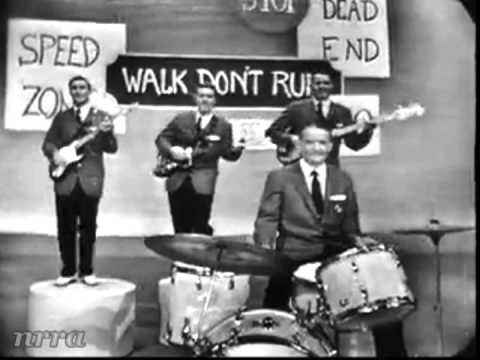


→ More from the 1960s File
View all 1960s hits →




Keep digging