The 1960s File Feature
Secret Agent Man
The Ventures' Instrumental "Secret Agent Man": A Pop Chart Entry in the Spy Craze of 1966 By 1966, The Ventures had established themselves as one of the most…
01 The Story
The Ventures' Instrumental "Secret Agent Man": A Pop Chart Entry in the Spy Craze of 1966
By 1966, The Ventures had established themselves as one of the most commercially successful and musically influential instrumental groups in the history of American popular music. Their spare, reverb-drenched guitar style had been foundational in the development of surf and garage rock, and their recording pace was extraordinary, producing multiple albums per year for the Dolton Records label and its successor Sunset. When the spy craze of the mid-1960s created a market for instrumental recordings in the James Bond mode, The Ventures were perfectly positioned to deliver, and their version of "Secret Agent Man" was released in early 1966 to capitalize on both the television show's popularity and the broader cultural appetite for espionage-themed entertainment.
The original "Secret Agent Man" had been written by P.F. Sloan and Steve Barri and performed by Johnny Rivers as the theme song for the American broadcast of the British television series Danger Man, which aired in the United States as Secret Agent. Rivers' vocal version entered the charts in early 1966 and became a significant pop hit. The Ventures recognized the appeal of the melody and the theme and recorded their own purely instrumental interpretation, which was a natural fit for their established approach to covering popular mThe Ventures' recording entered the Billboard Hot 100 on February 26, 1966, at number 90, climbing through March to reach its peak position of number 54 during the week of March 26, 1966, and spending seven weeks on the chart. That peak placed their version below the original but demonstrated that the market had room for multiple treatments of popular material in different formats, and that The Ventures' existing audience was sufficiently large and loyal to generate a genuine chart presence for an instrumental version of a song that already existed in a widely played vocal form.layed vocal form.
The Ventures, whose core lineup consisted of Don Wilson, Nokie Edwards, Bob Bogle, and Mel Taylor, had honed their approach to instrumental recording over years of studio and live work. Their ability to capture the essential melodic identity of a song while translating it entirely into an instrumental context was one of their primary commercial skills, and the spy genre material suited their sound particularly well. The tense, dramatic quality of espionage-themed melodies, with their chromatic passages and their sense of menace and movement, connected naturally with the reverb-heavy guitar textures and driving rhythm that defined The Ventures' style.
The spy craze that produced the cultural context for the song had been building since the first James Bond films and had expanded through television into one of the defining popular culture phenomena of the mid-1960s. Programs like The Man from U.N.C.L.E., Mission: Impossible, and Get Smart were generating enormous ratings and influencing music, fashion, and merchandise across the entertainment industry. The Ventures were among numerous recording artists who moved to record material connected to this craze, and their credibility in the instrumental market gave their version a distinct commercial niche.
Nokie Edwards' guitar work was central to the record's effectiveness. His ability to convey tension and momentum through his playing, using the melodic line to suggest the kind of dangerous movement and cool authority that the spy genre demanded, was the instrumental equivalent of what a skilled vocalist would have done with the lyrical content. The Ventures' rhythm section, with Mel Taylor's precise and powerful drumming providing the track's propulsive foundation, created the kind of tight, professional performance that their audience had come to expect and that the competitive pop market of 1966 demanded.
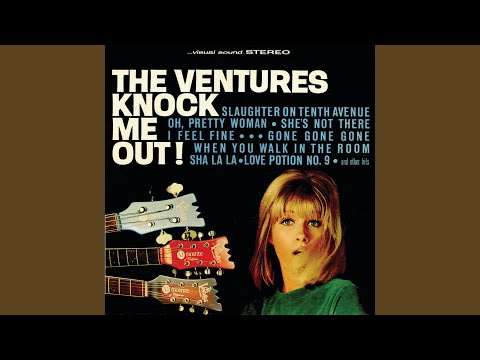
The record was included on their album Play Guitar With The Ventures and other compilations, maintaining its availability for the group's extensive fan base. By 1966, The Ventures were selling particularly well in Japan, where their influence on the development of Japanese popular music was immense and where their entire catalogue was commercially significant in ways that sometimes exceeded their domestic American performance.
The chart success of "Secret Agent Man" demonstrated both The Ventures' continued commercial viability and the remarkable flexibility of their approach, which could absorb and transform virtually any genre of popular material into their distinctive instrumental idiom without losing either the source material's essential character or their own immediately identifiable sound.
02 Song Meaning
The Meaning Behind "Secret Agent Man" as Performed by The Ventures
When The Ventures recorded their instrumental version of "Secret Agent Man," they were doing something that required careful interpretive judgment: taking a song whose identity was substantially carried by its lyrical content and finding a way to make that identity legible through instrumental means alone. The original P.F. Sloan and Steve Barri composition, as performed vocally by Johnny Rivers, depended on its words to establish the character of the secret agent and the nature of his dangerous existence. Without those words, The Ventures had to locate the song's essential meaning in its melodic and rhythmic content, and the question of how they accomplished that reveals something interesting about the nature of musical meaning itself.
The melody of "Secret Agent Man" carries an inherent character that the original composers built into the harmonic and rhythmic structure. The chromatic movement in key passages creates a sense of instability and danger that is immediately recognizable as the musical language of threat and suspense. The rhythm has a forward momentum that suggests purposeful, controlled movement through a hazardous environment. These qualities exist in the notes themselves, independent of any words, and The Ventures' recording released them from the accompaniment role they played in the vocal version and made them the primary expressive content of the recording.
The spy genre had by 1966 developed a recognizable musical vocabulary that extended from the John Barry arrangements for the James Bond films through the television theme music that accompanied programs like The Man from U.N.C.L.E. This vocabulary, characterized by bossa nova-influenced rhythms, chromatic guitar figures, brass stabs, and a particular quality of cool tension, was one that The Ventures could inhabit naturally given their existing sonic identity. Their reverb-heavy guitar sound was already associated with a kind of cinematic atmosphere, and the spy material gave that atmosphere a specific narrative context.
The Ventures' interpretation also demonstrates something about what happens to a song's meaning when it is stripped of its text. Without the specific reference to a "secret agent man" as a character, the recording becomes a more generalized expression of the qualities the character embodies: competence, danger, self-sufficiency, mystery, the capacity to move through threatening situations with controlled grace. These qualities, rendered in pure musical terms, become available to listeners in a more open-ended way than the vocal version allows, because the absence of specific narrative permits the listener to project their own version of those qualities onto the musical experience.
There is also a pleasure in The Ventures' version that is specific to instrumental performance, the pleasure of hearing musicians solve the problem of a familiar melody in an unfamiliar way. Listeners who knew Johnny Rivers' original brought their memory of the words to the instrumental version, which created a kind of silent singing along, a recognition of the melodic line that was simultaneously familiar and newly experienced through the different sonic medium. This doubling of reception, knowing the song in one form while experiencing it in another, was part of what made The Ventures' extensive catalogue of covers so compelling to their audience.
The record's chart success confirmed that purely instrumental music could participate meaningfully in the broader conversation of popular culture, carrying the same kinds of associations and speaking to the same emotional interests as vocal recordings. The Ventures had been demonstrating this for years, but "Secret Agent Man" provided a particularly clear example of how an instrumental performance could not only cover a vocal song but could find within that song meanings that the vocal version had not fully explored.
→ More from The Ventures
View all The Ventures hits →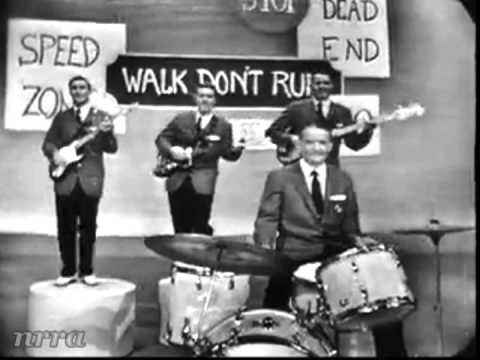

→ More from the 1960s File
View all 1960s hits →




Keep digging