The 1960s File Feature
She'd Rather Be With Me
"She'd Rather Be With Me" — The Turtles' Breezy Triumph California Pop at Its Most Confident Picture the summer of 1967: transistor radios crackled with poss…
01 The Story
"She'd Rather Be With Me" — The Turtles' Breezy Triumph
California Pop at Its Most Confident
Picture the summer of 1967: transistor radios crackled with possibility, and the AM dial was a revolving door of sounds that ranged from psychedelic sprawl to sweet, sun-warmed pop. The Turtles occupied a very particular corner of that dial, one built on lush harmonies, crisp guitars, and an almost ridiculous gift for the hook. She'd Rather Be With Me arrived in May of that year and immediately began climbing in a way that made every jukebox owner in America take notice.
The group had already made their name with Happy Together just months earlier, a record that had lodged itself in the collective consciousness with a persistence bordering on the miraculous. Following a number one hit is one of the oldest and hardest problems in pop music, and many a band has stumbled trying. The Turtles, to their considerable credit, did not stumble.
The Craft Behind the Record
She'd Rather Be With Me was written by Garry Bonner and Alan Gordon, the same songwriting partnership responsible for Happy Together. That consistency of authorship was no accident; the band had found a creative match, and everyone involved understood the value of pressing the advantage. The song carries the same architectural hallmarks as its predecessor: a verse that builds tension through restraint, and a chorus that releases it in a rush of stacked vocal harmony.
The production gave the track a clean, bright sheen that suited both the AM format and the live experience. Howard Kaylan and Mark Volman, the vocal centerpiece of the group, delivered the kind of performance that makes arranging look effortless, their voices locking together with a precision that belied the actual complexity of what they were doing. The rest of the ensemble, including Al Nichol and Jim Pons, provided a rhythmic backbone that kept things driving forward without ever feeling rushed.
An Ascending Chart Run
The Billboard Hot 100 data for this single tells a story of almost textbook momentum. The track debuted on May 13, 1967, entering at number 88 and then proceeding to climb with steady, relentless energy. Week by week it moved: 88, 58, 39, 14, 7, tightening its grip on listeners as radio play intensified and word spread. By the week of June 17, 1967, the song had reached its peak position of number 3, spending a total of eleven weeks on the chart before finally taking its bow.
A peak of number 3 on the Hot 100 in the summer of 1967 placed the record in genuinely elite company. That year saw an extraordinary concentration of talent competing for chart real estate: The Beatles, Aretha Franklin, The Association, and a dozen other forces of nature were all active. Holding the number 3 slot while that competition swirled around you was no minor achievement.
The Summer of 1967 and Its Sonic Landscape
Nineteen sixty-seven is frequently mythologized as the Summer of Love, a season of psychedelic liberation and cultural upheaval. And while that narrative captures something real about the Haight-Ashbury scene and the broader countercultural energy of the moment, the charts told a more complicated story. Most Americans that summer were listening to precisely the kind of polished, well-crafted pop that The Turtles delivered: melodically satisfying, rhythmically sure-footed, and emotionally uncomplicated in the best possible sense.
The song's message, centered on a romantic confidence that borders on cheerful boasting, fit the mood of a pop audience that wanted to feel good. The Turtles were never trying to redraw the boundaries of what music could be; they were trying to make three minutes of pure pleasure, and on She'd Rather Be With Me they succeeded completely.
Legacy and the Turtles' Place in History
The Turtles became one of the defining acts of late-1960s California pop, even though they never quite received the same critical reappraisal that contemporaries like The Byrds or Buffalo Springfield earned in later decades. That slight is understandable by the standards of rock criticism, which has always been more comfortable with artistic ambition than with sheer commercial effectiveness. Yet the ability to craft a song that lodges in the memory after a single hearing, as Bonner and Gordon did twice in quick succession, is a genuine and demanding skill.
Kaylan and Volman would go on to varied careers, including a celebrated stint with Frank Zappa's Mothers of Invention. But the records they made as The Turtles in 1967 represent a peak of their craft. She'd Rather Be With Me in particular holds up with remarkable freshness, its production dated only in the most charming and nostalgic of ways.
Cue it up and let those opening bars wash over you; the feeling it produces, somewhere between giddy and serene, is exactly what good pop music is supposed to do.
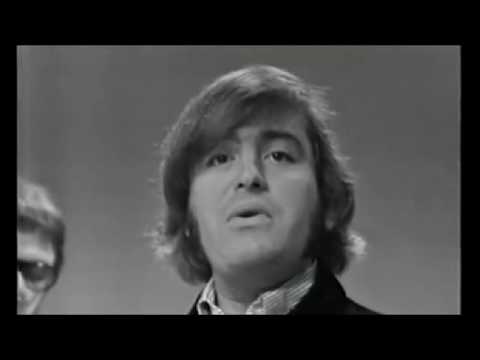
"She'd Rather Be With Me" — The Turtles' singular moment on the 1960s charts.
02 Song Meaning
"She'd Rather Be With Me" — Meaning, Themes, and Lasting Resonance
The Emotional Architecture of Romantic Certainty
At its heart, She'd Rather Be With Me is a song about the intoxicating feeling of being chosen. The narrator describes a scenario in which the object of his affection could be anywhere, doing anything, and yet she consistently, willfully chooses his company. There is no anxiety in this portrayal, no second-guessing or pleading. The emotional register is one of settled, almost luminous confidence, which made it unusual even in the context of 1967 pop, where romantic uncertainty was far more common.
The simplicity of that premise is a strength rather than a limitation. Garry Bonner and Alan Gordon wrote a lyric that captures a feeling most people recognize instantly: the specific warmth of knowing that someone's presence in your life is an active, ongoing choice rather than a default or an obligation. That recognition is what gave the song its immediate accessibility and its long tail of affection.
Era Context: Pop as Emotional Permission
The summer of 1967 was a moment of significant cultural turbulence. The Vietnam War was escalating, urban unrest was spreading across American cities, and the counterculture was becoming increasingly confrontational in its demands for change. Against that backdrop, a pop song about uncomplicated romantic happiness served a real emotional function for listeners who needed something that felt safe and joyful.
The Turtles never positioned themselves as political artists, and She'd Rather Be With Me makes no attempt to engage with the broader anxieties of the era. Some critics have treated this as a limitation; a more generous reading sees it as a deliberate act of emotional generosity, a commitment to offering listeners something that the news cycle emphatically could not.
Harmony as Meaning
It is impossible to separate the lyrical content of this song from its sonic delivery. The stacked vocal harmonies that Howard Kaylan and Mark Volman built with their bandmates are themselves an embodiment of the song's message. Harmony, in the most literal musical sense, requires multiple distinct voices to agree, to find the same moment, to choose to exist in complementary relationship. The sound of the record enacts the feeling the words describe.
This is not a coincidence or an accident of production; it is what the great pop records of the era consistently achieved. The Beach Boys understood it. The Four Seasons understood it. The Turtles, on their best recordings, understood it too. When voices blend that precisely and that warmly, the listener feels the embrace rather than simply hearing about it.
Why It Still Resonates
Decades of cultural distance have not dimmed the song's essential appeal. The feeling it articulates, of being someone's clear and enthusiastic first choice, is not historically specific. It belongs to every era equally. The track has found new audiences through its inclusion in film soundtracks, television programs, and the broader nostalgia economy that has kept 1960s AM pop in continuous circulation.
The song's durability speaks to the universality of its emotional core. Songs about doubt, heartbreak, and longing tend to age in complicated ways, their specifics becoming period-specific markers. Songs about joy and certainty travel better, because joy needs no explanation and no historical footnote to be understood. She'd Rather Be With Me carries its meaning in the open, without irony or complication, and that transparency is the source of its staying power.
→ More from The Turtles
View all The Turtles hits →
→ More from the 1960s File
View all 1960s hits →




Keep digging