The 1960s File Feature
The Happening
The Happening — The Supremes (1967) By the spring of 1967, The Supremes had accumulated a run of chart success unmatched in Motown history. Diana Ross, Mary …
01 The Story
The Happening — The Supremes (1967)
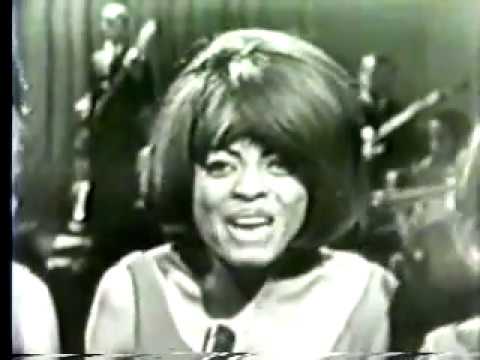
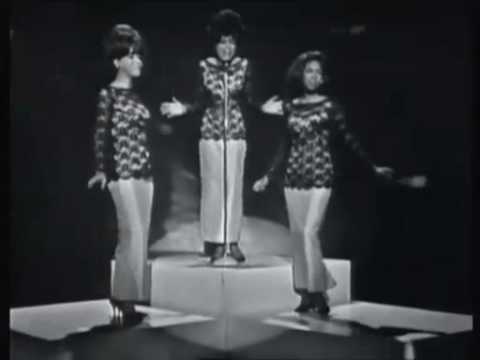
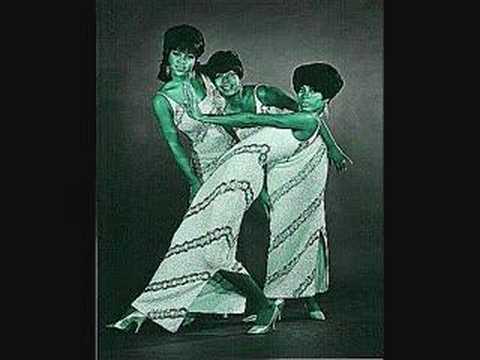
By the spring of 1967, The Supremes had accumulated a run of chart success unmatched in Motown history. Diana Ross, Mary Wilson, and Cindy Birdsong (who had replaced Florence Ballard that year) stood at the peak of their commercial power, and the songwriting and production team of Holland-Dozier-Holland had engineered much of that success. "The Happening" arrived as the culmination of a specific phase in both the group's career and in the broader story of the Motown sound, a record that demonstrated how fluently the label could navigate the crossover between pop spectacle and soul production.
"The Happening" reached number one on the Billboard Hot 100, giving The Supremes their tenth chart-topping single and cementing their position as the most commercially successful act in Motown's roster at that point in the label's history. The achievement was particularly notable given that the group was simultaneously managing significant internal personnel changes; Ballard's departure had created real uncertainty about the trio's stability, but the record's success suggested that the commercial chemistry remained intact.
The song was written and produced by the Holland-Dozier-Holland team, Eddie Holland, Lamont Dozier, and Brian Holland, who were then approaching the end of their enormously productive partnership with Motown. Their work with The Supremes had generated a string of number-one hits through the mid-1960s, and "The Happening" represented their characteristic approach at its most sophisticated: a production that balanced string-driven pop with rhythmic intensity, creating a record that worked on the radio, in clubs, and as the title track for a Hollywood film.
The connection to the 1967 film "The Happening" was central to the song's commercial strategy. The movie, a crime-comedy caper released by Columbia Pictures, needed a title track that could function simultaneously as a promotional vehicle for the film and as a standalone pop single. Holland-Dozier-Holland delivered a composition that met both requirements, with an arrangement energetic enough to open a film yet sufficiently self-contained to make commercial sense without any knowledge of the movie's plot.
The production deployed the full arsenal of Motown's Hitsville USA studio resources. The Funk Brothers, the session band that played on virtually every Motown record of the era, provided the rhythmic foundation, while strings and horns were layered to create the orchestral density that had become a trademark of the label's pop productions. Diana Ross's lead vocal was recorded with the clarity and presence that characterized her work during this period, her voice sitting atop the arrangement with an assertiveness that communicated both confidence and urgency.
The record was released in early 1967 and climbed the Hot 100 rapidly, reaching the top position within weeks of its release and becoming the group's first number-one hit to feature Cindy Birdsong as a member. This timing gave the achievement an additional layer of significance: it demonstrated that The Supremes could maintain their commercial momentum through a significant lineup change, a fact that would have important implications for the group's future trajectory.
Critical reception at the time focused primarily on the record's commercial attributes rather than its artistic ambitions, which was typical for how pop music criticism handled Motown productions during this period. The label had positioned its music as a crossover proposition from the beginning, and success was measured primarily in chart terms. By those metrics, "The Happening" was an unqualified success.
The broader cultural moment was also significant. 1967 was the year of "Summer of Love," a period when the counterculture was exerting significant pressure on mainstream pop's conventions. Against that backdrop, a polished Motown production tied to a Hollywood film might have seemed conservative, but The Supremes' audience had always been broad enough to encompass listeners who were not engaged with the counterculture's aesthetic program. The record's chart success confirmed that the group's appeal remained wide and deep.
Holland-Dozier-Holland departed Motown later in 1967, beginning a legal dispute that would drag on for years. "The Happening" stands as one of the last major productions they completed for The Supremes, making it a significant document not only of the group's commercial peak but also of a productive creative partnership that had shaped the sound of the decade.
02 Song Meaning
Meaning and Themes: The Happening
"The Happening" by The Supremes is a song about the sudden, disorienting experience of losing an idealized love. The narrator describes a moment of awakening, a realization that the world she had constructed around romantic certainty was more fragile than she knew. The "happening" of the title is not a celebration but a rupture, the moment when comfortable assumptions collapse and reality reasserts itself with unsettling clarity.
This thematic territory was familiar in the Motown catalog, where songs about romantic loss and emotional reckoning appeared frequently. What distinguished Holland-Dozier-Holland's approach was their willingness to frame heartbreak not merely as sadness but as a kind of philosophical shock, a confrontation with the limits of one's own understanding. The narrator describes having taken love for granted and now facing the consequences of that complacency, a message that resonated with audiences across generational and cultural lines.
The lyric operates on two levels simultaneously. On the surface, it narrates a specific romantic experience: a relationship that ended before the narrator was prepared for the loss. But beneath that personal story, the song engages with a broader theme about the nature of certainty and the danger of assumptions. The narrator's lesson is not simply that she lost love but that she failed to appreciate what she had while she had it, a lesson that extends well beyond romantic context.
Diana Ross's vocal interpretation amplified these themes considerably. Her delivery combined urgency and vulnerability in a way that made the lyrical content feel immediate rather than abstract. The tone she brought to the record suggested that the experience described was genuinely felt rather than merely performed, which was central to the song's emotional effectiveness. Listeners responded to the sense that the narrator was discovering these truths in real time, working through the implications of loss with the kind of rawness that polished pop production does not always permit.
The connection to the 1967 film of the same name added a layer of irony to the song's reception: a film about a carefree caper provided the occasion for a song about the painful consequences of taking things for granted. This tension between the film's light tone and the song's emotional weight was not necessarily planned, but it gave the record a complexity that pure film promotion rarely achieves.
Within the Supremes' catalog, the song occupies an interesting position as a transitional piece. It belongs to the Holland-Dozier-Holland era of group's career, a period defined by a particular kind of orchestrated emotional intensity, but it also hints at the more introspective material that would follow as the group moved through the late 1960s. The theme of lost certainty and forced maturity would recur in subsequent recordings, making "The Happening" a kind of prologue to a new phase in the group's artistic development.
The song's cultural resonance extended beyond its chart life. As a record that combined catchy pop production with genuine emotional substance, it demonstrated that commercial accessibility and artistic seriousness were not mutually exclusive. This argument, which Motown had been making implicitly through its entire catalog, was nowhere more clearly stated than in records like this one, where a melody designed for maximum radio appeal carried lyrical content that rewarded close attention.
The broader question the song raises, about whether people only understand the value of what they have after they lose it, has made it a durable reference point in discussions of pop music's capacity to address genuine human experience. The Supremes delivered it with the kind of conviction that transcended its commercial context, ensuring that it continued to mean something to listeners long after its film tie-in became a historical footnote.
→ More from The Supremes
View all The Supremes hits →
→ More from the 1960s File
View all 1960s hits →




Keep digging