The 1960s File Feature
My World Is Empty Without You
The Supremes and "My World Is Empty Without You": Motown's Hit Factory at Full Power When "My World Is Empty Without You" by The Supremes debuted on the Bill…
01 The Story
The Supremes and "My World Is Empty Without You": Motown's Hit Factory at Full Power
When "My World Is Empty Without You" by The Supremes debuted on the Billboard Hot 100 on January 15, 1966, it entered at number 78. The track then climbed with remarkable speed over the following five weeks, jumping to 46, then 26, then 13, before peaking at number 5 on February 19, 1966. The single spent eleven weeks on the chart in total, performing strongly enough to confirm that The Supremes remained the most commercially formidable act in the Motown catalog at a moment when the label's dominance of American popular music was at its height.
The composition was the work of Holland-Dozier-Holland: Brian Holland, Lamont Dozier, and Eddie Holland, the songwriting and production team that had been responsible for the majority of The Supremes' string of number-one singles since "Where Did Our Love Go" in 1964. By early 1966, Holland-Dozier-Holland had written and produced a sequence of recordings for the group that had defined a particular sound: rhythmically insistent, melodically accessible, emotionally direct, and arranged with a precision that made each element of the instrumentation serve the overall commercial effect. "My World Is Empty Without You" belonged squarely within this established formula while demonstrating that the team's capacity for variation within the form remained undiminished.
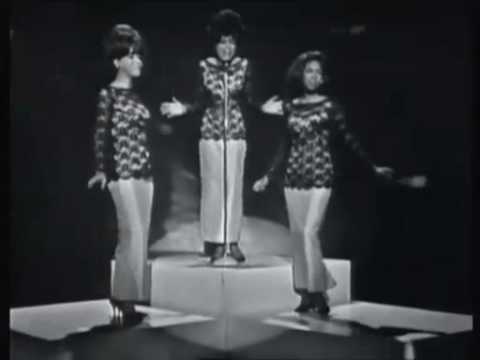
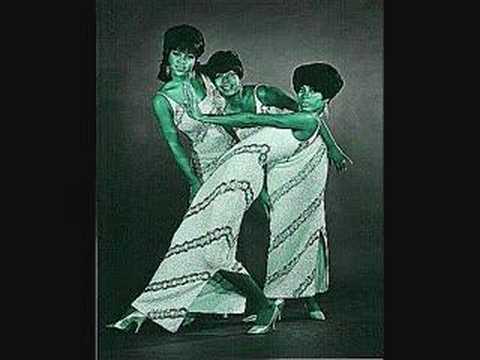
The Supremes at this point consisted of Diana Ross, Mary Wilson, and Florence Ballard, with Ross occupying the lead vocal role that had been consolidated over the preceding two years. The group had been performing together since the early 1960s, initially as The Primettes before signing with Motown as The Supremes in 1961. Their commercial breakthrough in 1964 had transformed them from promising Motown acts into the label's flagship group, and by 1966 they were one of the most recognized names in American popular music, with a crossover appeal that extended far beyond the rhythm and blues audience that constituted Motown's original market base.
Motown Records under Berry Gordy had developed an industrial approach to popular music production that was both artistically sophisticated and commercially ruthless. The label's in-house studio musicians, known as the Funk Brothers, provided the instrumental foundation for virtually all of the label's recordings during this period; the songwriting teams operated in competitive proximity to one another; and the quality control process was rigorous enough that recordings not deemed commercially competitive were withheld from release regardless of their artistic quality. "My World Is Empty Without You" passed through this system and emerged as a finished product that exemplified what the machine was capable of producing.
The arrangement of the single drew on the rhythmic and harmonic vocabulary that Holland-Dozier-Holland had refined across their previous work with The Supremes and other Motown acts. The bass line, played by one of the Funk Brothers, provided an insistent rhythmic drive that complemented the declarative quality of the vocal melody. The production favored a bright, forward sound that translated effectively across the range of speaker systems and radio transmission conditions that characterized the commercial radio landscape of the mid-1960s. This technical dimension of the recording's design was a consistent feature of Holland-Dozier-Holland's production approach.
The chart timing of the single placed it in competition with some of the strongest commercial product of the era, yet it reached number 5 with relative ease. The Supremes' position on the Motown roster meant that their releases received preferential promotional treatment from a label that understood the commercial value of sustaining momentum for an artist at the peak of their commercial run. The promotional infrastructure that Gordy had built, including the Motown Artist Development department that coached artists in stage presentation and public behavior, ensured that the group's commercial brand was consistently reinforced across multiple platforms simultaneously.
In retrospect, "My World Is Empty Without You" occupies an important place in The Supremes' catalog as one of the recordings that sustained their commercial peak through the mid-1960s even as the popular music landscape was shifting rapidly around them. The British Invasion, the emergence of soul-influenced rock acts, and the growing complexity of the album market were all beginning to reshape the commercial environment in which the Motown sound operated. That "My World Is Empty Without You" reached number 5 on the Hot 100 during this period of transition is a testament to the durability of the Holland-Dozier-Holland formula and the effectiveness of Diana Ross's vocal performance within it.
02 Song Meaning
Absence as Architecture: The Emotional Logic of "My World Is Empty Without You"
"My World Is Empty Without You" by The Supremes, written and produced by Holland-Dozier-Holland and released in early 1966, is a study in how popular song can use the vocabulary of deprivation and loss to create a powerful and commercially effective emotional statement. The song's central premise is announced in its title and sustained throughout: the speaker describes a world from which the beloved has been removed, and the consequence of that removal is a total collapse of meaningful experience. The world does not merely become less pleasant without the beloved; it becomes empty, which is a more radical claim about the dependency of meaning itself on love.
This philosophical dimension of the lyric reflects the sophistication that Holland-Dozier-Holland consistently brought to their best work for The Supremes. The songwriting team understood that the most commercially effective pop songs were those that gave listeners an opportunity to recognize and validate their own emotional experiences, and that the most universally recognizable emotional experiences are those organized around loss, longing, and the asymmetry of romantic attachment. By describing the world as "empty" rather than merely "sad" or "lonely," the song makes a claim about the structure of experience itself: that without love, the ordinary furniture of daily life loses its capacity to signify or to satisfy.
The choice to render this emotional state through Diana Ross's lead vocal performance added another dimension to the song's impact. Ross's vocal style during this period was characterized by a quality of controlled expressiveness: she communicated emotion with clarity and precision rather than through the kind of gospel-inflected exuberance that characterized other Motown singers of the era. This restraint made the declarations of emptiness in the lyric feel more rather than less convincing, because the emotional control of the performance suggested a speaker who had moved beyond the initial shock of loss into a sustained state of absence that had become a permanent condition of her existence.
The Motown production context shaped the emotional register of the recording in ways that are worth considering carefully. The label's house style emphasized rhythmic drive, melodic accessibility, and a brightness of sonic texture that was partly a commercial calculation and partly a reflection of Berry Gordy's conviction that Black popular music should present itself with a particular kind of polish and sophistication to maximize crossover appeal. The arrangement of "My World Is Empty Without You" works within these parameters while ensuring that the emotional content of the lyric is never overwhelmed by the production's formal qualities.
The song also participates in a tradition of Motown recordings that explored what might be called the phenomenology of romantic dependency: the way in which a person in love experiences the presence and absence of the beloved as conditions that structure the entirety of their perceptual world. Songs in this tradition do not treat love as one experience among many but as the organizing principle of experience itself, so that its removal produces not grief in the ordinary sense but something closer to a collapse of the world's meaning-structure. This is a philosophically ambitious claim to be making in the context of a three-minute pop single, and Holland-Dozier-Holland make it with characteristic directness.
The commercial success of the single demonstrated that audiences in 1966 were receptive to this particular emotional articulation. The song reached number 5 on the Hot 100 and performed strongly across multiple demographic categories, suggesting that the experience it described, or something sufficiently like it, was widely recognizable. In this respect, "My World Is Empty Without You" performs one of the primary functions of popular song: it gives public, shared form to experiences that individuals might otherwise navigate in isolation, creating through the act of communal listening a temporary community of recognition around a set of feelings that might otherwise seem too private for expression.
→ More from The Supremes
View all The Supremes hits →


→ More from the 1960s File
View all 1960s hits →




Keep digging