The 1960s File Feature
Love Is Here And Now You're Gone
Love Is Here and Now You're Gone: Holland-Dozier-Holland at the Peak of the Motown Machine "Love Is Here and Now You're Gone" stands as one of the most polis…
01 The Story
Love Is Here and Now You're Gone: Holland-Dozier-Holland at the Peak of the Motown Machine
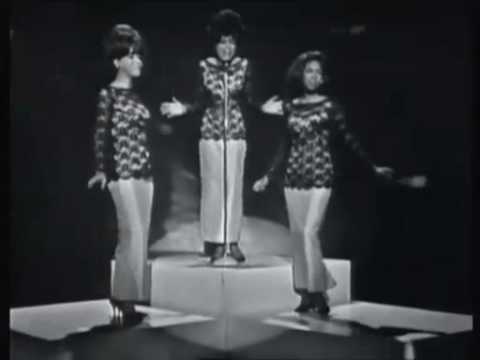
"Love Is Here and Now You're Gone" stands as one of the most polished examples of the Holland-Dozier-Holland songwriting and production partnership, capturing the Motown formula at a moment of near-perfect refinement. Released in early 1967 on Motown Records, the record reached number one on the Billboard Hot 100, becoming one of the signature chart triumphs of the Supremes' remarkable mid-decade run and confirming the trio's position as Motown's most commercially powerful act. The song's chart success and production quality represent the creative peak of a collaboration between the Supremes and Holland-Dozier-Holland that produced an extraordinary sequence of Hot 100 number ones across the mid-1960s.
By 1967, the Holland-Dozier-Holland team of Brian Holland, Lamont Dozier, and Eddie Holland had developed a production approach that was both formulaic in the best sense, meaning it produced consistent, repeatable results, and genuinely inventive within its own parameters. The team worked with an in-house roster of session musicians known as the Funk Brothers, whose contributions to the Motown sound have been extensively documented. Instruments were recorded at Hitsville U.S.A., Motown's home studio in Detroit, which had acoustic properties that contributed significantly to the recognizable sound of the label's records from this period.
Diana Ross led the vocal on the track, as was standard for Supremes recordings at this point in their career. Mary Wilson and Florence Ballard provided the harmonic support that gave the group its signature texture. The arrangement is characteristically lush, featuring strings, layered vocals, and the rhythmic precision of the Funk Brothers, but it never overwhelms the emotional delivery at the center of the record. Holland-Dozier-Holland had an almost clinical understanding of how to balance production elements so that the arrangement enhanced rather than buried the vocal performance.
"Love Is Here and Now You're Gone" was the fourth consecutive number-one single the Supremes achieved on the Hot 100, an almost unprecedented run in the competitive pop landscape of the mid-1960s. The Supremes had established themselves as the premier act of the Motown roster, capable of generating both critical praise and enormous sales, and each new Holland-Dozier-Holland single was received as a major event in popular music. The record-buying public's appetite for the group seemed to have no obvious ceiling during this period.
The song's arrangement follows a structure that Holland-Dozier-Holland had refined across numerous recordings: a controlled introduction, a vocal line that begins with conversational intimacy before expanding into the chorus, and a production that builds tension and release rhythmically. The team was particularly skilled at creating the sensation of emotional forward momentum within a pop song, the feeling that the music is pulling the listener somewhere specific, and "Love Is Here and Now You're Gone" exemplifies this skill.
Motown in 1967 was operating at remarkable commercial and artistic efficiency. Berry Gordy's quality control system, which subjected new recordings to internal review panels before release, helped ensure that only the strongest material reached the public. The system was demanding and sometimes contentious, particularly for artists who wanted more creative autonomy, but its results in terms of chart performance were difficult to argue with. The Supremes' string of number ones was the most visible evidence that the system worked.
The Holland-Dozier-Holland partnership would dissolve later in 1967 and formally end in 1968, following disputes with Motown over compensation and creative control. Their departure marked the end of the Supremes' most commercially dominant period and represents one of the significant turning points in the Motown story. "Love Is Here and Now You're Gone," released just before those tensions became public, thus sits near the end of an extraordinary creative partnership that had produced some of the most commercially successful pop records of the decade.
The song has maintained its reputation as one of the stronger entries in the Supremes' catalog precisely because it demonstrates all the qualities that made the Holland-Dozier-Holland Supremes records so effective: melodic strength, production sophistication, and the particular emotional directness of Diana Ross's vocal style. Its chart performance, reaching the summit of the Hot 100, places it alongside a small number of records from the period that achieved the highest level of commercial validation available in the American music industry.
Retrospective assessments of the Motown catalog consistently place the Holland-Dozier-Holland Supremes recordings among the most important popular music of the 1960s, and "Love Is Here and Now You're Gone" is regularly cited as a representative example of what that partnership achieved at its most assured.
02 Song Meaning
What "Love Is Here and Now You're Gone" Means: Abandonment, Regret, and the Supremes' Emotional World
"Love Is Here and Now You're Gone" belongs to a recurring emotional territory that the Supremes and Holland-Dozier-Holland explored with particular consistency and skill: the experience of being left by a romantic partner, and the process of understanding, retrospectively, how that loss came about. The song's narrator addresses a lover who has departed, examining the relationship in the past tense and acknowledging her own role in its failure. This element of self-awareness distinguishes the song from simpler heartbreak narratives and gives it a degree of psychological complexity unusual in pop music of the era.
The title itself performs a neat rhetorical move, compressing the essential drama of the song into a single grammatically ambiguous phrase. "Love is here and now you're gone" can be read as a statement of bitter irony: love finally arrived, or finally became clear, at precisely the moment the beloved departed. It can also be read as two separate observations in tension: love remains present (perhaps as a feeling, a memory, or a possibility) even though the person has left. Both readings are available simultaneously, and the song's lyrical content supports the ambiguity rather than resolving it.
Diana Ross's vocal performance is essential to how the song's meaning registers. Her delivery combines surface composure with an undercurrent of genuine emotion, a combination that the Holland-Dozier-Holland production style consistently supported. The arrangement surrounds her voice with warmth and momentum, but Ross finds the spaces within the arrangement where the vulnerability in the lyric can be heard. This was one of her particular gifts as a vocalist: the ability to project emotional intimacy even within a fully produced, orchestrated pop record.
The song fits into a broader pattern in the Supremes' catalog in which the female narrator is positioned as emotionally reflective, looking back at a relationship and trying to understand what happened rather than simply expressing raw grief or anger. This reflective stance gives the songs a quality that distinguished them from some of their contemporaries in the girl-group genre. The narrator of "Love Is Here and Now You're Gone" is not passive; she is actively processing her experience and arriving at insights about her own behavior that carry real emotional cost.
Holland-Dozier-Holland's compositional approach contributed to this effect by structuring the song around a narrative arc that moves from observation to acknowledgment to something resembling acceptance, though an acceptance tinged with regret rather than resolution. The musical arrangement mirrors this arc, building in intensity and then releasing it in a way that feels emotionally cathartic rather than simply conclusive. This structural intelligence is one of the reasons the song has remained compelling over decades of changing pop fashion.
In the context of 1967, the song's emotional register also spoke to the broader social experience of young Black women navigating romantic and personal life in America, an experience that Motown records consistently addressed through the language of love and loss. The Supremes were the most visible Black female pop act of their generation, and their records carried a cultural weight that extended beyond their immediate lyrical content. When Diana Ross sang about love, betrayal, and self-understanding, she was doing so as a figure who embodied significant aspirations and expectations for a large segment of the American public.
The song's position as a Hot 100 number one meant that this emotional content reached the widest possible audience. The commercial success of "Love Is Here and Now You're Gone" was not incidental to its meaning but part of it: the Supremes' ability to communicate these experiences through the most popular musical formats of their time was itself a cultural achievement with implications beyond chart statistics. The song remains a touchstone of the Motown era precisely because it combines genuine emotional depth with the commercial polish that defined the label's approach, and does so without allowing either quality to compromise the other.
→ More from The Supremes
View all The Supremes hits →



→ More from the 1960s File
View all 1960s hits →




Keep digging