The 1960s File Feature
Look Through My Window
"Look Through My Window" — The Mamas they were clearly a group of genuinely exceptional talent, combining four voices in ways that nobody else in popular mus…
01 The Story
"Look Through My Window" — The Mamas & the Papas and the Sound of California Dreaming
The Group at Its Zenith
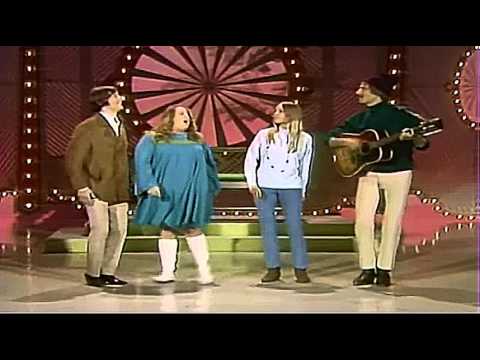
Autumn 1966 found the Mamas and the Papas at one of the most interesting intersections of their brief, brilliant career. They had arrived on the national scene barely a year earlier with "California Dreamin'," a record so distinctive and so perfectly timed that it made them immediately iconic. The follow-up singles had confirmed that the first hit was not an anomaly; they were clearly a group of genuinely exceptional talent, combining four voices in ways that nobody else in popular music was doing. By October 1966, when "Look Through My Window" entered the Hot 100, they had become one of the defining sounds of a cultural moment, and the question everyone was asking, including the group members themselves, was how long that moment could last.
John Phillips, Cass Elliot, Michelle Phillips, and Denny Doherty had found each other in New York's folk scene and migrated to Los Angeles, where their sound acquired the warmth and luminosity that became their signature. The Los Angeles of 1966 was a very particular place, flush with music industry money and creative energy, shaped by the weather and the light in ways that seemed to express themselves directly in the recordings coming out of its studios. The Mamas and the Papas embodied this Californian musical identity more completely than perhaps any other act of the era.
John Phillips Behind the Song
John Phillips wrote "Look Through My Window," as he wrote most of the group's best-known material. His gift for melody was exceptional, with an ear for the kind of soaring, open-spaced tune that the group's four-part harmony could transform into something genuinely stunning. The song has the characteristic Phillips quality of sounding both effortless and precisely constructed, as if it arrived fully formed but actually reflects a songwriter who understood exactly how harmony worked and wrote specifically to exploit it.
The recording was produced by Lou Adler, the Dunhill Records executive who had shepherded the group's career from the beginning and understood how to translate their live vocal chemistry into studio recordings that maintained the organic quality of their sound while adding the production polish that pop radio required. The combination of Phillips's compositional gifts, the group's extraordinary vocal blend, and Adler's production instincts was what had made their records so distinctive.
A Seven-Week Climb Through Autumn
Debuting at number 65 on October 22, 1966, "Look Through My Window" moved steadily upward through the autumn weeks, reaching 51, then 34, then settling into the mid-20s as November arrived. The song peaked at number 24 on November 26, 1966, its seventh week on the chart. A top-twenty-five placing represented solid commercial performance, though the group had already demonstrated they could reach higher: "Monday, Monday" had gone to number one, and "I Saw Her Again" had reached the top five.
Seven weeks of consistent chart presence through the autumn of 1966 placed "Look Through My Window" in good company. The competition during that period was formidable, with strong releases from across the pop landscape competing for radio time and listener attention. The song's ability to sustain nearly two months of chart momentum reflected genuine affection from radio programmers and their audiences.
The Voice Combination as Instrument
What made the Mamas and the Papas unique was not simply that they had four good singers but that their voices combined in ways that seemed almost chemically specific to that exact combination. Cass Elliot's full, powerful contralto; Denny Doherty's warm, expressive tenor; John Phillips's baritone; Michelle Phillips's lighter, more fragile soprano: the four voices created a whole that exceeded what any individual could accomplish alone, and "Look Through My Window" showcases this blend with particular clarity.
The opening bars demonstrate exactly why the group mattered, voices entering and weaving together in a pattern that sounds both complex and inevitable, as if these four people were always going to sound exactly like this together. The fact that the combination was historically accidental, the product of circumstance and chemistry rather than design, made it if anything more remarkable.
A Snapshot Before the Fractures
The Mamas and the Papas would effectively cease to operate as a creative unit within less than two years of "Look Through My Window" reaching the chart. Internal tensions, the strains of sudden fame, and the complications of the personal relationships within the group all contributed to an increasingly difficult working environment. The recordings from this period in 1966 capture the group at a moment of genuine cohesion, before the fractures became too deep to paper over with studio time and professional obligation.
Revisiting "Look Through My Window" now is to hear a particular kind of California innocence that was already beginning to darken by the time the song was released, the optimism of the early counterculture before the later 1960s began its complicated revision of everything that early moment had promised. Put it on and let those four voices carry you back to when that promise still felt unambiguously real.
"Look Through My Window" — The Mamas & The Papas' singular moment on the 1960s charts.
02 Song Meaning
The Meaning of "Look Through My Window" — Invitation and Longing in the California Sound
The Window as Threshold
Windows occupy a particular symbolic space in romantic poetry and song. They mark the boundary between inside and outside, between the private self and the shared world, between the observer and the observed. A window that one person invites another to look through is simultaneously an act of vulnerability and welcome, an opening of the interior life to someone whose gaze is desired. "Look Through My Window" works with this imagery to create a song about the specific longing of wanting to be truly seen by another person, to have someone look past the exterior and understand what is inside.
John Phillips shaped the lyric around this invitation with characteristic directness, making the emotional request explicit rather than burying it in metaphor. The directness was appropriate because the Mamas and the Papas' musical project was never about obscurity or difficulty; it was about connecting with listeners through emotional honesty delivered in irresistible melodic packages. "Look Through My Window" delivers exactly this, a clear emotional request wrapped in harmony so beautiful that resistance becomes nearly impossible.
The Sound of California Longing
The Mamas and the Papas were architects of what might be called the California Sound's emotional vocabulary. "California Dreamin'" had established longing as the group's emotional home territory, the specific ache of wanting to be somewhere you are not, to have something you lack, to feel more fully present in your own life than ordinary circumstances allow. "Look Through My Window" operates in the same emotional register, though the object of longing is another person rather than a place.
The Los Angeles of 1966 seemed, from the outside, like the place where longing went to resolve itself. The weather, the music, the cultural energy: everything suggested arrival rather than aspiration. The group's persistent engagement with longing even from within this apparently charmed environment suggested something more complicated and honest about what it meant to actually live there. Paradise did not resolve the fundamental human condition of wanting what one did not yet fully have.
Harmony as Emotional Argument
The four-part harmony that defines the Mamas and the Papas' recordings is not merely decorative but structural, making an argument about the nature of connection itself. When four voices blend into a unified sound while remaining individually distinct, they model a kind of relationship that the songs' lyrics often describe, the possibility of genuine intimacy that does not require the dissolution of individual identity. You can hear yourself and the other in the harmony simultaneously.
"Look Through My Window" uses this quality of the group's sound to amplify the lyric's emotional request. The invitation to be seen and known is delivered by voices that are already demonstrating the possibility of being both individual and unified, both separate and deeply connected. The medium enacts the message in a way that solo performance could not achieve, and this coherence between form and content is part of what gives the recording its emotional power.
The Counterculture's Romantic Ideal
The mid-1960s counterculture had particular ideas about love and connection, ideals about authenticity and openness that were sometimes more programmatic than experientially grounded. Songs like "Look Through My Window" both reflected and shaped these ideals, offering listeners a musical model of what genuine openness between people might sound like. The invitation of the title, the willingness to be observed and known, expressed values that the counterculture was beginning to articulate in more explicitly ideological terms.
The song's appeal, however, transcended any specific ideological moment. The desire to be truly seen by another person is not a historical artifact of the 1960s but a permanent feature of human experience that any listener in any era can recognize. The counterculture's idealism gave the song its specific coloring, but the emotional core underneath it belongs to no particular time or place. This universality is part of why the recording still moves listeners who were not yet born when it was made.
→ More from The Mamas & The Papas
View all The Mamas & The Papas hits →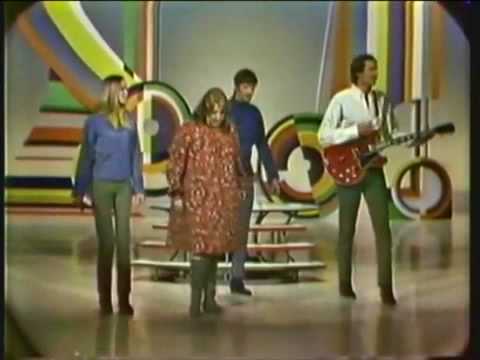


→ More from the 1960s File
View all 1960s hits →




Keep digging