The 1960s File Feature
Do You Wanna Dance
The Mamas and the Papas Cover "Do You Wanna Dance" in 1968 By 1968, The Mamas and the Papas were navigating a period of profound internal and artistic diffic…
01 The Story
The Mamas and the Papas Cover "Do You Wanna Dance" in 1968
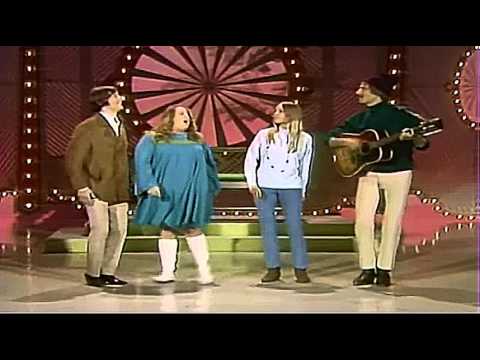
By 1968, The Mamas and the Papas were navigating a period of profound internal and artistic difficulty that would lead to their dissolution within months. Their remarkable run of harmony-driven pop hits from the mid-1960s had established them as one of the most distinctive vocal acts of the era, but the personal dynamics and creative tensions within the group had become unsustainable. Their recording of "Do You Wanna Dance" — a cover of Bobby Freeman's 1958 rock and roll classic — reached number seventy-six on the Billboard Hot 100 and spent five weeks on the chart, one of the final entries in a discography that had included far more commercially prominent recordings in the years immediately preceding.
The original "Do You Wanna Dance" was written and recorded by Bobby Freeman in 1958, a San Francisco artist whose recording became a significant early rock and roll hit and established the song as a durable piece of popular repertoire. Freeman's version captured the uncomplicated social energy of early rock and roll, with a directness and physical immediacy that reflected the cultural moment of its composition. The song became one of the more frequently covered pieces of its era, with versions appearing across different formats and stylistic orientations through the 1960s and beyond. The Beach Boys, among others, had recorded it before The Mamas and the Papas came to the material.
The Mamas and the Papas' relationship to rock and roll was more complicated than their polished vocal-group sound might suggest. John Phillips, whose compositional gifts had been central to their most successful recordings, came from a folk background that had been transformed by the commercial pop sensibility that defined the group's peak period. Cass Elliot's roots were in folk and blues, while Denny Doherty and Michelle Phillips brought their own musical backgrounds to the ensemble. The decision to cover "Do You Wanna Dance" in 1968 reflected the more straightforwardly rock-oriented direction the group was exploring at the end of their career, a shift away from the baroque folk-pop that had defined their commercial peak.
The recording was released on Dunhill Records, the label that had been the group's commercial home throughout their most productive period. By 1968, Dunhill was managing a group whose internal situation made consistent recording output difficult, and the cover choice reflected in part the practical reality that generating new original Phillips compositions had become harder as the personal circumstances surrounding the group deteriorated. Covering established material was a pragmatic solution that allowed the group to continue releasing product while the more complicated business of producing original recordings was stalled by circumstances beyond the label's control.
The production of the 1968 recording brought the song into the sonic context of late-1960s Los Angeles pop, with an arrangement that updated the original's rock and roll simplicity without entirely stripping it of its essential energy. The group's vocal blend, which remained one of the finest in contemporary pop even as the relationships producing it had become deeply strained, gave the recording a richness that the original's more modest production could not match. The interplay between Cass Elliot's powerful alto and the other voices in the ensemble created a textural depth that demonstrated why the group had been so commercially successful during their peak period, even as the circumstances surrounding the recording told a very different story about the state of the enterprise.
The five-week chart run and peak of seventy-six on the Hot 100 placed the recording well below the positions the group had occupied at their commercial apex. "California Dreamin'" had reached number four in 1966, "Monday Monday" had hit number one, and a succession of subsequent singles had maintained positions in the top twenty through much of the following two years. The relative commercial disappointment of "Do You Wanna Dance" was less a reflection of the recording's quality than of the changed circumstances surrounding the group and the shifting pop landscape of 1968, which was moving toward harder rock sounds and away from the harmony-pop format that The Mamas and the Papas had done so much to define.
The group's dissolution came shortly after this period, with the official announcement arriving in 1968. John Phillips pursued a solo career and production work, Cass Elliot became a successful solo artist before her early death in 1974, and Michelle Phillips and Denny Doherty followed their own trajectories outside the group framework. Various reunion configurations appeared in subsequent decades, but the original four-member lineup recorded nothing further after the 1968 period that "Do You Wanna Dance" represented.
The recording serves in retrospect as a document of the group's final professional phase, demonstrating that the vocal gifts that had made them exceptional were still present even as everything else that had sustained their commercial peak was falling away. The choice of Bobby Freeman's dance record, with its uncomplicated invitation to physical participation, suggested a desire to recapture something essential and joyful at a moment when the group's interior life was anything but. Whether that desire was realized in the recording is a question that different listeners have answered differently, but the attempt itself was genuine, and the result was a track that honored the spirit of the original while adding the particular sonic signature that made anything The Mamas and the Papas recorded immediately recognizable.
02 Song Meaning
The Invitation to Dance as Closing Statement: The Mamas and the Papas in Decline
"Do You Wanna Dance" is one of the most transparent invitations in the popular repertoire — a song that makes its purpose explicit in its title and fulfills it without complication or subtext in its musical content. Bobby Freeman's 1958 original was constructed from the simple social energy of early rock and roll, a music that understood physical response as one of its primary purposes and did not apologize for that directness. When The Mamas and the Papas covered it a decade later, they brought to it the considerably more elaborate musical identity they had built through their mid-1960s peak, creating a version that honored the original's essential spirit while inevitably filtering it through the group's own artistic character.
The interest of the recording lies partly in the contrast between its chosen material and the context in which it was made. A song about dancing — about the uncomplicated desire to move in company with another person — was recorded by a group in the process of irrevocably falling apart. The internal dynamics of The Mamas and the Papas in 1968 were defined by a complexity of personal relationships and professional frustrations that could not have been further removed from the breezy social invitation the song extended. Whether this contrast produces irony, poignancy, or simply coincidence is a matter of interpretive preference, but it gives the recording a quality of loaded innocence that purely biographical readings tend to overexploit and purely musical readings tend to miss entirely.
The song's durability as a covered piece of repertoire speaks to the robustness of its central proposition. An invitation to dance is an invitation to participate, to be present in the physical moment, to set aside whatever complications of interior life might otherwise dominate one's attention. In the context of popular music, this invitation functions as one of the form's most honest statements of purpose: the music wants you to move. Freeman's composition made that want explicit, and the many artists who have recorded it since have found in that explicitness a freedom from the more demanding interpretive work that more complex material requires. The song asks only that its performers honor its energy, and it rewards that honoring with an audience response that more sophisticated material often cannot match.
The Mamas and the Papas' version contributed a vocal richness to the material that the original did not have and did not need, but that the group could not help bringing to any music they recorded. Cass Elliot's voice in particular added a weight and warmth to the ensemble that transformed the song's sonic texture without altering its fundamental character. This is one of the more interesting features of the recording as a musical document: it demonstrates how much a vocal ensemble of genuine distinction can change the emotional temperature of straightforward material without changing its meaning. The song still means exactly what Bobby Freeman meant it to mean in 1958. It just sounds considerably different saying it.
As a closing chapter to one of the more remarkable commercial and artistic runs in 1960s pop, "Do You Wanna Dance" is simultaneously too slight and too resonant to serve as a definitive statement. It was not the group's most ambitious recording or their most successful, and it captured them neither at their creative peak nor at their most troubled nadir. It captured them doing what pop musicians do when other things are not working: finding a good song, getting into the studio, and making a record. The simplicity of that act, performed by artists whose capacity for complexity had defined their most celebrated work, has its own kind of meaning — one that requires no particular interpretive framework to appreciate.
→ More from The Mamas & The Papas
View all The Mamas & The Papas hits →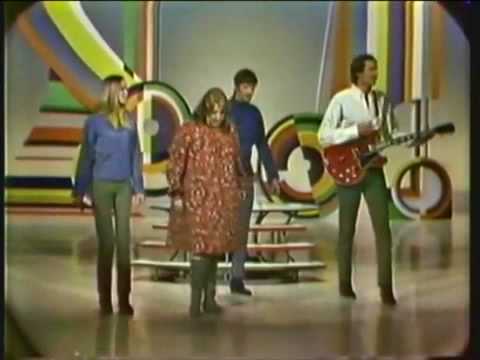

→ More from the 1960s File
View all 1960s hits →




Keep digging