The 1960s File Feature
Do You Believe In Magic
"Do You Believe In Magic" — The Lovin' Spoonful Greenwich Village and the Sound of Something New Picture the summer of 1965. The British Invasion had reshape…
01 The Story
"Do You Believe In Magic" — The Lovin' Spoonful
Greenwich Village and the Sound of Something New
Picture the summer of 1965. The British Invasion had reshaped American pop radio in ways that felt seismic, and young musicians up and down the East Coast were figuring out what it meant for a homegrown sound to survive in that new landscape. In a cramped apartment near Washington Square Park in New York's Greenwich Village, a loose congregation of musicians called The Lovin' Spoonful was putting the finishing touches on a song that would answer that question with irresistible confidence. The group, centered on the partnership of John Sebastian and Zal Yanovsky, had formed just the year before with a shared love of jug band music, folk, blues, and the kind of unguarded joy that formal rock arrangements sometimes squeezed out.
Sebastian wrote "Do You Believe In Magic" as both a mission statement and an invitation. The song captures a feeling that most people have had but rarely heard articulated in a pop context: the almost physical sensation of music overwhelming your resistance, your hesitation, your self-consciousness. It was personal without being confessional, philosophical without being pretentious.
The Recording and the Sound
The track was recorded in 1965 and released by Kama Sutra Records, the label that had signed the group and would release their most important early material. The production leans into an infectious looseness, with acoustic guitar at the center and a rhythm section that bounces rather than pounds. Yanovsky's guitar work adds a subtle jangle, and Sebastian's harmonica playing connects the record to the jug band and blues traditions the group had been absorbing for years.
What distinguishes the arrangement is its lightness. At a moment when rock music was becoming more aggressive in response to electric blues influences on both sides of the Atlantic, The Lovin' Spoonful pointed in a different direction: toward warmth, daylight, and something approaching glee. Radio programmers responded immediately to how different it felt from the harder-edged sounds competing for attention that summer.
The Chart Run
The single debuted on the Billboard Hot 100 on August 21, 1965, entering at position 96. What followed was a textbook steady climb: 79 the next week, then 64, then 42, then 28. The song continued to rise, and by October 16, 1965, it had reached its peak of number 9 on the Hot 100. It spent 13 weeks total on the chart, a run that confirmed The Lovin' Spoonful as a serious commercial force and not merely a critics' favorite from the Village folk scene.
The timing was significant. In the weeks surrounding the song's chart peak, the Hot 100 was crowded with British acts and California sounds. A New York folk-pop record with a jug band soul carving out that kind of real estate said something definitive about the breadth of the audience's appetite.
A Career Launched
The success of "Do You Believe In Magic" opened the door to a remarkably productive run for The Lovin' Spoonful. Over the next two years, the group would place a series of singles on the Hot 100, including "Summer in the City," which reached number 1 in 1966, and "Daydream," which climbed to number 2. Sebastian's songwriting established him as one of the more original voices in American pop during the mid-1960s, a figure who could absorb influences from Appalachian folk, Mississippi blues, and New York street music and synthesize them into something radio-ready and emotionally direct.
The song also helped define a subgenre that would later be called "good-time music" or "sunshine pop," though The Lovin' Spoonful's version always carried a little more grit and rootsiness than those labels suggest. Sebastian had grown up in Greenwich Village in a musical family and had a genuine connection to American vernacular traditions that gave the group's work more depth than straightforward pop cheerfulness.
Enduring Presence
Decades after its original chart run, "Do You Believe In Magic" has become one of those songs that exists at the edge of cultural furniture, recognizable to people who couldn't tell you the name of the band. It has appeared in films, television commercials, and sporting event soundtracks, each new context drawing on the song's core quality: the ability to make a listener feel like music itself is the subject, not just the vehicle. The song argues for the power of a good record in the most direct terms possible, and time has not weakened that argument.
Put it on and you will understand exactly what 1965 felt like on a good afternoon.
"Do You Believe In Magic" — The Lovin' Spoonful's singular moment on the 1960s charts.
02 Song Meaning
"Do You Believe In Magic" — Meaning and Legacy
The Central Argument
At its core, "Do You Believe In Magic" is a piece of advocacy. The song doesn't simply celebrate music; it makes a case for it, addressing a listener who might be skeptical or guarded and inviting them toward an experience they have been reluctant to trust. John Sebastian frames the emotional release that music provides not as escapism but as a kind of truth-telling, a way of accessing feelings that ordinary conversation and ordinary life tend to suppress. The question in the title is genuine rather than rhetorical. The song is genuinely asking.
The lyrics describe the experience of hearing music that moves you physically before you have time to analyze it intellectually. This is a surprisingly sophisticated observation dressed in deceptively simple language. Sebastian locates magic not in mysticism but in the body's involuntary response to rhythm and melody, which is a more interesting and more honest claim than most pop songs of the era attempted.
Folk Roots, Pop Ambitions
The song emerges from a specific tradition. The Greenwich Village folk scene of the early 1960s had produced artists who took the transmission of feeling through music seriously, as a kind of social and even spiritual responsibility. Sebastian had absorbed those values, and "Do You Believe In Magic" carries them into a pop context where they were not usually welcome. The tension between the song's folk-rooted sincerity and its commercial aspirations is part of what makes it compelling: it wants to reach a mass audience, but it doesn't condescend to that audience or simplify its message to get there.
The Social Context of 1965
By mid-1965, American culture was beginning to register the first tremors of the upheaval that would define the rest of the decade. The civil rights movement was reshaping the country's self-understanding, the Vietnam War was escalating, and young people were developing a sense that their generational experience was distinctly their own, separate from their parents' world. Music was becoming the medium through which that generational identity was expressed and consolidated. A song that explicitly argued for music's transformative power was therefore also, in a subtle way, making a claim about the authority of youth culture. If music has this power, and this is music that young people are making and listening to, then that community carries a particular kind of significance.
Why It Resonated Then and Now
The song's longevity is partly explained by the universality of its subject. Everyone has experienced the sensation Sebastian describes, a moment when a piece of music cuts through and changes the emotional temperature of a room or a moment. The song gives that experience a name and a voice, which creates a bond between the listener and the record each time it is heard.
It also resonated because of its emotional honesty. The mid-1960s pop landscape contained a great deal of music that performed happiness without quite achieving it, that was polished into a surface so smooth it slipped past the listener's defenses without leaving a mark. "Do You Believe In Magic" has rougher edges, a slight looseness in the rhythm, a harmonica that sounds like something lived rather than arranged. That quality of authenticity is what allowed it to endure beyond the immediate commercial moment.
"Do You Believe In Magic" — The Lovin' Spoonful's singular moment on the 1960s charts.
→ More from The Lovin' Spoonful
View all The Lovin' Spoonful hits →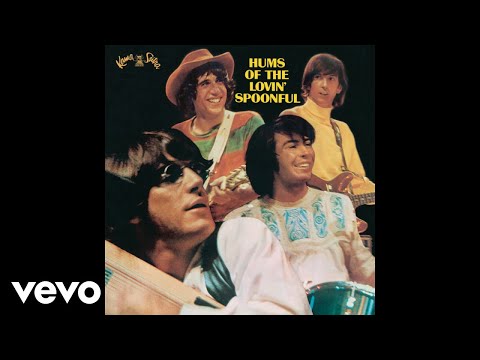
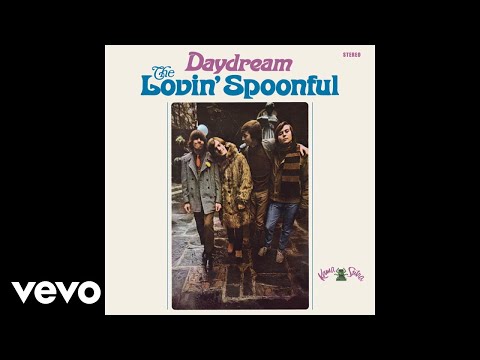
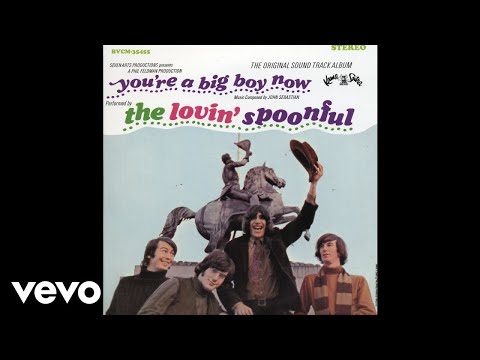
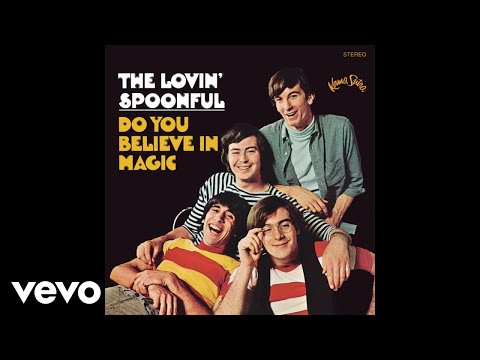
→ More from the 1960s File
View all 1960s hits →




Keep digging