The 1960s File Feature
Did You Ever Have To Make Up Your Mind?
Did You Ever Have to Make Up Your Mind? — The Lovin' Spoonful (1966) In the winter of 1965 and into early 1966, the Lovin' Spoonful occupied an almost singul…
01 The Story
Did You Ever Have to Make Up Your Mind? — The Lovin' Spoonful (1966)
In the winter of 1965 and into early 1966, the Lovin' Spoonful occupied an almost singular position in American pop music. The band had already scored with "Do You Believe in Magic" and were riding high on a jug-band-influenced, good-time sound that set them apart from both the British Invasion acts dominating radio and the harder-edged garage rock bubbling up from American basements. Into that commercial moment stepped "Did You Ever Have to Make Up Your Mind?", a song so compact and melodically direct that it seemed almost effortlessly casual about its own ambition.
The song was written entirely by John Sebastian, the band's primary songwriter and frontman, whose gift for translating everyday social dilemmas into three-minute pop gems was already evident. Sebastian had grown up steeped in folk and jug band traditions in New York, and his compositional approach leaned on conversational language and memorable hooks rather than elaborate arrangement. "Did You Ever Have to Make Up Your Mind?" exemplified that philosophy. It addressed the specific, relatable anxiety of choosing between two romantic options, a predicament familiar to virtually any teenager or young adult listening to AM radio in 1966.
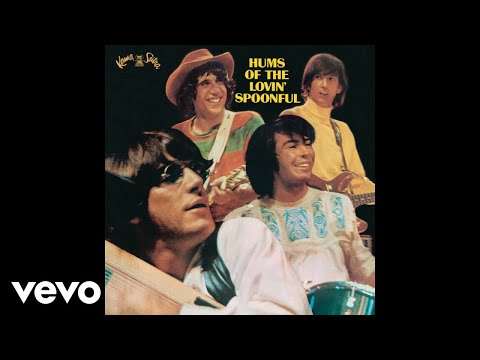
The recording was produced by Erik Jacobsen, who served as the band's principal producer throughout their most commercially successful period. Jacobsen understood how to capture the Spoonful's loose, warm sonic personality while still delivering a product polished enough for Top 40 consumption. The track featured the band's core lineup: Sebastian on vocals and autoharp, Zal Yanovsky on guitar, Steve Boone on bass, and Joe Butler on drums. The arrangement was spare and bright, with the autoharp lending a distinctive texture that felt rooted in American folk tradition even as the song was clearly aimed at the pop mainstream.
The single was released on the Kama Sutra Records label, the boutique imprint that housed the Lovin' Spoonful throughout their peak years. Kama Sutra, distributed by MGM at the time, was a small operation that nonetheless had a remarkably strong run of hits thanks largely to the Spoonful. The label's promotion machinery pushed the single to radio stations across the country in the spring of 1966, and the response was immediate.
"Did You Ever Have to Make Up Your Mind?" entered the Billboard Hot 100 in early 1966 and climbed steadily up the chart, eventually peaking at number two, a result that placed it firmly among the top-performing singles of that quarter. The song spent multiple weeks in the upper reaches of the chart and earned the band their second major hit in rapid succession. It reached number two in the United States, kept from the top position during a period of fierce competition on the Hot 100, but its commercial performance was unmistakably strong.
Radio play was central to the song's success. AM radio in 1966 was still the dominant medium for pop music consumption, and "Did You Ever Have to Make Up Your Mind?" fit the format ideally. Its running time was short, its melody was instantly recognizable, and its lyrical subject was universal enough to appeal across demographic lines. Disc jockeys responded warmly, and listener request lines confirmed the track's popularity in real time.
Critical reception at the time was largely favorable, with the trade press noting the song's craftsmanship and Sebastian's knack for creating pop that felt both simple and emotionally precise. Over subsequent decades, the track has been reassessed as a prime example of mid-1960s American pop at its most winningly direct. It appears regularly on retrospective surveys of the era, and the Lovin' Spoonful's broader catalog, including this single, has been cited by musicians across genres as a touchstone for melodically driven, warm-hearted pop songwriting.
The song's chart success contributed materially to what would become a remarkable two-year hot streak for the Lovin' Spoonful. Between late 1965 and 1967, the band placed multiple singles in the upper reaches of the Hot 100, establishing them as one of the most consistently successful American bands of the British Invasion era. "Did You Ever Have to Make Up Your Mind?" was a central chapter in that run, arriving at a moment when the band's commercial credibility was still building and proving that the Spoonful could sustain hit-making output across successive releases.
John Sebastian would later reflect on that period as a time of almost frictionless creativity, when songs seemed to flow naturally from everyday experience into finished recordings with unusual speed. The Lovin' Spoonful's studio approach supported that energy: sessions were relatively quick, the band performed live together in the studio more often than not, and Jacobsen's production sensibility prioritized feel over technical perfection. The result was a catalog of singles that retained a spontaneous, human quality even after heavy radio rotation.
Today "Did You Ever Have to Make Up Your Mind?" is remembered as one of the defining singles of the American pop response to the British Invasion, a song that proved domestic acts could compete on craft and charm without imitating the harder or more experimental edges of what was coming from England. Its place in the Lovin' Spoonful's legacy is secure, and its position as a top-three Hot 100 hit cements its standing in the commercial history of 1960s pop music.
02 Song Meaning
The Romantic Dilemma at the Heart of "Did You Ever Have to Make Up Your Mind?"
At its core, "Did You Ever Have to Make Up Your Mind?" is a song about a problem that resists easy resolution: the situation of being romantically drawn to more than one person at the same time. John Sebastian approached this subject not with melodrama or guilt but with a kind of cheerful bewilderment, treating the dilemma as a natural feature of young social life rather than a moral crisis. That tonal choice was central to the song's appeal and to its broader meaning within the Lovin' Spoonful catalog.
The scenario Sebastian constructed involves a young man caught between sisters, a premise that adds a specific social complication to what might otherwise be a generic romantic triangle. The choice is not merely between two individuals but between two members of the same family, which raises the stakes of any decision and makes the indecision more understandable. Sebastian presented this situation with empathy rather than judgment, acknowledging that the emotional pull in multiple directions was genuine and not simply a matter of fickleness or shallow feeling.
The song's emotional register is notably light-handed. Where another songwriter might have treated identical material as an opportunity for anguish or confession, Sebastian kept the mood bright and conversational. The narrator does not wallow; he poses the dilemma as a shared human experience, implicitly inviting the listener to recognize themselves in the situation. This quality made the song feel inclusive and relatable rather than confessional, which aligned perfectly with the Lovin' Spoonful's broader artistic identity as a band that celebrated ordinary life with warmth and humor.
Within the context of 1966 pop music, the song represented a relatively sophisticated take on romantic themes. Much of the era's romantic pop dealt in idealized love or heartbreak; Sebastian's willingness to address ambivalence and indecision was somewhat unusual and pointed toward a more realistic emotional palette. The song did not promise resolution. It asked a question and let that question hang, which gave it a psychological honesty that distinguished it from more formulaic material of the period.
For the Lovin' Spoonful as a band, the song reinforced an identity that Sebastian was carefully constructing across their catalog. The group was not trying to be dangerous or revolutionary; they were presenting American life, particularly young American social life, as fundamentally good-natured and navigable even when it was complicated. "Did You Ever Have to Make Up Your Mind?" fit that vision perfectly, treating romantic confusion as a fact of life that could be acknowledged with a smile rather than a grimace.
The song also demonstrated Sebastian's particular skill at matching lyrical content to musical tone. The bright, brisk arrangement, with its autoharp textures and clean vocal delivery, communicated ease and lightness before a single word was processed by the listener's conscious mind. The music did not contradict the lyrical subject; it contextualized it, suggesting that even difficult choices could be approached with equanimity. That coherence between form and content was a hallmark of Sebastian's best work during this period.
Decades after its release, the song retains its power precisely because its subject matter has not aged. The specific social configurations of 1966 may feel distant, but the experience of being pulled in two romantic directions simultaneously is as current as it ever was. Sebastian's decision to treat that experience with generosity and humor rather than hand-wringing gave the song a timelessness that more earnest treatments of similar material often lack. It remains a small but instructive case study in how pop music can handle emotional complexity without sacrificing accessibility.
→ More from The Lovin' Spoonful
View all The Lovin' Spoonful hits →
→ More from the 1960s File
View all 1960s hits →




Keep digging