The 1960s File Feature
Our Winter Love
The Story Behind Our Winter Love by The Lettermen In the early weeks of 1967, as rock music pushed further into psychedelic experimentation, a smooth vocal t…
01 The Story
The Story Behind "Our Winter Love" by The Lettermen
In the early weeks of 1967, as rock music pushed further into psychedelic experimentation, a smooth vocal trio built on close harmony and impeccable diction offered listeners something entirely different: a gentle, orchestral instrumental-turned-vocal piece perfectly suited to a cold winter evening. The Lettermen's rendition of "Our Winter Love" carried that mood onto the Billboard Hot 100, extending a run of easy listening success that had made the group a fixture of American pop radio.
The Lettermen's Niche in a Changing Decade
By 1967, The Lettermen, then featuring Tony Butala, Jim Pike, and Gary Pike, had already built a substantial following through college-friendly, romantic pop delivered with pristine three-part harmony. Their appeal rested on exactly the qualities that set them apart from the era's louder rock acts: polish, sincerity, and an unashamed embrace of old-fashioned romanticism, which kept them commercially relevant even as the broader pop landscape moved toward heavier, more experimental sounds through the back half of the decade.
An Instrumental Given New Warmth
The song originated as an instrumental piece before The Lettermen brought their vocal treatment to it, adding lyrics befitting a wintertime romance to a melody already built around graceful, sweeping strings. Their arrangement leaned fully into lush orchestration, prioritizing the trio's blended harmonies over any single lead voice, consistent with the group's collective approach to performance across their catalog.
A Steady Climb to the Chart's Middle
The single debuted on the Billboard Hot 100 on January 28, 1967 at number 82 and made gradual progress over the following weeks, ultimately reaching its peak of number 72 on February 18. It held its place on the chart for four weeks, a modest but respectable run consistent with the group's steady, if rarely spectacular, chart performance throughout the mid-1960s.
Part of a Long, Consistent Career
"Our Winter Love" never reached the heights of the group's biggest hits, but it fits comfortably within a catalog defined by consistency rather than blockbuster peaks. The Lettermen would continue recording and touring for decades, building a loyal following on exactly the kind of warm, seasonal romanticism this single represents. Their catalog would eventually stretch into the hundreds of recordings, few as purely tied to a single season as this one, and the group continued performing well into later decades with rotating members carrying the original harmony forward, proving the formula could survive changes in personnel as well as changes in musical fashion. That longevity, built on trust rather than reinvention, remains rare in popular music, and it speaks to how deeply audiences valued the specific comfort this kind of vocal group offered decade after decade, long after rock and roll had moved on to louder, harder concerns and left this kind of easy sentiment behind. Save it for a cold night and hear why the formula worked for so long, and why a whole generation of listeners never tired of hearing it.
"Our Winter Love" — The Lettermen's singular moment on the 1960s charts.
02 Song Meaning
What "Our Winter Love" Is Really About
The song draws a direct line between a season and a feeling, using winter's imagery of snow, cold air, and fireside warmth as a metaphor for a romance that feels both fragile and comforting. It's a straightforward pairing, but one executed with genuine tenderness.
Romance as Seasonal Ritual
By tying the relationship explicitly to winter, the lyric frames love as something cyclical and returning, a warmth that arrives each year against a backdrop of literal cold. That seasonal framing gives the song a gentle nostalgia even in its original context, evoking the comfort of a familiar, cherished ritual rather than a once-in-a-lifetime event.
Harmony as the Emotional Core
Because The Lettermen built their identity around blended three-part harmony rather than a single distinctive lead voice, the emotional weight of the song rests in the vocal blend itself. That collective sound mirrors the song's theme of togetherness, three voices merging into one just as the lyric imagines two people merging into a shared warmth against the cold, a musical choice that makes the metaphor feel earned rather than decorative.
A Deliberate Counterpoint to 1967's Turbulence
Arriving at the start of a year that would become one of the most turbulent in postwar American culture, the song's unhurried, sentimental mood offered a deliberate alternative to the anxieties building elsewhere on the charts and in the news. That contrast wasn't a political statement so much as a continuation of what The Lettermen always offered: an escape into simple, old-fashioned tenderness that asked nothing of the listener but a willingness to feel warm for three minutes.
Why the Formula Endured
Songs like this one succeeded because they filled a specific emotional need that harder-edged music of the era didn't address. Listeners wanting comfort rather than provocation found in The Lettermen's sound, and in this song specifically, a reliable, warmly familiar pleasure that asked nothing difficult of its audience, season after season, year after year, for as long as winter kept returning and love songs kept finding new listeners each time it did. That dependability, more than any single hit, defined the group's entire career.
→ More from The Lettermen
View all The Lettermen hits →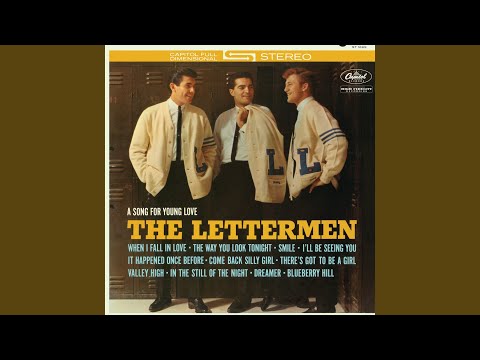



→ More from the 1960s File
View all 1960s hits →




Keep digging