The 1960s File Feature
Hurt So Bad
"Hurt So Bad" — The Lettermen's Slow-Burning 1969 Triumph The Sound of Heartbreak on Late-1960s Radio Close your eyes and imagine a summer evening in 1969, a…
01 The Story
"Hurt So Bad" — The Lettermen's Slow-Burning 1969 Triumph
The Sound of Heartbreak on Late-1960s Radio
Close your eyes and imagine a summer evening in 1969, an AM radio on the kitchen counter, the dial drifting toward one of those all-night stations that mixed everything from hard rock to soft pop without apology. In that environment, smooth vocal harmony groups still occupied a distinct and valued radio niche, even as the landscape was being reshaped by album-oriented rock and the psychedelic sounds drifting out of San Francisco. The Lettermen had been working that niche with craft and consistency since the early 1960s, building a catalog of precisely executed romantic ballads that found audiences wherever heartbreak was recognized as a universal condition.
Hurt So Bad was not an original song by the Lettermen. The composition had been written by Teddy Randazzo, Bobby Weinstein, and Bobby Hart, and had previously been recorded most notably by Little Anthony and the Imperials, whose 1965 version had given the song its first significant commercial life. The Lettermen's decision to record it in 1969 reflected their consistent strategy of identifying songs with demonstrated emotional resonance and reinterpreting them through the prism of their specific harmonic approach.
The Lettermen's Craft and Commercial Identity
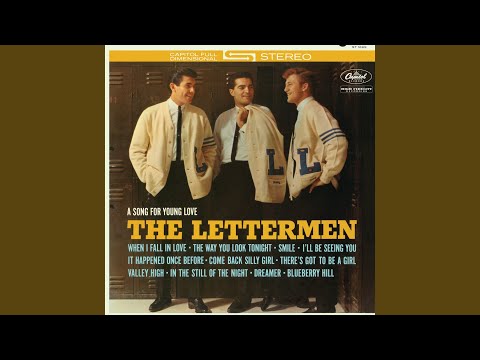
The trio, comprising Tony Butala, Jim Pike, and Gary Pike in the late-1960s configuration, had built their reputation on close three-part harmony that prized smoothness and blend above all else. Where some contemporary vocal groups were working in more gospel-inflected or rhythmically complex territory, the Lettermen occupied a corner of the market that prized classical pop values: clean tone, precise intonation, and an emotional restraint that let the melody carry the feeling without histrionics.
That restraint was both a strength and a limitation. The group could never compete for the rock audience that was increasingly dominating album sales and FM radio by the late 1960s. What they could do was provide a consistent product for listeners who preferred the controlled emotional register of a carefully arranged vocal harmony performance to the more expressively unbounded approach of soul singers or rock vocalists. That audience was smaller than it had been a few years earlier, but it remained substantial enough to sustain a meaningful commercial career.
A Remarkable Chart Journey
The single's performance on the Billboard Hot 100 tells a story of exceptional endurance. Debuting on May 31, 1969, at position 96, the record mounted one of the slower, more patient climbs of the year. Week by week through June, July, August, and into September, it moved steadily upward, resisting the typical pattern of quick peak and sharp decline that characterized most singles in the competitive late-1960s market. The track ultimately reached its peak position of number 12 during the week of September 20, 1969, after an extraordinary 21 weeks on the chart.
A 21-week chart run, culminating in a top-fifteen peak, was a significant commercial achievement for any act in that environment. It suggests a record that was working continuously, finding new listeners and new stations throughout a remarkably long promotional cycle. For a group whose musical identity was explicitly at odds with the dominant sounds of that summer, the sustained chart presence of Hurt So Bad is all the more striking.
1969's Complicated Landscape
The Billboard Hot 100 in mid-to-late 1969 was a genuinely diverse document of where American music was. Woodstock happened that August. The Temptations were charting psychedelic soul. Sly and the Family Stone were redefining funk. Against that backdrop, a smoothly arranged vocal harmony version of a mid-1960s ballad finding its way to number 12 speaks to the genuine breadth of American radio's listening audience. The Lettermen were not fighting for the same listeners as Creedence Clearwater Revival or the Rolling Stones; they were serving a different market entirely, and serving it with genuine skill.
The track's production, which enhanced the original's melodic qualities while updating the arrangement for late-1960s sensibilities, played a significant role in the record's appeal. The arrangement gave the voices room while maintaining the emotional focus that makes the song's title feel earned rather than overstated.
A Signature in the Late Career
For the Lettermen, Hurt So Bad represented one of their strongest chart performances of the decade's final years, a period when the group was maintaining commercial viability in an increasingly hostile environment for their style. The song's combination of harmonic sophistication and raw emotional content gave them material worthy of their considerable vocal abilities.
Listen to it and recognize why a record that peaked at 12 after 21 weeks on the chart was anything but an accident.
"Hurt So Bad" — The Lettermen's singular moment on the 1960s charts.
02 Song Meaning
"Hurt So Bad" — The Anatomy of Romantic Pain
A Song About the Specific Weight of Loss
Some emotional experiences are so universally recognized that they require only the simplest articulation to resonate completely. The pain of romantic loss, specifically the kind that lingers and that cannot be simply willed away through determination or the passage of time, is one of those experiences. Hurt So Bad, written by Teddy Randazzo, Bobby Weinstein, and Bobby Hart, goes directly to that territory without detour or decoration. The song's power comes from its unflinching acknowledgment that heartbreak is not a poetic metaphor but a physical reality, something that occupies the body and refuses to leave on command.
The Tradition of the Vocal Harmony Ballad
The Lettermen's version of the song belongs to a long and emotionally rich tradition of close-harmony vocal group performance that reached back through doo-wop into earlier popular vocal styles. That tradition had always prioritized emotional communication through the grain and blend of voices rather than through production elaboration or instrumental complexity. When three voices are arranged with precision and care around a melody that carries genuine emotional weight, the result can achieve a kind of direct emotional access that more elaborate productions sometimes obscure.
The harmony arrangement in the Lettermen's recording serves the song's emotional content by keeping the focus entirely on the words and the melody. The voices support and amplify each other without competing for attention, creating a unified statement rather than showcasing individual virtuosity. This collective approach to emotional expression has its own kind of power, suggesting that the pain described is not one person's singular experience but something so universal that multiple voices can share it simultaneously.
Pain as an Honest Subject
Popular music has always been drawn to painful emotions, partly because they are genuinely universal and partly because the resolution of pain into song creates a kind of catharsis that listeners find deeply satisfying. Hurt So Bad does not offer easy resolution or premature comfort. The lyrical stance maintains its honest acknowledgment of how much the described situation actually hurts, without rushing toward reassurance or narrative closure.
In the context of 1969, when a great deal of popular music was either experimenting with expanded consciousness or pushing toward harder rock expression, that emotional directness carried a particular weight. The song's refusal to dress up or complicate its central emotional statement was itself a kind of artistic commitment, a choice to work with the most fundamental human materials without the protective cover of irony or innovation.
Why It Resonated Across Audiences
The track's 21-week chart presence, peaking at number 12 on the Billboard Hot 100, points to an audience that responded strongly and consistently. The record sold and charted over an unusually long period, suggesting repeated radio exposure that connected with successive groups of listeners rather than a single wave of initial enthusiasm.
The reason for that sustained response is not difficult to identify. The experience the song describes, the specific agony of caring deeply for someone who does not reciprocate, or who is absent, or who represents a loss that cannot be quickly overcome, is one of the most common and least comfortably resolved of human experiences. A song that acknowledges that experience without minimizing it, and renders it with vocal beauty that makes the painful listening bearable and even pleasurable, is doing something genuinely valuable.
The Lettermen understood their role in the popular music ecosystem with unusual clarity, and Hurt So Bad shows them fulfilling that role at the highest level of their craft.
→ More from The Lettermen
View all The Lettermen hits →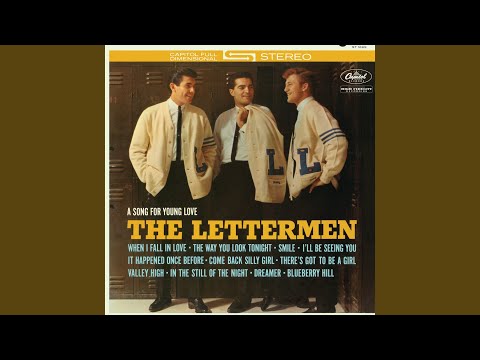



→ More from the 1960s File
View all 1960s hits →




Keep digging