The 1960s File Feature
I Only Have Eyes For You
I Only Have Eyes For You: The Lettermen's 1966 Interpretation of a Pop Standard By the time the Lettermen recorded their cover of "I Only Have Eyes for You" …
01 The Story
I Only Have Eyes For You: The Lettermen's 1966 Interpretation of a Pop Standard
By the time the Lettermen recorded their cover of "I Only Have Eyes for You" in 1966, the song had already accumulated a rich performance history spanning more than three decades. Written by Harry Warren and Al Dubin for the 1934 film Dames, the song had become one of the most covered standards in American popular music, with versions by Dick Powell, Doris Day, and most definitively by the Flamingos, whose 1959 doo-wop recording transformed the standard into one of the most atmospheric and beloved recordings in the genre's history. The Lettermen's version entered the Billboard Hot 100 on June 18, 1966, spending six weeks on the chart and reaching a peak of number 72 on July 23, 1966.
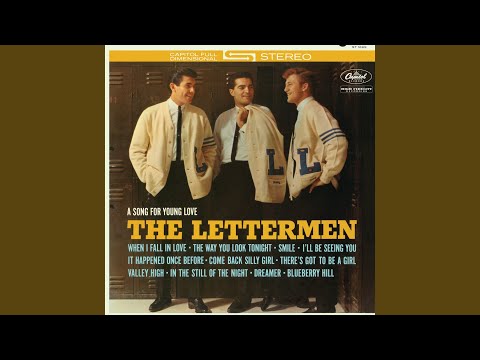
The Lettermen were one of the most successful close-harmony pop groups of the early 1960s, a trio whose meticulous vocal blend and sophisticated arranging sensibility placed them in a specific commercial category between the teen idol pop of the period and the more adult-oriented sound of traditional pop performers. Tony Butala, Jim Pike, and Bob Engemann had developed a sound that drew on the barbershop and collegiate vocal traditions while adapting them for the contemporary pop market, and their Capitol Records releases found consistent chart success throughout the first half of the 1960s.
Covering "I Only Have Eyes for You" was both a natural fit for the group's vocal abilities and a commercial risk given the Flamingos' version's extraordinary cultural standing. The doo-wop reading that the Flamingos had created in 1959 was widely regarded as definitive, its dreamy, otherworldly quality having established a standard against which all subsequent interpretations would inevitably be measured. The Lettermen's approach acknowledged this precedent without attempting to replicate it, instead bringing their own close-harmony aesthetic to the material in a way that honored the song's romantic content through a different sonic lens.
The group's Capitol Records production team crafted an arrangement that suited the mid-1960s pop context while preserving the song's inherent romanticism. The Lettermen's strength had always been their ability to make elaborate vocal harmonies sound effortless and emotionally direct, and that quality served them well with material that had accumulated so much interpretive history. Rather than compete with the Flamingos on atmospheric terms, they brought their own characteristic warmth and precision to the melody, creating a version that was distinctly identifiable as their own work rather than a tribute to its predecessor.
The chart performance, while modest compared to some of the group's earlier successes, reflected the particular challenges of the 1966 pop market, which was undergoing rapid transformation under the influence of British Invasion acts and the emerging sounds of soul and psychedelia. Traditional pop vocal groups like the Lettermen were finding it increasingly difficult to compete for radio attention and chart positions with the new sounds that were reshaping listener expectations, and their 1966 releases generally performed more modestly than their early-decade work had.
Six weeks on the Hot 100, peaking at 72, placed this recording in the middle tier of the Lettermen's chart history, which extended back to 1961 and included substantially higher peaks for earlier releases. The group continued recording and releasing material throughout the 1960s and well into subsequent decades, finding audiences in adult contemporary radio and the live performance circuit even as pop radio moved in directions less accommodating to their style.
The song's endurance across so many covers and performance contexts speaks to qualities in the original composition that transcend any single interpretation. Warren and Dubin's melody is one of the great achievements of the classic American songbook era, possessing a quality of focused, almost hypnotic beauty that has allowed successive generations of performers to find authentic meaning in it regardless of their specific vocal style or production approach. The Lettermen's version contributes a chapter to this interpretive history that is modest in commercial terms but genuine in musical quality.
02 Song Meaning
The Meaning Behind "I Only Have Eyes For You" as Performed by The Lettermen
"I Only Have Eyes for You" is a song about the obliterating intensity of romantic attention, the state in which one person's presence so thoroughly dominates another's perceptual field that the entire surrounding world loses its distinctness and fades to irrelevance. The central metaphor is perceptual rather than emotional in the conventional sense: the speaker does not merely feel strongly about the beloved but literally cannot see anything else, cannot register the details of the environment because all available attention is drawn to and held by a single focal point. The Lettermen's interpretation of this theme drew on their close-harmony tradition to communicate this quality of focused, absorbed romantic devotion with particular musical precision.
The song was written in 1934 for a film musical context, and its original dramatic purpose was to express a kind of swooning absorption in romantic feeling that the Hollywood musical of the period specialized in representing. The decades of subsequent interpretation transformed this theatrical expression into something that felt more personal and intimate, and by the time the Lettermen recorded it in 1966, the song had accumulated enough performance history to function as a statement about romantic experience generally rather than a specific dramatic character's feeling.
The Lettermen's close-harmony approach gave the song a quality of collective yearning that differed from single-voice interpretations. When three voices blend in the kind of precise unison that was the group's trademark, the effect is one of complete agreement, of a feeling so total and shared that it can be expressed simultaneously by multiple voices without any contradiction or dissonance. This unanimity of vocal expression reinforced the song's thematic content about a romantic focus so complete that it admits no qualification or distraction.
The contrast between the Lettermen's version and the Flamingos' 1959 recording is instructive for understanding how the same song can carry different but related meanings through different performances. The Flamingos created an atmosphere of dreamy, almost disembodied romantic reverie, their doo-wop arrangement giving the song a quality of hovering suspension as if the speaker were genuinely lost in a romantic fugue state. The Lettermen's approach was warmer and more grounded, the romantic focus expressed not as dissolution but as clear, directed attention. Both interpretations are faithful to the song's central meaning, but they locate that meaning in different emotional registers.
For mid-1960s listeners encountering the Lettermen's version, the song's meaning was also shaped by the cultural context of close-harmony pop and the values it was understood to represent. The Lettermen's vocal style was associated with a kind of refined romantic sentiment that differed from the raw emotional energy of rock and roll or the earthier intensity of soul music. Their version of "I Only Have Eyes for You" communicated devotion through polish and precision, through the aesthetic choices of control and harmony rather than passion and abandon.
The song's lasting meaning across all its interpretations rests on the universality of the experience it describes. The state of being so thoroughly in the presence of another person that the surrounding world loses its claims on attention is something that most people have experienced in the early stages of romantic attachment, and songs that capture this experience with melodic beauty and emotional directness tend to retain their resonance across generations. "I Only Have Eyes for You" has demonstrated this durability through more than eight decades of continuous performance, and the Lettermen's 1966 version contributes a specific and valued chapter to that interpretive tradition.
The meaning is finally simple, even if the song's history is complex: the experience of complete romantic attention, of seeing only one face in all the world, is one of the most vivid and recognized of human emotional states, and music that honors that experience with genuine feeling and craft will always find its audience.
→ More from The Lettermen
View all The Lettermen hits →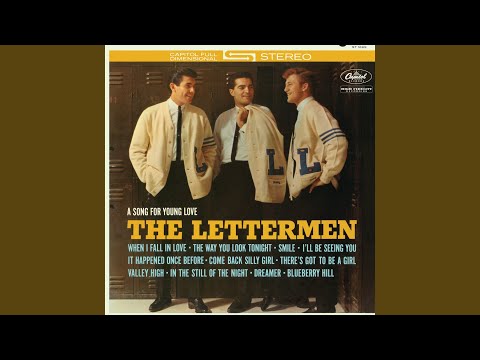



→ More from the 1960s File
View all 1960s hits →




Keep digging