The 1960s File Feature
Girls It Ain't Easy
The Honey Cone's Debut: "Girls It Ain't Easy" and the Birth of a Soul Trio (1969) The Honey Cone arrived at a pivotal moment in the history of American soul …
01 The Story
The Honey Cone's Debut: "Girls It Ain't Easy" and the Birth of a Soul Trio (1969)
The Honey Cone arrived at a pivotal moment in the history of American soul music, and their debut single "Girls It Ain't Easy" introduced a vocal group that would go on to deliver one of the most successful recordings of the early 1970s. Before "Want Ads" made them stars in 1971, before anyone outside of the music industry's inner circle knew their name, the Honey Cone announced their presence on Hot Wax Records with this November 1969 chart entry, a record that encapsulated everything distinctive about the label's approach and the group's potential.
The trio consisted of Edna Wright, Carolyn Willis, and Shellie Clark, three singers with substantial prior experience in Los Angeles's session and backing vocalist world. Wright was the sister of Darlene Love, herself one of the most gifted and underrecognized voices in 1960s pop. Willis had sung background vocals on numerous recordings, and Clark brought comparable experience to the ensemble. When Holland-Dozier-Holland, the legendary Motown songwriting and production team of Brian Holland, Lamont Dozier, and Eddie Holland, departed from Motown and established their own labels, Invictus and Hot Wax, the Honey Cone were among their first significant signings.
Hot Wax Records launched in 1969 with the explicit ambition of replicating and extending the kind of polished, rhythmically sophisticated soul pop that HDH had pioneered at Motown. The label was distributed through Buddah Records, which gave it national reach, and the production team brought with them not only their songwriting abilities but also the network of musicians and arrangers who had defined the Motown sound. The Honey Cone's debut was thus a statement of intent for the new enterprise, a demonstration that the creative infrastructure developed at Motown could produce commercially viable records outside that institutional framework.
"Girls It Ain't Easy" entered the Billboard Hot 100 on November 8, 1969, at position 85, climbing to its peak of number 68 during the weeks of November 22 and 29, and spending six weeks on the chart before fading in December. That performance was modest by the standards of what the group would later achieve, but it was sufficient to establish their presence and demonstrate that the HDH machine was operational in its new independent context.
The record's sound was immediately recognizable to ears familiar with the Motown catalogue. The production employed the rhythmic clarity, the precise horn arrangements, and the call-and-response vocal structure that had characterized HDH's best work for artists like the Four Tops and Martha and the Vandellas. The Honey Cone's harmonies were tight and disciplined, with Edna Wright's lead voice providing the emotional focal point while Willis and Clark wove complementary parts around her.
Los Angeles had been developing its own distinct soul music identity throughout the 1960s, separate from the Detroit sound that Motown had made definitive and the Memphis approach that Stax and Volt had codified. The Honey Cone, despite working with Detroit producers, carried traces of the LA session culture in their delivery, a slight pop flexibility that would serve them well as they navigated the crossover market.
The single's subject matter addressed the challenges facing women in romantic relationships with a directness that would become more pronounced in their later work. Holland-Dozier-Holland had always been skilled at writing material that gave female performers emotional authority and narrative centrality, and even in this debut single, the Honey Cone was positioned as a group with something to say rather than merely a decorative vocal ensemble.
The success of "Want Ads" in 1971, which reached number one on the Billboard Hot 100, would make the Honey Cone's earlier recordings objects of retrospective interest. "Girls It Ain't Easy" acquired additional significance as evidence of the group's trajectory and as a document of HDH's transition from Motown to independent operation. For collectors and historians of soul music, it represents a genuinely important opening chapter in the story of one of the early 1970s' most compelling vocal groups.
02 Song Meaning
The Meaning Behind "Girls It Ain't Easy" by The Honey Cone
"Girls It Ain't Easy" announces its thematic territory directly in its title, positioning itself as an honest assessment of the difficulties women face in romantic relationships. The Honey Cone, working with Holland-Dozier-Holland's production infrastructure, delivered a record that acknowledged the emotional labor and vulnerability involved in loving someone, particularly in a cultural moment when expectations around gender and romance were beginning to be examined more critically.
The song's central observation is about asymmetry. The experience of romantic investment, the record suggests, is not equally distributed between partners, and the costs of that investment fall more heavily on women who commit fully while remaining uncertain about the depth of commitment on the other side. This theme of emotional asymmetry was not unique to the Honey Cone in the late 1960s soul tradition, but the specificity and the directness of the group's delivery gave it particular force.
Holland-Dozier-Holland had developed a sophisticated understanding of how to write for female voices that gave their performers genuine narrative agency. Rather than positioning women as passive recipients of male attention, their best songs placed women at the center of their own emotional stories, making decisions, drawing conclusions, and speaking plainly about their experiences. "Girls It Ain't Easy" fits within this framework, presenting the difficulty of romantic life not as something to be apologized for or romanticized but as something to be acknowledged honestly.
There is a communal dimension to the song's address that is significant. The title and the vocal arrangement both suggest a conversation among women, a shared recognition of common experience rather than an individual confession. When the Honey Cone sang together, their harmonies created the impression of multiple voices confirming a single truth, which gave the message a collective weight that a solo performance could not have achieved in the same way.
The song also participates in a broader conversation about female solidarity and mutual recognition that would become increasingly prominent in popular culture over the following years. By addressing "girls" directly and speaking from experience, the record created a space for listeners to recognize themselves in the account being offered. That act of recognition was itself meaningful in a popular music landscape where women's experiences were frequently mediated through male perspectives.
The production's sonic warmth, with its precise rhythms and lush arrangements, created a slight tension with the song's content. The music was inviting and pleasurable to hear while the lyrics were dealing with something genuinely difficult. HDH understood that this tension was commercially and emotionally productive, that people were more receptive to honest emotional content when it was delivered through arrangements that felt good to inhabit. "Girls It Ain't Easy" used the pleasure of the music to create access to a truthful account of romantic difficulty, which was entirely consistent with the best traditions of soul music's approach to feeling.
→ More from The Honey Cone
View all The Honey Cone hits →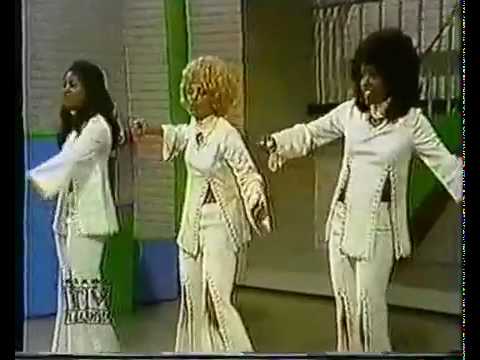

→ More from the 1960s File
View all 1960s hits →




Keep digging