The 1960s File Feature
No Time
"No Time" — The Guess Who Winnipeg's Hardest Edge By the end of 1969, The Guess Who had completed one of the most dramatic career transformations in Canadian…
01 The Story
"No Time" — The Guess Who
Winnipeg's Hardest Edge
By the end of 1969, The Guess Who had completed one of the most dramatic career transformations in Canadian rock history. The Winnipeg band, after years of working the provincial circuit and releasing material that failed to break through in the American market, had cracked the US charts decisively that spring with These Eyes, a ballad whose combination of aching melody and rock instrumentation demonstrated that they could compete with the best American acts of the era. The momentum from that breakthrough carried through the summer and into the fall, and the band moved quickly to follow up with something that showed another dimension of their capability.
No Time was that demonstration, a track that arrived in December 1969 with a harder, more direct energy than These Eyes had carried. Where that earlier hit leaned into longing and melodic sweetness, No Time pushed toward something more assertive, more rhythmically aggressive, more clearly shaped by the hard rock currents that were intensifying throughout 1969 as the decade lurched toward its close. The band, and particularly guitarist Randy Bachman and vocalist Burton Cummings, had the chops to execute both modes.
The Sound at the End of the 1960s
The final months of 1969 were an extraordinary moment for rock music, with Woodstock only months in the past and the genre reaching outward in multiple directions simultaneously. Heavy rock was hardening; singer-songwriters were emerging; arena rock was beginning to take shape. The Guess Who in this environment were something genuinely interesting: a band from outside the American mainstream (and even outside the British scene that had dominated rock for much of the decade) that had developed a sound drawing from all of these currents without being reducible to any one of them.
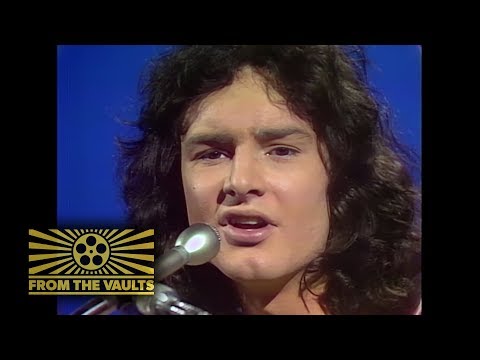
Burton Cummings's vocal range and presence gave the band a frontman capable of moving between vulnerable tenderness and hard-edged rock energy without losing conviction in either mode. That flexibility was among the group's strongest assets as they navigated an increasingly diverse rock landscape.
Two Weeks and a Debut-to-Peak Sprint
The single debuted on the Billboard Hot 100 on December 20, 1969, entering at position 81. The following week, on December 27, it reached its peak of number 70, giving the track a chart presence that was brief but real. The two-week Hot 100 run ended as 1969 became 1970, with the track cycling out quickly as the new year's releases began to fill the chart. This brief trajectory was not unusual for a single entering the chart in the final weeks of a year, competing with holiday-season releases and year-end chart consolidation.
The chart performance also reflected that No Time was functioning partly as a setup for what came next. The Guess Who were building momentum through successive releases, and the most significant commercial achievement from this period was still ahead of them.
The Bridge to American Woman
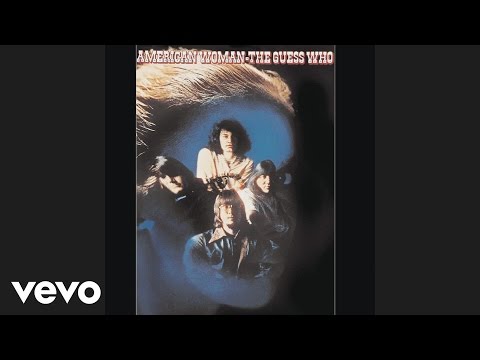
Understanding No Time's place in The Guess Who's story requires knowing what followed it. The track was included on American Woman, the album released in early 1970 that would produce the band's signature hit and their first number one on the Billboard Hot 100. That title track became one of the defining rock singles of 1970, a guitar riff so iconic that it has retained its recognizability for more than fifty years. No Time, as a double A-side with American Woman in some markets, had a complicated relationship with that larger success.
In the United States, American Woman was paired with No Time on the single that conquered the charts in early 1970. Their intertwined commercial history means that No Time benefited from and contributed to one of the most significant commercial events of early 1970s rock.
A Canadian Band Writing American Rock History
The Guess Who's achievement across 1969 and 1970 was remarkable in its scope. Starting from Winnipeg, with minimal American industry support, they competed for and earned a position at the top of the most competitive rock market in the world. Randy Bachman's guitar work and his compositions gave the band a musical foundation that could stand comparison with British and American contemporaries. No Time was part of the material that built that foundation. Listen to the track and hear the hard edge of a band that knew exactly where it was headed.
"No Time" — The Guess Who's singular moment on the 1960s charts.
02 Song Meaning
The Meaning Behind "No Time" by The Guess Who
Refusal as an Act of Assertion
Songs built around refusal occupy a distinctive place in rock music. No Time belongs to that tradition, a track whose central statement is a declaration of unavailability, a turning away from something or someone that is demanding more than the narrator is prepared to give. The blunt directness of the title captures the song's emotional posture: there is no time, no space, no accommodation available. This kind of refusal in rock music carried particular resonance at the end of the 1960s, when a generation was collectively pushing back against the demands of an older social order.
The dismissive energy of the track connected to broader countercultural currents of the period, the sense that the rules and obligations imposed by mainstream society deserved to be refused rather than accepted. Rock music had been making this argument in various forms since the mid-1960s, and The Guess Who's version of it was more musically direct and harder-edged than much of what had preceded it.
Hard Rock and the Politics of Attitude
The sonic texture of No Time was itself a kind of argument. The guitar work, the rhythmic drive, the vocal delivery that favored assertion over vulnerability: all of these communicated an attitude before any lyrical content was absorbed. Hard rock in 1969 was developing a vocabulary of musical toughness that functioned as social commentary whether or not the lyrics made explicit claims.
A young listener in December 1969 hearing this track on the radio would have felt its emotional position before parsing its words. The music was saying something about not being pushed around, about having a right to define one's own terms, and that message landed in a cultural context where those sentiments had enormous collective resonance.
The End of the 1960s and Its Exhaustions
It is impossible to fully understand the emotional texture of music released in late 1969 without accounting for the weight the year carried. The Manson murders, the deterioration of the civil rights coalition, violence at Altamont, the ongoing horror of Vietnam, the growing sense that the optimism of 1967 had curdled into something darker: all of this formed the backdrop against which listeners received new music. A song that declared "no time" was speaking to an audience that in many ways felt it had run out of time, or patience, or faith in the systems it had been asked to trust.
This is not to overload a pop-rock single with more meaning than its creators necessarily intended, but the reception of any piece of music is shaped by its moment, and the moment in which No Time appeared was one that made its assertive refusal feel appropriate.
Canadian Perspective on American Rock
The Guess Who's position as Canadians writing rock music that engaged with distinctly American themes and anxieties gave their work a particular critical angle. They were close enough to American culture to understand and speak to it but outside it enough to observe its contradictions with some clarity. That slight outsider perspective inflected their songwriting and would become fully explicit the following year with American Woman, a track that was simultaneously an embrace and a critique of American cultural power.
No Time anticipates that ambivalence, a track that understood the energy of American rock and channeled it with full conviction while coming from somewhere slightly different, somewhere that gave its authors permission to refuse what the culture was demanding.
→ More from The Guess Who
View all The Guess Who hits →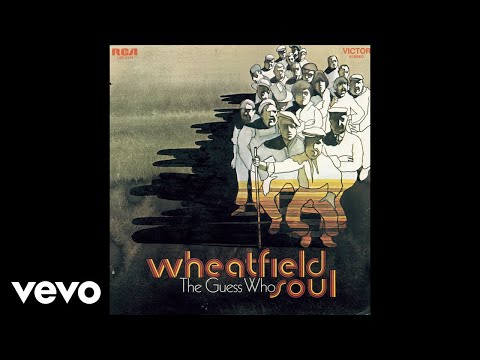
→ More from the 1960s File
View all 1960s hits →




Keep digging