The 1960s File Feature
Mercy, Mercy, Mercy
Mercy, Mercy, Mercy — The Buckinghams Chicago's Finest Moment The summer of 1967 belonged to San Francisco, if you believed the cultural mythology being asse…
01 The Story
Mercy, Mercy, Mercy — The Buckinghams
Chicago's Finest Moment
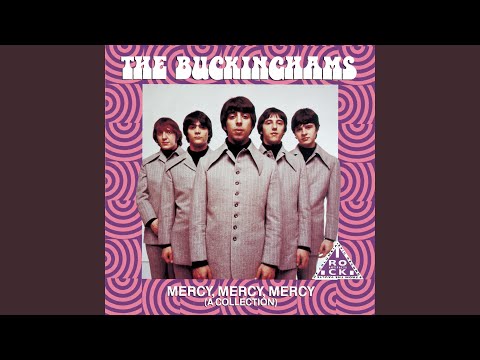
The summer of 1967 belonged to San Francisco, if you believed the cultural mythology being assembled in real time. But while the psychedelic summer bloomed in Golden Gate Park and the Haight, a group from Chicago was quietly proving that the Midwest had its own musical arguments to make. The Buckinghams had spent most of 1967 in extraordinary commercial form, placing singles on the Hot 100 with a consistency that few of their contemporaries matched. "Mercy, Mercy, Mercy" was the pinnacle of that run, a record that demonstrated the group's range by venturing into jazz-funk territory while keeping one foot firmly on the pop chart dance floor.
The Joe Zawinul Connection
The original "Mercy, Mercy, Mercy" was an instrumental composition by Joe Zawinul, the Austrian-born jazz pianist who was playing with Cannonball Adderley's quintet in the mid-1960s. Zawinul wrote the piece, and it was recorded live at the Club in Chicago in 1966, becoming an unexpected jazz hit and introducing Zawinul's compositional voice to a wider audience. The melody had an accessible, gospel-inflected warmth that distinguished it from more abstract jazz of the period. When the Buckinghams adapted the piece for their pop purposes, they added lyrics and reshaped it for a teenage audience, but the underlying melodic and harmonic intelligence of Zawinul's original survived the transition.
Producer James William Guercio
James William Guercio produced the Buckinghams' recordings during their commercial peak, and his work with the group is credited with much of their commercial success. Guercio understood how to frame the group's strengths and how to adapt source material for maximum pop impact. His production on "Mercy, Mercy, Mercy" retained the jazz feeling of the original while building it out with the brass and rhythm elements that made Buckinghams records sonically distinctive in the pop landscape of 1967. Guercio would go on to produce Chicago (the band), a career trajectory that shows the consistent thread of jazz-rock fusion in his aesthetic sensibility.
A Chart Run of Exceptional Duration
The single debuted on the Billboard Hot 100 on June 17, 1967, at position 81. What followed was one of the more impressive sustained climbs in the group's chart history. The record moved steadily upward through the summer months, eventually reaching a peak of number 5 on August 12, 1967, after spending 12 weeks on the Hot 100 in total. A number 5 pop single in the summer of 1967, competing against Aretha Franklin, the Beatles, and the full force of Motown, was a genuine achievement. The 12-week chart run indicated sustained radio support rather than a flash of initial enthusiasm.
The Summer of 1967 and the Buckinghams
The Buckinghams in 1967 were something of an anomaly: a pop group with jazz influence finding mass commercial acceptance in a year when pop music was being pulled in multiple directions simultaneously. Their Chicago connection gave them access to a jazz sensibility that most of their peers lacked, and their instinct for the pop single format gave them the commercial discipline to use that sensibility without alienating mainstream radio. The combination of jazz sophistication and pop directness was rare in 1967, and the audience rewarded it. The group's run of hits that year stands as a fascinating counterpoint to the psychedelic sounds that have come to define our collective memory of the Summer of Love.
Chicago as a Musical Counterweight
The Buckinghams' success in 1967 was also a reminder that Chicago was a serious musical city in its own right, not merely a Midwestern echo of either the New York pop machine or the California counterculture. The city had its own blues heritage, its own jazz institutions, and its own live music circuit that produced players with particular skills and sensibilities. Guercio's production on the Buckinghams' records drew on those resources, creating a sound that was recognizably Chicago in its brassy directness while being fully competitive with anything coming from the coasts. The group's commercial peak in 1967, capped by a number 5 single with a Joe Zawinul melody, represents the high-water mark of a very specific and underappreciated moment in Chicago pop history. Press play and let that big brass sound remind you that 1967 had more than one way to be magnificent.
"Mercy, Mercy, Mercy" — The Buckinghams' singular moment on the 1960s charts.
02 Song Meaning
Mercy, Mercy, Mercy — Meaning and Cultural Legacy
The Gospel Feeling in a Jazz Frame
Joe Zawinul's original composition drew explicitly from gospel music's harmonic language, which gave it an emotional accessibility that more abstract jazz of the period deliberately avoided. The feeling of the piece is immediately human, grounded in the warmth and communal energy of church music even when performed in a secular jazz context. When the Buckinghams adapted the melody for their pop version, this gospel warmth remained the emotional core, providing a foundation that listeners could recognize and respond to even without identifying its precise musical origins. The title itself is a plea, drawing on the tradition of mercy as a spiritual concept before it becomes a romantic one.
Jazz-Pop as a 1967 Possibility
The relationship between jazz and pop has always been complicated and context-dependent. In the late 1960s, as rock and psychedelic music were expanding what pop could encompass, there was a brief window when jazz-inflected pop could find mainstream chart success without being classified as something too specialist for general audiences. The Buckinghams' version of "Mercy, Mercy, Mercy" existed in that window, using jazz's harmonic sophistication as a flavoring within a fundamentally pop structure. The brass arrangements and the chord voicings gave the record a musical depth that most of its chart neighbors lacked, without making it inaccessible to the teenage radio audience that the Hot 100 primarily served.
Zawinul's Compositional Legacy
Joe Zawinul went on from his Cannonball Adderley years to co-found Weather Report, one of the most influential jazz fusion groups of the 1970s, and to become one of the defining voices in jazz composition of the latter half of the 20th century. The fact that his early compositional work reached a mass pop audience through the Buckinghams' adaptation represents an interesting early intersection of his sensibility with the mainstream. The Buckinghams brought Zawinul's harmonic thinking to an audience that would not have sought it out in a jazz context, performing a kind of cross-pollination that benefits both forms.
The Buckinghams' Particular Achievement
In the context of 1967 American pop, the Buckinghams occupied an interesting position. They were not part of the psychedelic movement, not part of the soul tradition, not part of the British Invasion. They were a Chicago pop group with a particular sophistication that came from proximity to the city's strong jazz tradition and from producers who understood how to use that sophistication commercially. "Mercy, Mercy, Mercy" is the best expression of that particular combination, a record that works on the pop level while having more musical substance than most of what surrounded it on the charts.
What Endures
The record endures because the melody Zawinul wrote is genuinely beautiful, and because the Buckinghams' performance of it had authentic enthusiasm. These are not small qualities. Much of what charts in any given year is serviceable but not memorable; what crosses into something more durable usually has at least one element that operates above the purely functional. The combination of Zawinul's composition and the Buckinghams' spirited pop production gave the record a musical life that outlasted the summer of 1967, making it a regularly cited example of the jazz-pop intersection at a specific and unrepeatable cultural moment.
→ More from The Buckinghams
View all The Buckinghams hits →

→ More from the 1960s File
View all 1960s hits →




Keep digging