The 1960s File Feature
Hey Baby (They're Playing Our Song)
"Hey Baby (They're Playing Our Song)" — The Buckinghams in the Summer of Love Chicago's Pop Powerhouse In the autumn of 1967, the Summer of Love was giving w…
01 The Story
"Hey Baby (They're Playing Our Song)" — The Buckinghams in the Summer of Love
Chicago's Pop Powerhouse
In the autumn of 1967, the Summer of Love was giving way to something more complicated and contested, but the pop charts still belonged largely to the kind of melodically rich, hook-driven music that the Buckinghams had been producing since their breakthrough earlier that year. The Chicago-based quintet had already scored a number-one hit with "Kind of a Drag" in early 1967 and had followed it with a string of chart entries that established them as one of the most reliable hit-making acts in American pop. "Hey Baby (They're Playing Our Song)" arrived in September as the latest installment in a remarkable run.
The Band and Their Moment
The Buckinghams occupied a specific and successful niche in the 1967 pop landscape: they were American enough to have genuine local roots in Chicago's club scene, pop enough to compete with the British Invasion acts that still dominated radio, and sophisticated enough in their use of horn arrangements to stand apart from the basic guitar-bass-drums template that defined much of their competition. Their recordings during this period frequently featured brass instrumentation that gave them a fuller, warmer sound than the typical rock combo arrangement.
The band recorded for Columbia Records, and their producer James William Guercio shaped their sound with considerable skill during the peak period of their commercial success. Guercio would later go on to produce Chicago Transit Authority (the band that became Chicago), and his instinct for melodic pop with instrumental sophistication was already evident in what he did with the Buckinghams. His production sensibility emphasized arrangement clarity and vocal presence, qualities that served the Buckinghams' material well on both radio and jukebox.
The Chart Run
The single debuted on the Billboard Hot 100 on September 9, 1967, entering at number 83. The climb was steady through September, the track moving through the sixties and forties with the kind of upward momentum that reflects consistent radio rotation. By the end of September, it had reached number 24, and by October 7 it stood at number 19. The track peaked at number 12 on October 14, 1967, and spent a total of 10 weeks on the Hot 100. A top-fifteen position in the fourth quarter of 1967 placed the Buckinghams in excellent company: the fall charts that year featured Beatles material, Motown at its commercial zenith, and a wave of psychedelic pop from both British and American acts.
The number-12 peak came during what was effectively the back half of an extraordinary year for the band, and it confirmed that they could sustain chart presence across multiple single cycles without any decline in quality or audience interest.
The Musical Identity of the Track
"Hey Baby (They're Playing Our Song)" deployed the formula that had made the Buckinghams reliable chart performers: an irresistible opening hook, vocal harmonies that locked tight on the chorus, and a rhythm-section foundation that made the song radio-functional from the first bar. The brass arrangements provided textural richness that elevated the track above simpler pop constructions, and the production balance ensured that nothing competed unproductively with the lead vocal.
Carl Giammarese's lead vocal work on the band's recordings during this period carried the kind of confident energy that AM radio rewarded. The title's conversational address, the direct "hey baby" opening, created immediacy that pulled listeners in before the first verse was complete. Pop songs that work on radio often succeed or fail in their first five seconds, and the Buckinghams understood that instinctively.
Legacy of Chicago's Pop Hit-Makers
The Buckinghams' run of hits in 1967 represents one of the underappreciated achievements of mid-decade American pop. Working from Chicago rather than New York or Los Angeles, building their sound in clubs and ballrooms rather than through the machinery of coastal industry, they produced a string of records that competed successfully with the best pop being made anywhere in the world that year. "Hey Baby (They're Playing Our Song)" sits comfortably within that achievement, a radio-ready piece of craft that delivered what 1967 pop asked for: melody, energy, and a hook you would find yourself singing an hour later. Press play and feel the season.
"Hey Baby (They're Playing Our Song)" — The Buckinghams' singular moment on the 1960s charts.
02 Song Meaning
"Hey Baby (They're Playing Our Song)" — Shared Memory and the Romance of Radio
The Premise: A Song as a Shared Object
"Hey Baby (They're Playing Our Song)" builds its emotional world around an idea so simple that it borders on the obvious, yet so loaded with feeling that it has powered dozens of songs across many decades: the notion that a particular piece of music can belong to two people, can carry the weight of their relationship's private history in a way that makes it uniquely theirs whenever it appears. The framing is a social situation, perhaps a dance, a party, a moment on radio, where the shared song suddenly materializes and the narrator uses its appearance as a reason to connect. The premise requires no elaboration; virtually anyone who has ever been in a meaningful relationship understands it immediately.
Pop Music's Relationship With Memory
What makes "Hey Baby (They're Playing Our Song)" particularly interesting as a cultural artifact is that it is a song about how songs function in emotional life. Pop music has always been deeply self-aware about its own role in memory-making, and songs that explicitly invoke this function tend to resonate powerfully because they activate in listeners the same mechanism they are describing. When the Buckinghams sing about their song being played, the listener is simultaneously experiencing what it means to have a song that means something.
In 1967, radio was the primary means by which shared musical culture was constructed and reinforced. Songs heard together on the radio or at a dance became social bonding agents in a way that streaming playlists do not quite replicate. A track like this one would have been understood immediately by audiences whose musical lives were organized around AM radio and the community of listeners it implied.
The Language of Invitation
The title phrase itself is an invitation, a moment of recognition extended across whatever social space separates the narrator from the object of their attention. The directness of "hey baby" was characteristic of 1967 pop's comfort with unmediated romantic address, a directness that the folk revival's introspection and the British Invasion's irony had not fully displaced from mainstream radio. The Buckinghams were making music for dancers and radio listeners who wanted to feel something immediately, and that directness served the purpose well.
The warmth of the sentiment, the sense that being called over to dance to "your" song is an unambiguously good thing, also reflects something about the cultural mood of the moment. Even as 1967 grew more complicated and fractious in its larger political dimensions, mainstream pop maintained a space where romantic pleasure could be celebrated without complication.
Nostalgia and the Pop Song Form
Songs about shared songs are inherently nostalgic in structure, even when they are set in an immediate present moment. They assume a past worth returning to, a history between two people rich enough to have produced a shared soundtrack. The Buckinghams' track participates in this temporal complexity: it is a present-tense invitation grounded in the past tense of a relationship's formation. This layering of time is one of pop music's most reliable emotional strategies, and the Buckinghams executed it with the confidence of a band that had been navigating AM radio's emotional geography all year.
Why It Endures
The song's durability stems from the universality of its central experience combined with the quality of its musical execution. The hooks are genuinely strong, the production remains clean and pleasant across the decades, and the sentiment is one that neither dates nor exhausts itself. Generations of listeners who never heard the Buckinghams on original AM radio have been able to find their way into this song because the emotional situation it describes is perennial. The memory-making function of pop music it celebrates is itself eternal, which gives the track a kind of recursive staying power: it is a song about why songs matter, and that subject will never stop mattering.
→ More from The Buckinghams
View all The Buckinghams hits →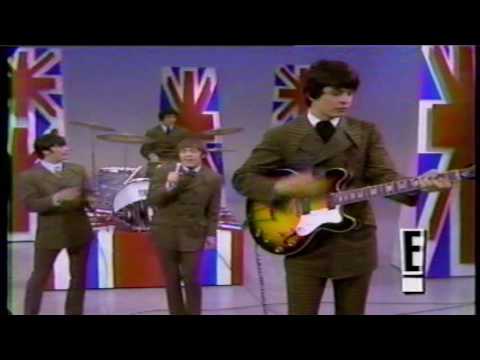

→ More from the 1960s File
View all 1960s hits →




Keep digging