The 1960s File Feature
Kind Of A Drag
"Kind Of A Drag" — The Buckinghams' Number One and Chicago Pop's Finest Hour A Chicago Band Arrives on the National Stage In the winter of 1966 and into earl…
01 The Story
"Kind Of A Drag" — The Buckinghams' Number One and Chicago Pop's Finest Hour
A Chicago Band Arrives on the National Stage
In the winter of 1966 and into early 1967, the American pop chart was a fiercely competitive landscape. The British Invasion had reshaped the entire ecosystem, Motown was consistently placing records in the upper reaches of the Hot 100, and independent regional acts faced enormous obstacles in breaking through to national attention. The Buckinghams were a Chicago-based group who had been grinding through the local circuit, building a following in the Midwest and working with a small regional label called U.S.A. Records. What happened next was the kind of lightning strike that defines careers.
"Kind Of A Drag" entered the Billboard Hot 100 on December 31, 1966, the very last entry of the year, at number 90. Over the following weeks it climbed with remarkable speed: 66, then 42, then 15, then 9. The momentum was undeniable. By February 18, 1967, the record had reached number one on the Hot 100, the first Chicago rock act to top the chart. The thirteen weeks they spent on the chart represented one of the most dramatic chart climbs of the era.
The Sound and the Production
The song was written by James Holvay, a member of the band's extended circle, and the production for the U.S.A. Records release leaned into the sophisticated pop-rock sound that had been shaped by the British Invasion while retaining an American directness that distinguished it from its British models. The arrangement featured horns, a rhythmically crisp rhythm section, and the layered vocal work that would become the Buckinghams' signature.
Dennis Tufano fronted the group with a vocal style that combined genuine emotional expressiveness with the polish that Top 40 radio required. The production quality was high enough for a record on a small regional label, which helped it survive the transition to national radio when major market programmers began picking it up. Many regional records lost something in that transition; "Kind Of A Drag" sounded ready for national distribution because it had been made with that kind of ambition.
The Climb to Number One
The chart trajectory of "Kind Of A Drag" is one of the more dramatic success stories of the mid-1960s independent label era. Starting from the very bottom of the Hot 100 on December 31, 1966, the record took just seven weeks to reach the top position, arriving at number one during the week of February 18, 1967, and spending thirteen weeks total on the chart.
Peaking at number one on the Billboard Hot 100 placed the Buckinghams in extraordinary company. The chart in early 1967 included the Beatles, the Rolling Stones, and the full force of the Motown roster. For a Chicago band on a regional independent label to reach the top in that environment was genuinely remarkable, and it required not just a great record but the kind of commercial momentum that builds when radio programmers in market after market make the same decision in rapid succession.
The Consequences of Success
The number one position changed everything for the Buckinghams. Columbia Records moved quickly to sign the group, giving them the major label distribution and promotional infrastructure that U.S.A. Records could not provide. The Columbia deal allowed them to move into more sophisticated recording environments and work with producers who could help them sustain commercial momentum. Their subsequent singles, including "Don't You Care" and "Mercy, Mercy, Mercy," confirmed that the "Kind Of A Drag" success was the beginning of a genuine pop career rather than a fortunate accident.
The late 1960s Chicago rock scene that the Buckinghams represented was not the blues-oriented scene that the city was equally famous for; this was melodic, horn-drenched pop rock aimed squarely at the radio audience, and it proved to be a commercially viable genre in its own right.
Legacy in the City and Beyond
"Kind Of A Drag" has retained its place in the memory of mid-1960s pop enthusiasts as a pristine example of what could be achieved with a well-written song, a committed group performance, and the kind of chart momentum that cannot be manufactured but can be sustained once it begins. The Buckinghams' achievement opened a door for subsequent Chicago pop acts and demonstrated that the national pop market was genuinely accessible to acts outside the established East Coast and West Coast recording centers.
The record still sounds crisp, confident, and completely of its moment. Press play and hear what a number one hit from the winter of 1967 actually felt like.
"Kind Of A Drag" — The Buckinghams' singular moment on the 1960s charts.
02 Song Meaning
The Sting of Romantic Letdown: The Meaning of The Buckinghams' "Kind Of A Drag"
A Simple Phrase That Captures Everything
The colloquial title is itself the hook. "Kind of a drag" is everyday American speech rendered into a song title, and its casualness is part of its genius. The phrase acknowledges heartbreak without melodramatizing it; it admits that something has gone wrong without descending into anguish. This tonal calibration is precisely what made the song accessible to the broad pop audience of 1966 and 1967. Not everyone has experienced devastating romantic tragedy, but nearly everyone has experienced the particular deflated feeling of a relationship that simply did not work out as hoped.
The lyric occupies the space between real pain and the performance of stoicism, the territory most people actually inhabit after a disappointment rather than the extremes of devastation or indifference that pop music often defaulted to. This emotional accuracy is one reason the song charted so successfully; listeners recognized themselves in it.
Pop Music's Relationship With Romantic Disappointment
The pop chart in 1966 and 1967 was saturated with romantic content, as it had been throughout the decade. Love songs, breakup songs, yearning songs, songs of reunion and songs of loss filled the airwaves in an enormous variety of tonal registers. What distinguished the best of them from the merely competent was precisely the quality of emotional accuracy that "Kind Of A Drag" demonstrated: the ability to find the specific feeling rather than the generic one.
The Buckinghams' record succeeded partly because its emotional content was specific enough to feel true and universal enough to travel. A song that described a very particular heartbreak in too much detail would lose listeners who had not shared that exact experience. A song that described heartbreak in completely general terms would fail to connect with anyone's specific experience. "Kind Of A Drag" found the productive middle ground.
Youth Culture and the New Language of Feeling
The mid-1960s were a period of significant evolution in how young people talked and thought about their emotional lives. The previous decade's pop music had often described romantic experience in relatively formal language; the British Invasion and its American responses had introduced a more vernacular, direct approach to lyrical content. Songs began to sound more like the way young people actually talked to each other.
"Kind Of A Drag" exemplifies this shift. The title phrase was the kind of thing a teenager in 1966 might actually say to a friend, and the lyric maintained that register throughout. This authenticity of voice was not incidental to the song's success; it was the mechanism by which the emotional content reached its intended audience. Young listeners heard themselves in the language, which opened the door to feeling themselves in the emotion.
The Horn Arrangement as Emotional Amplifier
One of the more interesting aspects of "Kind Of A Drag" is the contrast between its lyrical tone, measured, slightly resigned, using understatement rather than declaration, and its musical arrangement, which features horn punctuations that add a brightness and energy to the production that the lyrical content does not strictly demand. This contrast creates a productive tension in the listening experience: the music is more energized than the lyric suggests the narrator feels, which mirrors the experience of putting a good face on disappointment.
This kind of mismatch between lyrical mood and musical energy is common in the best pop productions, where the music provides an emotional counterpoint to the words rather than simply illustrating them. The result is more complex and more interesting than either element would be alone.
Why Number One Made Sense
Chart positions are not arbitrary; they reflect the aggregate of many individual decisions by radio programmers, record buyers, and eventually streaming listeners. The fact that "Kind Of A Drag" reached number one indicates that a very large number of people found something in it worth returning to, worth requesting, worth purchasing. The emotional accuracy of the song, its ability to name a specific feeling in language that felt authentic, was the commercial engine underneath the chart performance.
Records that reach number one usually do so because they have found something true and expressed it in a way that is immediately recognizable to a very large audience. The Buckinghams managed exactly that in the winter of 1966 and 1967.
→ More from The Buckinghams
View all The Buckinghams hits →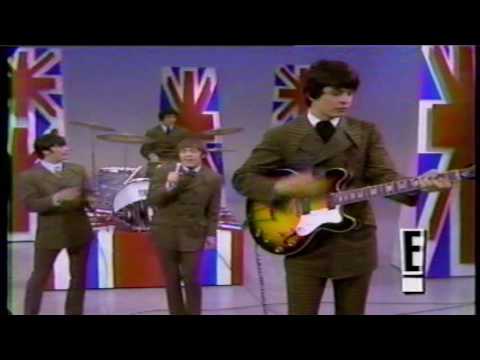

→ More from the 1960s File
View all 1960s hits →




Keep digging