The 1960s File Feature
Don't Let Me Be Misunderstood
Don't Let Me Be Misunderstood — The Animals (1965) The Animals arrived in the United States in early 1964 as part of the British Invasion, a Newcastle-based …
01 The Story
Don't Let Me Be Misunderstood — The Animals (1965)
The Animals arrived in the United States in early 1964 as part of the British Invasion, a Newcastle-based quintet whose raw, blues-influenced sound distinguished them from the more polished Merseybeat acts that were simultaneously transforming the American chart. By early 1965 the group had already achieved number-one success with their recording of "The House of the Rising Sun" and had established a significant American following through both chart success and extensive touring. "Don't Let Me Be Misunderstood" represented a different kind of challenge for the group, taking a song composed in the American rhythm and blues tradition and reinterpreting it through the prism of British rock.
The song was written by Bennie Benjamin, Sol Marcus, and Gloria Caldwell, three American songwriters working in the professional tradition of the New York music publishing world. The composition had been recorded by Nina Simone in 1964 as a soul ballad, a version in which Simone's powerful, controlled voice delivered the lyric as a relatively composed plea for understanding. The song's core message, an appeal from someone who acknowledges their own emotional volatility and asks for patience and comprehension rather than judgment, was well suited to Simone's interpretive approach.
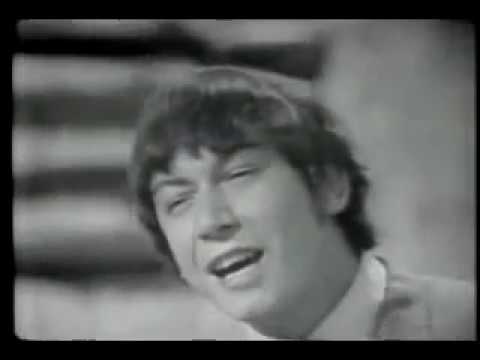
When the Animals recorded the song at Mickie Most's production sessions for Decca Records in London in late 1964 or early 1965, the results were substantially different in character from the Simone original. Most, who had become the group's principal producer following their initial success, supervised an arrangement that accelerated the tempo considerably and introduced an urgency and agitation entirely absent from Simone's version. Eric Burdon's vocal was delivered with the raw, slightly desperate quality that had become the band's trademark, and Alan Price's organ provided a churning harmonic foundation that drove the track's emotional intensity upward throughout.
The Animals' recording was released in January 1965 and entered the American Billboard Hot 100 on February 6, 1965, at position 89. The chart ascent was steady if not dramatic, moving through the 70s, 60s, and 50s in successive weeks. The record reached its chart peak on April 3, 1965, attaining number 15 on the Billboard Hot 100, a respectable commercial performance that fell short of the extreme heights the group had reached with "The House of the Rising Sun." The record spent 10 weeks total on the Billboard Hot 100 during its chart run.
In the United Kingdom, the record performed more strongly, reaching number 3 on the UK Singles Chart and confirming the group's continued popularity in their home market. The difference in chart performance between the American and British markets reflected in part the more crowded American competitive landscape of early 1965, where British Invasion acts were competing intensely with each other as well as with American artists who had adapted to the new commercial environment.
The production of the Animals' version was notable for its layering of Burdon's vocal intensity with Chas Chandler's bass, Hilton Valentine's guitar, John Steel's drums, and Price's organ into a sound that felt both disciplined and on the verge of losing control. This balance of organization and volatility perfectly matched the lyric's emotional subject matter, creating a recording in which the sonic environment enacted what the words described. The session musicians and band members achieved a collective performance intensity that was widely admired among both contemporaries and later musicians who heard in it a model for capturing genuine emotional urgency in a rock recording.
The Animals broke up in 1966 following Alan Price's departure and subsequent personnel changes, but "Don't Let Me Be Misunderstood" retained its place in the active popular music repertoire in a way that few of their contemporaries' recordings achieved. The song was most dramatically reintroduced to new audiences when the German band Santa Esmeralda released a lengthy Latin-disco version in 1977 that reached the top 20 in several European markets. Eric Burdon continued to perform the song extensively throughout his subsequent career, and it appeared in several major film soundtracks in the 1980s and 1990s. The song's inclusion in Quentin Tarantino's 2009 film "Inglourious Basterds" gave it a further cultural revival, introducing it to a new generation of film audiences and sustaining its presence in popular consciousness well into the twenty-first century.
The Animals' recording stands as one of the most significant British Invasion-era transformations of American source material, demonstrating how English musicians of the period could take a song rooted in African-American soul and gospel tradition and produce something with its own distinct emotional character while preserving the underlying composition's essential power.
02 Song Meaning
What "Don't Let Me Be Misunderstood" Means
"Don't Let Me Be Misunderstood" addresses a specific and psychologically complex emotional situation: the experience of someone who recognizes their own capacity for difficult, even hurtful behavior and attempts to contextualize that behavior for a partner who has been on the receiving end of it. The lyric does not deny the behavior or rationalize it away. Instead, it asks for understanding, for a recognition that the difficult moments are not the whole truth of who the person is. This appeal for interpretive charity, for being understood in context rather than judged by the worst moments, is the song's emotional core.
This is a notably more morally complicated stance than the standard pop song's approach to romantic conflict, which typically assigns clear roles of wrongdoer and wronged party. "Don't Let Me Be Misunderstood" acknowledges agency and responsibility while simultaneously arguing that neither the behavior nor the agency is the complete story. The narrator is not innocent; they know they have caused pain. But they are asking that the pain not be taken as the totality of who they are, that their better self be held in view alongside the difficult moments. This nuance, rendered in a commercial pop format, distinguished the song from most of its chart contemporaries.
Nina Simone's original 1964 recording delivered this message as a controlled, deliberate statement, using the dynamic authority of her voice to frame the plea as something confident rather than desperate. The Animals' 1965 recording transformed the emotional register entirely, replacing Simone's composure with an urgency that itself enacted the volatility the lyric acknowledges. Burdon's vocal sounds like someone genuinely at risk of being misunderstood at this very moment, not someone calmly explaining themselves after the fact. This shift from explanation to enactment is what makes the Animals' version feel so different from the original despite setting essentially the same words to essentially the same melody.
The organ work of Alan Price is inseparable from the song's meaning in the Animals' recording. Price's churning, pressurized playing creates a sonic environment of barely contained energy that functions as a musical metaphor for the emotional volatility the lyric describes. The organ does not simply accompany the vocal; it dramatizes the internal state of the person singing. This integration of instrumental color with lyrical meaning was one of the distinctive achievements of the Animals' approach to the song and contributed to the recording's lasting reputation among rock musicians as a model for how arrangement can serve meaning.
The song's appeal across multiple versions and multiple decades reflects the universality of its emotional situation. The experience of being misread, of having one's worst moments taken as one's essential character, of wanting to be seen whole rather than partially, is not bounded by era, nationality, or musical genre. This universality explains why the song has been successfully reinterpreted by artists working in styles as different as Simone's soul balladry, the Animals' rough rock urgency, Santa Esmeralda's Latin disco, and various other subsequent approaches. Each version finds the same essential truth in the lyric and renders it through a different stylistic lens.
The song also participates in a broader tradition of popular music that takes emotional self-examination as its subject. In the early and mid-1960s, pop music's treatment of romantic situations tended toward the external: songs about what someone did or didn't do, about arrival and departure, about presence and absence. A song that turned the camera inward, acknowledging the singer's own capacity for difficult behavior and asking to be judged by more than the worst of it, represented a different kind of emotional honesty. This self-referential quality, the song's interest in the singer's own complexity rather than merely the other person's actions or feelings, places it in a lineage of psychologically sophisticated pop that would become more prominent in the later 1960s.
The ongoing cultural life of the song, most recently amplified by its prominent use in Tarantino's "Inglourious Basterds," confirms that the emotional situation it describes has not become dated. The experience of being misunderstood, and the desire to be seen in one's full complexity rather than reduced to one's most difficult moments, is a permanent feature of human relational life, and the song's articulation of that experience retains its power across contexts and generations.
→ More from The Animals
View all The Animals hits →


→ More from the 1960s File
View all 1960s hits →




Keep digging