The 1960s File Feature
Sing A Simple Song
Sing A Simple Song — Sly & The Family Stone's Funk Underneath the Fire The Most Radical Band in America By early 1969, Sly & The Family Stone occupied a sing…
01 The Story
Sing A Simple Song — Sly & The Family Stone's Funk Underneath the Fire
The Most Radical Band in America
By early 1969, Sly & The Family Stone occupied a singular position in American popular music. Formed in San Francisco by Sylvester Stewart, the group was genuinely integrated in a way that went beyond symbolic gesture: Black and white musicians, men and women, playing together with a musical authority that made their social composition feel like an artistic statement as much as a political one. Their sound was an explosive synthesis of rock, gospel, soul, and psychedelia, with a rhythmic engine that pointed directly toward the funk era that would dominate the early 1970s. Sly Stone's production approach was ahead of nearly everyone in the pop world: harder rhythmically, more texturally dense, more willing to let the groove exist for its own sake rather than merely as support for melody.
The B-Side That Charted
"Sing A Simple Song" had an interesting commercial life. The track appeared as the B-side to "Everyday People," which reached number one on both the Billboard Hot 100 and the R&B chart in early 1969. "Everyday People" was one of the defining social statements of its era, a song about human unity that captured the idealism of the late 1960s counterculture while simultaneously keeping its feet planted in funk. "Sing A Simple Song," as its flipside, was a more groove-oriented piece that showcased the band's rhythmic capabilities rather than foregrounding a political message. The fact that it charted separately on the Hot 100 spoke to the depth of enthusiasm for the band at that moment.
The Chart Run
The single debuted on the Billboard Hot 100 on March 8, 1969, entering at number 90. It rose to its peak position of number 89 on March 15, 1969, where it remained for two weeks before slipping back. The four-week chart run was modest, reflecting its status as a B-side benefiting from the extraordinary attention that "Everyday People" was generating rather than as a primary single making its own way up the chart. But reaching 89 on the Hot 100 as a B-side was itself meaningful, and the track appeared separately on R&B charts as well, where the group's fanbase was concentrated and passionate.
The Album and Its Context
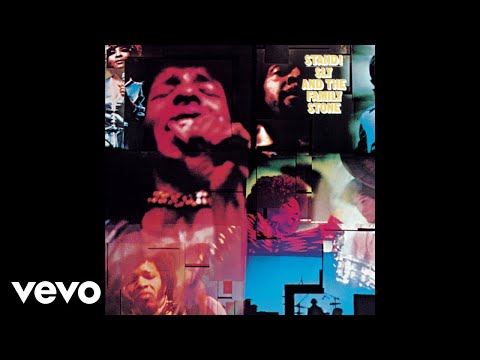
The track came from Life, released in 1968, the band's third album and an important step toward the harder, darker material that would appear on Stand! later in 1969 and then reach its culmination in the landmark There's a Riot Goin' On in 1971. Stand! in particular would become one of the most celebrated albums in the history of funk and soul, with "Everyday People" and "I Want to Take You Higher" establishing the band as commercial and critical powerhouses. "Sing A Simple Song" sat in the period just before that peak, when the group was still refining the approach that would make those records possible.
A Foundation Stone of Funk
Sly & The Family Stone's influence on subsequent music is so pervasive that it can be difficult to isolate. James Brown's funk, Parliament-Funkadelic's cosmic groove, hip-hop's sample culture, the entire trajectory of Black popular music through the 1970s and beyond: all of it passed through what Sly and his band developed. "Sing A Simple Song" was one of the tracks that demonstrated the group's rhythmic intelligence at its most concentrated, a lesson in how to make a groove function that successive generations of producers and musicians absorbed, often without knowing exactly where it came from. Turn it up loud enough and you can feel that education happening in real time.
"Sing A Simple Song" — Sly & The Family Stone's singular moment on the 1960s charts.
02 Song Meaning
Sing A Simple Song — Groove, Community, and the Radical Simplicity of Funk
What the Groove Means
In the vocabulary of African American music, a groove is not merely a rhythmic pattern. It is a collective experience, a shared physical and emotional state that musicians create together and audiences enter together. "Sing A Simple Song" operates in that tradition with confidence and authority, offering a rhythmic framework that invites participation rather than passive listening. The "simple song" of the title is neither an apology nor an ironic understatement; it is a statement of values. Simplicity in this context means direct access to the body's rhythmic intelligence, cutting through the intellectual distance that more complex arrangements sometimes impose. Simple songs, when executed with the depth this one brings, are often the hardest to write.
The Family Stone's Integration as Artistic Practice
The composition of Sly & The Family Stone was itself a kind of argument embedded in the music. An integrated band playing integrated music in 1969 made a social claim through practice rather than proclamation. When the group performed, the visible fact of their composition challenged audiences to hear the music they were making together as evidence that the social integration they embodied was possible, real, and productive. The music didn't just describe community; the making of it enacted community. "Sing A Simple Song" participated in this argument through its very existence as a product of that creative collaboration.
The Late 1960s Crossroads
Early 1969 sat at a crucial moment in the cultural trajectory of the 1960s. The idealism of the middle of the decade was fraying, the civil rights movement had suffered severe blows with the assassinations of 1968, and the counterculture was beginning to encounter the limits of its optimism. Sly & The Family Stone navigated this moment in a particularly interesting way, making music that was simultaneously celebratory and electric with tension. Their work acknowledged that joy and struggle coexist, that a dance groove can carry political weight without being a polemic. "Sing A Simple Song" leaned toward the celebratory end of that range while existing in a context that gave even celebration its own kind of urgency.
The B-Side as Hidden Depth
The B-side occupied a particular cultural function in the single era: it was the unexpected gift, the track that rewarded attentive listeners who flipped the record over after wearing out the A-side. The most durable B-sides in popular music history often had a raw, less obviously commercial quality that made them favorites among musicians and serious fans even when they didn't match the chart success of their A-side counterparts. "Sing A Simple Song" worked in this tradition, offering a rhythmic intensity and funkier texture that contrasted with the more immediately accessible "Everyday People" on the flip. Fans who discovered it found something that felt more purely musical and less commercially calculated.
The Legacy in the Groove
The rhythmic approach demonstrated on "Sing A Simple Song" filtered directly into the funk revolution that dominated Black popular music in the early 1970s and has continued resonating through sample-based music ever since. The particular way the Family Stone locked into a groove, the relationship between bass, drums, and rhythm guitar, the space left for each element to breathe, established principles that producers and musicians have returned to repeatedly across decades. The track's modest chart performance belied its influence on the practitioners who heard it and absorbed its lessons. It was one of the foundational documents of a rhythmic tradition that shows no signs of exhausting itself.
→ More from Sly & The Family Stone
View all Sly & The Family Stone hits →


→ More from the 1960s File
View all 1960s hits →




Keep digging