The 1960s File Feature
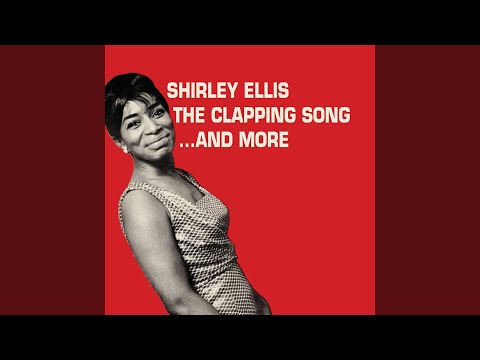
The Clapping Song (Clap Pat Clap Slap)
The Clapping Song (Clap Pat Clap Slap) — Shirley Ellis and the Playground Comes to Pop The Sound of Children's Games on the Radio Something unusual was climb…
01 The Story
The Clapping Song (Clap Pat Clap Slap) — Shirley Ellis and the Playground Comes to Pop
The Sound of Children's Games on the Radio
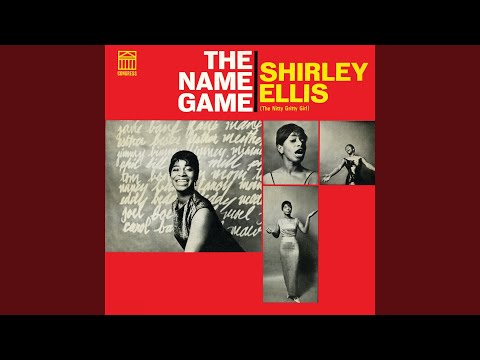
Something unusual was climbing the Billboard Hot 100 in the spring of 1965. At a moment when British Invasion acts were still reshaping the American charts and Motown was producing one landmark single after another, a record rooted in the rhythmic language of schoolyard hand-clapping games worked its way from number 75 all the way to the top ten. Shirley Ellis had already surprised everyone once with "The Name Game" in early 1965, and now she was doing it again with a track that felt like nothing else on the radio.
Shirley Ellis had spent years as a working songwriter before her recording career took off, and that experience shaped the quality of her material in ways that separated her from many of her contemporaries. She understood construction: how to build a hook, how to pace a lyric, how to set up a rhythm that would stick in the listener's head long after the record finished. "The Clapping Song" deployed all of those skills in service of something deceptively simple.
From Playground to Recording Studio
The song drew directly on the tradition of hand-clapping games that have existed in children's culture across cultures and generations, the rhythmic pat-and-clap sequences that children invent and pass down through oral tradition without ever writing anything down. Ellis and her collaborators took that physical, participatory tradition and fashioned it into a structured pop record, produced by Lincoln Chase on the Congress imprint of Kapp Records.
Lincoln Chase was himself a songwriter and producer with a track record in rhythm and blues, and his work on the Ellis recordings gave them a tightness that kept them from feeling novelty-thin. The rhythm section on "The Clapping Song" has genuine drive, the kind of propulsive feel that makes the body want to respond physically before the brain has consciously decided anything. That physical immediacy was entirely appropriate for a song about hand-clapping, but it also made it feel organic rather than gimmicky.
The Chart Climb
The track debuted on the Billboard Hot 100 on March 20, 1965, entering at number 75. The ascent was rapid and steady: number 42 the following week, number 32 the week after, then 19, then 9. It peaked at number 8 on April 24, 1965, spending nine weeks in total on the chart. For an artist who had already hit with "The Name Game," this was confirmation that Ellis had found a formula that audiences genuinely loved rather than a single fluke.
The competition on the charts that spring included the Beatles, the Rolling Stones, the Four Tops, and a dozen other major acts, which makes the performance of "The Clapping Song" all the more impressive. Ellis's recordings occupied a particular niche that was warm, fun, and deeply participatory, inviting listeners to join in rather than simply observe.
Shirley Ellis and the Art of Novelty
The word "novelty" tends to be applied dismissively in pop music history, as if songs that make people smile and participate are somehow less serious than songs that brood or philosophize. Ellis's career deserves a more generous reading. The rhythmic complexity of her hits was genuine and not accidental, rooted in traditions of African American oral culture, verbal play, and communal music-making that have deep historical roots. Taking those traditions and translating them into chart-worthy pop singles required real craft.
Ellis recorded for Congress throughout the mid-1960s, charting multiple times without ever achieving the massive crossover breakthrough that might have made her a household name for more than one generation. The brevity of her Hot 100 run speaks more to the volatility of the mid-60s pop market than to any deficit in her abilities.
An Echo That Never Quite Fades
"The Clapping Song" has appeared in films, television shows, and advertisements across the decades since its original release, each appearance introducing it to new audiences who immediately understand its basic appeal. The song has been covered internationally, recorded in multiple languages, and adapted into children's programming in countries far beyond its original American context. That global reach speaks to how completely Ellis tapped into something universal about the pleasure of rhythmic play.
Cue it up and feel the urge to clap along. Fifty years of distance has not diminished that impulse one bit.
"The Clapping Song (Clap Pat Clap Slap)" — Shirley Ellis's singular moment on the 1960s charts.
02 Song Meaning
The Clapping Song (Clap Pat Clap Slap) — Themes of Play, Rhythm, and Communal Joy
The Oldest Music
Before there were instruments, there was rhythm, and before there was rhythm as art, there were the rhythmic games that children play with their bodies, clapping hands, slapping thighs, stamping feet. "The Clapping Song" reaches back to that most fundamental layer of musical experience and draws it into the pop format of 1965. Shirley Ellis understood that the pleasure of rhythmic participation is one of the most deeply wired human responses, and she built a record that activated it immediately and irresistibly.
Oral Tradition Meets the Charts
The hand-clapping game tradition that feeds the song is an oral tradition in the strictest sense: learned by watching and copying, transmitted person to person, never written down, constantly evolving. Different regions have different versions; different schoolyards pass down slightly different patterns. Ellis drew on African American musical and verbal play traditions that had sustained themselves across generations, bringing them into a form that mainstream radio could receive.
This act of cultural translation was not simple, and Ellis's facility with it reflects her background as a songwriter who had spent years understanding how popular audiences receive material. The challenge was to preserve the participatory energy of playground games while giving the song enough melodic shape and lyrical content to hold up as a record, something you would want to hear even when you could not clap along. The production achieved that balance cleanly.
Joy as a Political Act
In the context of 1965, a year of enormous social turbulence, civil rights struggle, and political division, an African American artist placing Black musical traditions at the center of the national pop conversation carried a meaning that was not purely musical. The visibility of Ellis and her recordings on the mainstream Hot 100 was part of a broader integration of the American charts that Motown, Atlantic, and a handful of independent labels were driving simultaneously. The joy in "The Clapping Song" was genuine and uncomplicated on its surface, but its presence in the mainstream was not incidental.
Pop music has always served as one of the arenas where cultural integration moves ahead of the surrounding society, and the mid-1960s chart landscape was a particularly vivid example of that dynamic.
Why the Song Still Works
Decades of critical reappraisal have been kinder to artists like Shirley Ellis than the original industry was. Scholars of African American music, of oral traditions, and of popular music have recognized in her recordings a richness of cultural connection that the "novelty" label obscured. The Clapping Song endures because it does something genuinely hard: it makes complex rhythmic patterns feel effortless and irresistible to listeners who have never studied rhythm in their lives.
Contemporary listeners discovering the track through streaming platforms or film soundtracks find something that requires no historical context to appreciate. The rhythm works on bodies across generations because it taps into patterns of call and response, anticipation and release, that human beings seem to be born ready to understand. Ellis found something close to a universal frequency, and she broadcast it with warmth and precision in equal measure.
"The Clapping Song (Clap Pat Clap Slap)" — Shirley Ellis's singular moment on the 1960s charts.
→ More from Shirley Ellis
View all Shirley Ellis hits →

→ More from the 1960s File
View all 1960s hits →




Keep digging