The 1960s File Feature
Falling
Falling — Roy Orbison (1963) Roy Orbison recorded "Falling" in 1963 for Monument Records , the Nashville-based independent label where he had achieved his gr…
01 The Story
Falling — Roy Orbison (1963)
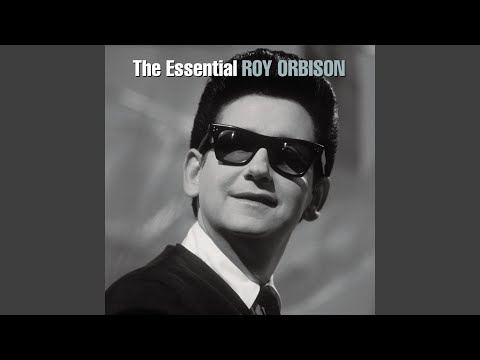
Roy Orbison recorded "Falling" in 1963 for Monument Records, the Nashville-based independent label where he had achieved his greatest commercial and artistic successes. By 1963, Orbison was at the peak of his commercial power, having released "Oh, Pretty Woman" and a succession of extraordinary recordings that had made him one of the most distinctive voices in American pop music. Monument, under the direction of Fred Foster, had provided him with the creative latitude and production environment that suited his uncommon artistic personality, and the working relationship between Orbison and Foster during this period was one of the most productive in the history of American popular recording.
"Falling" belongs to the distinctive stylistic universe that Orbison had been constructing across his Monument recordings: the operatic vocal range deployed in service of intimate romantic catastrophe, the lush orchestral arrangements that existed somewhere between pop and classical music, and the narrative structure that treated romantic experience with a seriousness typically reserved for art song. Orbison's voice, one of the most technically remarkable in the pop idiom, with its capacity to move from falsetto to full-throated tenor without perceptible seams, was the central instrument around which Monument's productions were organized. The production team understood that the voice required support rather than competition, and the arrangements on his recordings consistently honored this understanding.
The song's commercial performance on the Billboard Hot 100 in 1963 reflected the strength of Orbison's position in the marketplace during this period. Monument's distribution and promotional relationships allowed his recordings to reach both country and pop radio, a dual-market penetration that amplified his commercial impact. The early 1960s were a particularly hospitable moment for artists who could navigate the boundary between Nashville and the broader pop world, as the Nashville Sound that had emerged in the late 1950s was successfully marketing country-influenced material to mainstream pop audiences.
Fred Foster's production aesthetic was well-suited to Orbison's material. Foster favored recordings that treated each song as a complete dramatic world, with the orchestral arrangement functioning as a kind of cinematic scoring that communicated the emotional stakes of the narrative before the vocal even entered. For a song called "Falling," this meant an arrangement that captured the sense of vertiginous descent implied by the title, the loss of equilibrium that romantic feeling can produce in those unprepared for its force.
Orbison's approach to pop songwriting in this period was influenced by his classical listening and his interest in operatic forms. He was drawn to the dramatic arc, the sense of a song as a compressed narrative with a beginning, development, climax, and resolution, and this structural ambition set his recordings apart from the more formulaic verse-chorus pop of the era. "Falling" exhibits this structural sophistication, moving through emotional registers with a sense of dramatic inevitability that rewards close listening.
The year 1963 was one of remarkable productivity for Orbison and one of the most commercially rich periods in the history of Monument Records. The label was operating as an independent in a marketplace increasingly dominated by major label infrastructure, and its success with Orbison was a demonstration that independent labels with strong artist relationships could compete at the highest commercial levels. Foster's decision to record Orbison with full orchestral accompaniment rather than the stripped-down arrangements more common in country production was a creative gamble that paid sustained dividends across multiple years of releases.
British artists, who were in the process of formulating what would become the British Invasion, held Orbison in exceptionally high regard. The Beatles, in particular, had performed with him on a British tour and were vocal about their admiration for his work. This transatlantic recognition contributed to the durability of his reputation even as American pop was about to be transformed by the very British acts who admired him. "Falling" appeared at a moment when Orbison stood at an intersection of American pop traditions, having absorbed country, rockabilly, and classical influences into a synthesis that was entirely his own.
02 Song Meaning
Falling — Meaning and Themes
"Falling" uses the physical sensation of uncontrolled descent as a metaphor for the experience of falling in love, a common romantic figure that Orbison handles with a specific emotional precision that distinguishes his treatment from more generic deployments of the trope. The experience the song describes is not entirely comfortable; it contains within it the disorientation and loss of control that the metaphor literally implies. To fall is to be in motion without having chosen that motion, and the song is honest about the ambiguity of an experience that is simultaneously exhilarating and terrifying.
Roy Orbison's vocal performance gives particular weight to the vulnerability inherent in the song's situation. His voice, trained in the operatic tradition of sustained pitch and dynamic range, was unusually capable of communicating states of emotional extremity without tipping into melodrama. The upper registers that he employed for moments of particular intensity conveyed a quality of suspension, of the voice itself momentarily weightless, that mirrored the physical metaphor the lyric was deploying. This correspondence between vocal technique and lyrical content was one of Orbison's signature artistic achievements.
The song participates in a broader pattern in Orbison's Monument recordings of treating romantic love as a potentially overwhelming force rather than an uncomplicated pleasure. His most celebrated recordings, including "Crying" and "In Dreams," share this quality of representing love as something that exceeds the singer's capacity to contain it, that spills over the boundaries of ordinary emotional management. "Falling" belongs to this tradition, presenting the onset of love as a loss of agency that the speaker simultaneously welcomes and struggles to process.
The Monument Records production framework that Fred Foster constructed for Orbison emphasized the operatic dimensions of this emotional material. The orchestral arrangements that surrounded Orbison's recordings were not decorative; they were functional, providing an emotional landscape within which the vocal drama could unfold with appropriate scale. For "Falling," this meant an arrangement that communicated the sense of expanding, accelerating sensation that the lyric described, with the strings and brass working together to create a sense of increasing intensity that mirrored the speaker's emotional state.
In the context of early 1960s pop, the emotional seriousness that Orbison brought to romantic subjects was unusual and perhaps even anomalous. The dominant aesthetic of the era tended toward the celebratory or the pleasantly melancholy, but Orbison's work occupied a more extreme register, one where romantic feeling was treated as an experience capable of remaking the self. "Falling" is a relatively contained example of this tendency, but it shares the fundamental conviction that love deserves the full resources of musical art to convey its actual nature, that a three-minute pop record can be a serious aesthetic object rather than merely a commercial one. This conviction, consistently acted upon across dozens of recordings, is what secured Orbison's reputation as one of the most singular artists in the American pop tradition.
→ More from Roy Orbison
View all Roy Orbison hits →
→ More from the 1960s File
View all 1960s hits →




Keep digging