The 1960s File Feature
Crying
Crying — Roy Orbison (1961) Roy Orbison recorded "Crying" in the spring of 1961 at the Bradley Film and Recording Studios in Nashville, one of the most stori…
01 The Story
Crying — Roy Orbison (1961)
Roy Orbison recorded "Crying" in the spring of 1961 at the Bradley Film and Recording Studios in Nashville, one of the most storied facilities in American country and pop music. The session was produced by Fred Foster, the founder and head of Monument Records, the Nashville-based independent label that had signed Orbison two years earlier after his tenure at Sun Records. Foster had already shepherded Orbison through the breakthrough smash "Only The Lonely" in 1960, and he understood better than anyone how to frame the singer's extraordinary tenor voice within the pop landscape of the era.
The song was written by Roy Orbison and Joe Melson, the same songwriting partnership responsible for "Only The Lonely" and several other Orbison classics of the period. Melson was a fellow Texan who had befriended Orbison in the late 1950s, and their collaborative chemistry produced some of the most emotionally exposed material on the American pop chart in the early 1960s. "Crying" reportedly grew from a real encounter Orbison had with a former girlfriend on a Nashville street, where the casual pleasantries of a chance meeting concealed the emotional devastation he felt beneath the surface. That private, suppressed grief became the emotional engine of the recording.
What distinguished the production of "Crying" from most pop recordings of 1961 was its formal ambition. At a moment when most 45 rpm singles were constructed for brevity and immediacy, Foster and Orbison built the song as a slow orchestral crescendo. The arrangement, which incorporated strings and a gradual dynamic build, was unusual for a Nashville production of the time and underscored Monument's willingness to invest in unconventional sonic architecture for its star act. Orbison's vocal ascended steadily through the track, reaching a climactic high note near the conclusion that became one of the most discussed moments in early 1960s pop recording.
Monument Records released "Crying" as a 45 rpm single in the summer of 1961, backed with "Candy Man." The record entered the Billboard Hot 100 on August 14, 1961, debuting at position 71. Its ascent was steady and impressive, climbing through the top 30 and top 20 with each successive week. By October 9, 1961, "Crying" had reached its chart peak at number 2 on the Billboard Hot 100, held from the top position by Jimmy Dean's "Big Bad John," which was one of the dominant singles of that autumn season. The record spent 16 weeks on the Billboard Hot 100 in total, a run that confirmed Orbison as one of the most commercially reliable acts in American pop music.
The record also performed well on the country chart, reflecting Orbison's dual appeal across both the Nashville-identified audience and the mainstream pop market. This crossover quality was significant in 1961, when the distinctions between pop, country, and rhythm and blues were being tested by the competitive pressures of a singles market that rewarded broad appeal. Orbison occupied an unusual position in that landscape, drawing on operatic vocal dramatics and orchestral pop production while maintaining a credibility with country listeners through his Monument association and his Texas origins.
Critical reception to "Crying" in 1961 was strongly positive, with reviewers noting the unusual emotional intensity of the performance and the sophistication of the production relative to most chart pop of the time. The song was understood immediately as something more than a standard teen-market release, and its success helped reframe Orbison's public identity from rockabilly act to a more serious, adult-oriented pop artist. This repositioning was commercially important and set the trajectory for his run of Monument singles throughout the early 1960s.
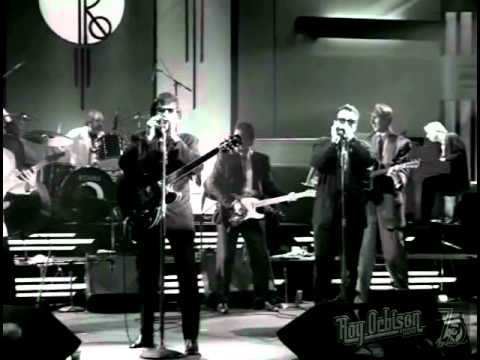
The song's cultural footprint extended well beyond its original chart run. In 1962, Don McLean recorded a version that eventually reached number 5 on the Hot 100 in 1981, twenty years after the original. Orbison himself re-recorded "Crying" as a duet with k.d. lang for the 1987 film "Hiding Out," and that version won a Grammy Award for Best Country Collaboration with Vocals in 1989. The song had thus produced commercial success across three separate decades under the same title. It was inducted into the Grammy Hall of Fame, and Orbison's original recording has been consistently cited in critical surveys as one of the essential vocal performances in American popular music history.
The recording also stands as a landmark document of the Monument Records catalog and of the particular Nashville pop sound that Fred Foster cultivated through the early 1960s. Unlike the productions coming out of New York's Brill Building stable or Detroit's early Motown operation, "Crying" represented a Southern pop sensibility rooted in country music's emotional directness but reaching toward orchestral grandeur. That combination gave it a distinctive place in the 1961 chart landscape and ensured its durability across subsequent generations of listeners and artists who found in it a model for performing emotional vulnerability at maximum volume.
02 Song Meaning
What "Crying" Means
"Crying" belongs to a tradition of pop songs that use an apparently simple emotional situation to explore something psychologically more complex. The song's central conceit is the gap between outward composure and inward devastation, a situation in which a person encounters a former romantic partner, exchanges pleasantries, and manages to hold themselves together in the moment, only to be overwhelmed by grief once alone. This structure, describing the delayed collapse of emotional control, gave the song its distinctive dramatic arc and placed it at the intersection of melodrama and genuine psychological insight.
The emotional territory of "Crying" is not merely romantic heartbreak in the conventional teenage-pop sense of the early 1960s. Roy Orbison's performance transforms the song into an examination of grief and the social masks people wear to manage unbearable feeling. The performance builds from a composed, almost conversational beginning toward a vocal climax of extraordinary intensity, mirroring in musical form the internal pressure that builds when emotion is suppressed for too long. The architecture of the performance is itself a statement about the experience being described.
In the context of early 1960s American pop music, "Crying" stood apart from the prevailing tones of the chart. The era was dominated by dance-oriented singles, teen-idol ballads, and novelty records. Orbison's offering was darker, more adult in its emotional register, and less interested in reassurance or resolution. The song does not end with reconciliation or with the emotional wound healed, but rather with the experience of grief rendered honestly and without consolation. This refusal of the upbeat resolution that dominated radio pop of the time was part of what made the record distinctive and gave it a longevity that more cheerful contemporaries did not always achieve.
The song also engages with the particular vulnerability of the male figure in post-war American pop culture. In the early 1960s, public expressions of male grief were unusual in mainstream entertainment, and a recording that centered a man's crying as its core subject matter carried a certain cultural weight. Orbison's willingness to inhabit that vulnerability without irony or deflection became a defining characteristic of his artistic identity throughout the Monument Records period and gave "Crying" a significance that went beyond its chart performance.
Within Orbison's catalog, "Crying" occupies a central position as the clearest expression of what critics and commentators have identified as his signature mode: the dramatic ballad in which emotional suffering is rendered with operatic seriousness and formal precision. The song established a template that subsequent Orbison recordings, including "In Dreams," "It's Over," and "Running Scared," would develop in different directions. Each of those songs shares with "Crying" a fascination with loss, with the finality of romantic endings, and with the idea that grief is not a temporary condition but something that reshapes the person who experiences it.
The recording's meaning expanded over time as it accumulated cultural associations across multiple decades. Don McLean's 1981 cover introduced the song to a new generation, and the Orbison and k.d. lang duet of 1987 gave it a further layer of meaning by transforming the solo cry of grief into a shared experience between two voices. That duet version, which won the Grammy Award for Best Country Collaboration with Vocals in 1989, demonstrated the song's capacity to carry emotional authenticity across very different vocal and production contexts. Each version added something to the original without diminishing it, a quality that separates the genuinely significant popular song from the merely successful one.
At its most fundamental level, "Crying" is a song about the irreversibility of certain emotional experiences. The encounter it describes cannot be undone, the feelings it reveals cannot be unfelt, and the grief it enacts is presented as something that will persist. That frank acknowledgment of emotional permanence, rendered through one of the most technically impressive vocal performances in American pop history, is what has kept the song in active circulation across more than six decades of popular music culture.
→ More from Roy Orbison
View all Roy Orbison hits →
→ More from the 1960s File
View all 1960s hits →




Keep digging