The 1960s File Feature
Only The Lonely (Know How I Feel)
Only The Lonely (Know How I Feel) — Roy Orbison's Breakthrough into the Darkness A Voice Searching for Its Stage Picture the pop music landscape of early 196…
01 The Story
Only The Lonely (Know How I Feel) — Roy Orbison's Breakthrough into the Darkness
A Voice Searching for Its Stage
Picture the pop music landscape of early 1960. Buddy Holly was gone, dead in a plane crash just over a year earlier. Elvis Presley had been drafted and was still in the Army. The charts were filled with teen idols and novelty records, and the raw emotional turbulence of early rock and roll had given way to something smoother, safer, and considerably more forgettable. Into this relatively placid environment came Roy Orbison with a record that seemed to belong to a different emotional universe entirely, one where heartbreak was not a passing inconvenience but a permanent condition of being alive.
Orbison had spent years on the edges of commercial success without breaking through. He had recorded for Sun Records in Memphis, where Sam Phillips had tried to position him as a rockabilly act, a bad fit for a man whose gifts were operatic rather than raucous. He had written Claudette for the Everly Brothers, who had a hit with it. By the time he signed with Monument Records and found himself working with producer Fred Foster in Nashville, he was in his mid-twenties and had not yet made the record that would define him.
The Making of a Monument Record
Orbison wrote "Only the Lonely" with Joe Melson, a frequent collaborator during this period, and the song was reportedly offered to Elvis Presley and the Everly Brothers before Monument decided to record it with Orbison himself. That decision changed everything. The track was produced by Fred Foster at Monument Records, and the arrangement built around Orbison's voice in a way that emphasized its extraordinary range and emotional depth. The backing vocal group provided a doo-wop-influenced frame, while the production gradually expanded to let Orbison's voice soar into registers that most pop singers of the era could not approach.
The falsetto that Orbison deployed throughout the recording was not a trick or an affectation. It was the natural extension of a voice trained in gospel and shaped by genuine personal experience of loss and loneliness. His first marriage had been difficult; his personal life carried real shadows that the music seemed to reflect without calculation.
Twenty-One Weeks on the Hot 100
The commercial performance of Only the Lonely (Know How I Feel) was remarkable by any measure. The single debuted on the Billboard Hot 100 on June 6, 1960, entering at number 88. Over the following months it climbed steadily and persistently, moving up through the 40s and 30s before accelerating through the upper reaches of the chart. It peaked at number 2 during the week of July 25, 1960, kept from the top spot only by the intense competition at the summit of what was then a very crowded chart. The record spent an extraordinary 21 weeks on the Hot 100, a figure that reflected the deep and sustained enthusiasm of radio audiences across a full five months of airplay.
The single also reached number 1 in the United Kingdom, establishing Orbison's international profile earlier than most American acts of the period. The British appetite for his emotionally intense style would prove durable throughout his career.
What Made It Different
In the context of 1960 pop radio, Only the Lonely sounded like nothing else. Where other records of the period sought to reassure listeners or entertain them, Orbison's record acknowledged a specific emotional reality: that loneliness is sometimes absolute, and that the people who truly understand it are the people who live inside it. The song's power came from its refusal to offer false comfort, presenting isolation not as a problem to be solved but as a shared human experience worthy of serious musical attention.
That approach created a different kind of connection with its audience. Listeners who had felt alienated from the cheerful optimism of mainstream pop radio found in Orbison's record a validation that the charts rarely provided. The record sold in large numbers partly because it told the truth about an emotional experience that a great many people recognized from their own lives.
The Foundation of the Orbison Legend
Roy Orbison was inducted into the Rock and Roll Hall of Fame in 1987, and Only the Lonely is consistently cited among the most important recordings of the early 1960s. It launched a remarkable run of dark, dramatic hits through the first half of the decade. The record opened a door that no one else had thought to look for. Press play and hear the moment it swung open.
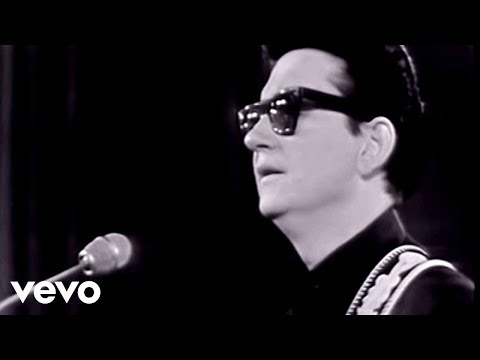
"Only The Lonely (Know How I Feel)" — Roy Orbison's singular moment on the 1960s charts.
02 Song Meaning
Only The Lonely (Know How I Feel) — Grief, Isolation, and Pop Music's Darker Register
Loneliness as Subject Matter
The premise of Only the Lonely (Know How I Feel) was almost radical for its moment. Pop music in 1960 had not yet fully developed a vocabulary for genuine emotional pain; the charts were populated with upbeat teenage romance, mild heartbreak that resolved itself by the final verse, and novelty material that celebrated the simple pleasures of being young. Roy Orbison's song proposed something different: that loneliness was a permanent condition for some people, and that only those who inhabited it could truly recognize each other. The song's central claim was one of solidarity among the isolated, an acknowledgment that the pain was real and that it connected people even as it separated them from the more comfortable majority.
The Emotional Geography of Heartbreak
The lyrics traced the specific landscape of romantic loss with a precision that did not resolve into hope or consolation. The narrator did not suggest that the listener would eventually feel better, or that time would heal the wound. The feeling described was present-tense and ongoing, an ache that the music did not promise to cure. That honesty was unusual in popular song of the period and probably accounted for the intense personal connection that listeners formed with the record. When a song tells the truth about an experience without softening it, the people living that experience often respond with a loyalty that more cheerful material cannot generate.
Orbison's vocal approach reinforced the lyrical content at every turn. His voice moved between registers in ways that physically embodied the emotional movement between acceptance and renewed grief, between a surface-level composure and the underlying devastation it was managing. The falsetto passages in particular carried a quality of vulnerability that was genuinely unusual in the vocal practice of the era's male pop singers.
The Social Context of Early 1960s Isolation
The early 1960s were, on the surface, a period of affluent normalcy in American life. The postwar economic expansion had created conditions of widespread material comfort for the white middle class, and the cultural ideal was domestic happiness, suburban stability, and social conformity. Loneliness was not supposed to be part of that picture, and the dissonance between the cultural ideal and the actual emotional experience of many people created a kind of pressure that records like Orbison's could release. To hear your private experience articulated on the radio was to feel, paradoxically, less alone.
This dynamic made the song particularly powerful for listeners who felt that they did not fit the cheerful template of postwar American success. Young people who felt socially marginalized, adults whose marriages had failed or whose lives had not followed the prescribed path, anyone who lived with a private sorrow that public life had no room for: these were Orbison's people, and he reached them directly.
Legacy and Lasting Influence
The emotional directness of the recording influenced multiple generations of artists who understood that vulnerability in popular music could be a source of power rather than weakness. The track opened space for a strand of pop and rock that took emotional darkness seriously, refusing the mandatory optimism that radio formats typically demanded. From the British Invasion artists who admired Orbison's work to the singer-songwriters who emerged in the 1970s, the trace of his approach can be found in any music that chooses honesty about pain over the easier comforts of the resolved narrative. Only the Lonely proved that darkness, handled with artistry and craft, could find an audience just as large as anything the sunnier end of the dial could offer.
→ More from Roy Orbison
View all Roy Orbison hits →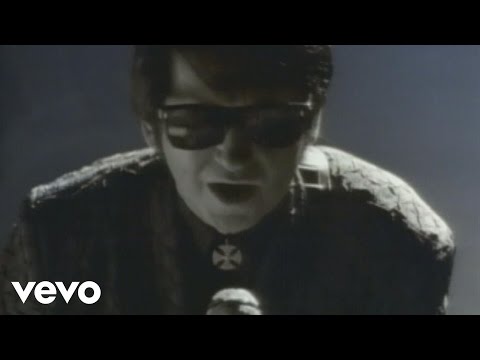
→ More from the 1960s File
View all 1960s hits →




Keep digging