The 1960s File Feature
Dream Baby (How Long Must I Dream)
Dream Baby (How Long Must I Dream) — Roy Orbison and the Art of Longing A Voice That Could Break Your Heart Few voices in early rock and roll history occupie…
01 The Story
Dream Baby (How Long Must I Dream) — Roy Orbison and the Art of Longing
A Voice That Could Break Your Heart
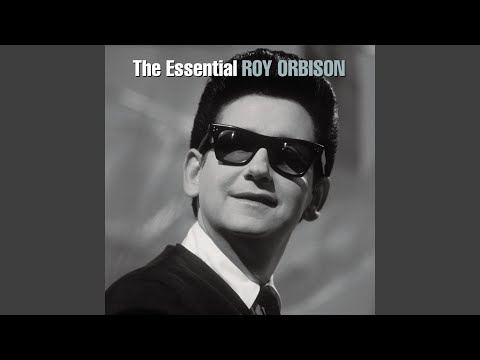
Few voices in early rock and roll history occupied such a specific emotional register as Roy Orbison's. Where most of his contemporaries trafficked in energy, urgency, and rhythmic excitement, Orbison specialized in something more interior: the suspended state between hope and despair, the long ache of wanting something not yet obtained. By early 1962, he had already demonstrated that gift on recordings like Crying and Running Scared. Dream Baby (How Long Must I Dream) arrived in February of that year as further confirmation of his singular talent for turning romantic longing into something almost operatic in its intensity.
The song was written by Cindy Walker, one of the great songwriters of the country and pop tradition, a Texan whose talent for melody and lyrical economy had already produced numerous standards before she handed this track to Orbison. The match between Walker's songwriting and Orbison's vocal style was close to perfect: her gift for melodic lines that could accommodate wide vocal leaps suited his extraordinary three-octave range, and the emotional directness of her lyrics found in his voice exactly the weight they required.
Monument Records and the Orbison Method
By 1962, Roy Orbison had settled into his artistic home at Monument Records, the Nashville-based independent label where producer Fred Foster had created the conditions for the string of classics that defined Orbison's peak years. Foster's approach to production emphasized the voice above all else, building arrangements that served the vocal performance rather than competing with it. The strings, the rhythm section, the background vocals: all were calibrated to enhance the emotional impact of what Orbison delivered at the microphone.
Dream Baby has a slightly different feel from some of Orbison's more overtly dramatic records. It is relatively upbeat in tempo, almost bouncy compared to the orchestral grandeur of Crying, built on a guitar-driven rhythm track that gives it a lightness his more despairing material lacked. The contrast between that relatively cheerful musical setting and the persistent longing expressed in the lyric creates a productive tension that keeps the song feeling emotionally complex.
Orbison's vocal performance here demonstrates his control across dynamics. He can deliver the verses with understated warmth before opening up in the chorus to something much larger, without the transition feeling effortful or theatrical. It sounds like the most natural thing in the world, which is precisely what separates great singers from technically competent ones.
Twelve Weeks and Number Four
The single debuted on the Billboard Hot 100 on February 17, 1962, entering at position 77. Over the following weeks, it climbed steadily toward the chart's upper reaches: by March 31, 1962, it had peaked at number 4, and it maintained chart presence for a total of twelve weeks. That performance placed it among Orbison's most commercially successful singles to that point and confirmed his status as one of the most reliable hit-makers on Monument's roster.
The early spring of 1962 was not, on its surface, a particularly hospitable moment for a record built on yearning and emotional depth. The pop charts were full of teenage novelties, dance-craze records, and the kind of breezy optimism that suited an America still operating in the pre-assassination cultural climate of the early Kennedy years. Yet Dream Baby navigated that landscape successfully, proving that Orbison's audience existed in sufficient numbers to carry a record to the upper tier of the Hot 100.
Orbison's Place in the 1962 Landscape
By the time Dream Baby reached its chart peak, Roy Orbison was establishing himself as one of the most distinctive voices in American popular music. His ability to access emotional states that other artists avoided or sentimentalized, to deliver romantic suffering with dignity rather than melodrama, set him apart from nearly all his contemporaries. The British Invasion bands that would reshape the pop landscape from 1964 onward counted him among their primary American influences.
The Beatles, who toured with Orbison in Britain in 1963 and found themselves routinely upstaged by his solo spotlight, understood something that the American pop mainstream was beginning to recognize: this voice was in a category by itself.
The Legacy of the Dreamer
Cindy Walker's song gave Orbison material that suited both his strengths and the moment, and the combination produced a record that has held up across six decades. Dream Baby continues to appear on oldies radio and in retrospective compilations because the emotional content is genuine and the voice that delivers it is irreplaceable. Listen to the chorus and understand why some voices change the way you hear music entirely.
"Dream Baby (How Long Must I Dream)" — Roy Orbison's singular moment on the 1960s charts.
02 Song Meaning
Dream Baby (How Long Must I Dream) — Longing, Time, and the Romance of Waiting
The Dream as Emotional State
The central image of Dream Baby is the dream as a substitute for the thing desired: when reality does not provide what you need, the imagination offers a version of it. The question embedded in the title, how long must this dreaming continue, frames the entire emotional situation as a state of suspension, neither consummated nor abandoned, hovering between possibility and reality.
Cindy Walker's lyrical construction captures something psychologically precise about early romantic longing. The stage before physical closeness, when everything is possibility and imagination, has its own particular quality of intensity. The dreamed version of the beloved is in some ways more potent than any real encounter could be, precisely because it is uncontaminated by the ordinary frictions of actual human relationship. The song understands and honors that intensity.
Orbison and the Aesthetics of Longing
Roy Orbison's entire artistic persona was built around emotional states that most pop music of the early 1960s either avoided or resolved quickly. Where a typical pop song moved from problem to solution, from longing to fulfillment, or from heartbreak to recovery, Orbison preferred to dwell in the middle state. The longing itself was his subject, and he rendered it with a seriousness that treated it as worthy of extended artistic attention.
This was a form of emotional realism. Most actual romantic experience involves more time in the waiting and the wondering than in the resolution, and music that acknowledged this honestly resonated with listeners who recognized their own inner lives in it. Orbison did not offer false comfort or rush toward happy endings; he stayed with the feeling for as long as the song required.
The Cultural Moment of 1962
American pop culture in early 1962 was operating in a period of surface optimism that had not yet been disrupted by the major traumas of the decade's later years. The Kennedy administration projected a youthful confidence; economic prosperity had produced a consumer culture that expected and received a steady supply of upbeat entertainment. Within that context, a record about longing and the ache of waiting occupied an interesting position.
It did not challenge the era's optimism directly; it simply acknowledged that private emotional reality was sometimes more complex and more suspended than the public mood suggested. That acknowledgment gave listeners permission to feel what they actually felt, which is one of the most valuable things popular music can offer any audience in any era.
Cindy Walker's Contribution
The song's durability owes as much to Walker's songwriting as to Orbison's interpretation. Walker's melody is designed to accommodate the kind of wide interval leaps that showcase a capable voice while remaining singable at a more modest scale by anyone who wants to sing along. Her lyrical construction is efficient, saying exactly what it needs to say without excess, which gives Orbison's performance room to expand emotionally without competing with overcrowded imagery.
The songwriting credit belongs entirely to Walker, a fact worth emphasizing because her contributions to early country and pop are sometimes insufficiently recognized relative to her actual influence. She wrote hits for artists across the spectrum of mid-twentieth century American popular music, and Dream Baby is among her most enduring contributions to the catalog.
The song asks a simple question and declines to answer it: how long must the dreaming last? The lack of resolution is the point. Some emotional states deserve music that matches their duration, that sits with them rather than rushing toward an exit. Orbison understood this, and the recording he made in early 1962 has been proving it ever since.
"Dream Baby (How Long Must I Dream)" — Roy Orbison's singular moment on the 1960s charts.
→ More from Roy Orbison
View all Roy Orbison hits →
→ More from the 1960s File
View all 1960s hits →




Keep digging