The 1960s File Feature
Blue Bayou
"Blue Bayou" — Roy Orbison The Voice That Made Longing Sound Like Architecture Roy Orbison in 1963 occupied one of the more unusual positions in American pop…
01 The Story
"Blue Bayou" — Roy Orbison
The Voice That Made Longing Sound Like Architecture
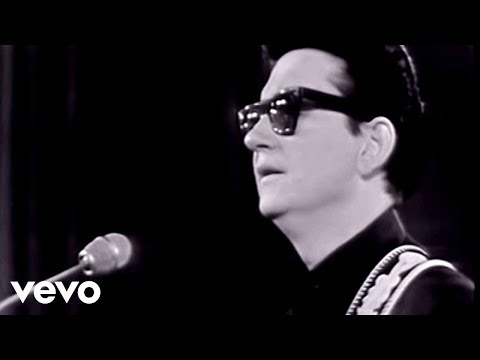
Roy Orbison in 1963 occupied one of the more unusual positions in American pop. He was not a teen idol in the conventional mold, not a rock-and-roller in the Chuck Berry tradition, and not a country crooner playing it safe in Nashville. He was something stranger and harder to categorize: a singer with a three-octave tenor voice capable of emotional extremity that most of his contemporaries could not approach, recording songs that treated heartache and yearning with an almost operatic seriousness. "Blue Bayou" arrived in the autumn of 1963 as one of the more distinctive offerings he had produced up to that point in his career.
By September 1963, Orbison was already a proven commercial force. "Oh, Pretty Woman" would not come until 1964, but the preceding years had given him significant chart success with "Only the Lonely," "Running Scared," and "Crying," each of which demonstrated his remarkable capacity to make grand emotional statements that somehow felt personal rather than theatrical. "Blue Bayou" extended that run while introducing a dreamlike, atmospheric quality that set it somewhat apart from his earlier work.
Charting Through the Autumn of 1963
The single entered the Billboard Hot 100 on September 14, 1963, debuting at number 86. Its climb through the autumn weeks was gradual and steady, moving from 86 to 70 to 45 to 41 to 31 before reaching its peak of number 29 on October 19, 1963. The record spent ten weeks on the Hot 100, a solid run that confirmed the track had found a real and sustained audience even if it did not push into the top twenty.
The timing of the record's chart run placed it in a particularly interesting moment in American music history. The Beatles' American breakthrough was still months away, and the pop landscape of late 1963 remained organized around a set of domestic stars who had defined the post-rock-and-roll era. Orbison was one of the few artists from that period whose artistic profile was large enough to withstand the upheaval that Beatlemania would bring in early 1964.
The Sound of the Record
What makes "Blue Bayou" distinctive within Orbison's catalog is its atmospheric, almost hypnotic quality. Where many of his earlier hits built to dramatic climaxes that showcased the full range of his voice, this song settles into a sustained mood of yearning that rarely breaks its spell. The imagery in the lyric paints a picture of a place simultaneously real and mythological, a southern waterscape that functions as a symbol for the life the narrator wants to return to rather than a specific geographic location.
The production suited the material's dreamy quality. The arrangement avoided the kind of orchestral grandeur that would have been available to Orbison at this stage of his career, opting instead for a more intimate texture that placed his voice in close relationship with the listener. That intimacy is central to the song's emotional power. Orbison's vocal performance here is controlled, almost careful, as though the emotion is too large to be unleashed fully without disturbing the fragile atmosphere the track has created.
The Song's Second Life
The most commercially spectacular chapter in "Blue Bayou"'s history came fourteen years after Orbison's original recording. Linda Ronstadt recorded the song in 1977 for her album Simple Dreams, and her version became one of the biggest singles of that year, reaching number 3 on the Billboard Hot 100 and spending extended periods on the Adult Contemporary chart. Ronstadt brought her own emotional directness and a late-1970s production sensibility to the material, and the result introduced the song to an entirely new generation of listeners.
Orbison was characteristically gracious about the cover's success. The Ronstadt version confirmed what careful listeners had always suspected: the song itself was strong enough to sustain multiple interpretations, and its core emotional content, the longing for a return to something essential and peaceful, was as resonant in 1977 as it had been in 1963.
Orbison's Place in the Larger Story
Roy Orbison's full stature as an American musical figure would not be broadly acknowledged until late in his life, when his participation in the Traveling Wilburys and his Mystery Girl album brought him renewed critical and commercial attention shortly before his death in 1988. But the catalog he assembled through the early 1960s, including "Blue Bayou," had always been there waiting for that reassessment. Press play and let that voice do what it was built to do.
"Blue Bayou" — Roy Orbison's singular moment on the 1960s charts.
02 Song Meaning
"Blue Bayou" — Longing, Homecoming, and the Geography of the Heart
A Place That Exists in the Imagination
The bayou in Roy Orbison's song is a real geographical type, those slow, murky waterways of the American South, but in "Blue Bayou" it functions primarily as an interior landscape. The narrator's longing is not simply for a physical place but for a state of being associated with that place: a slower pace, a simpler emotional life, the presence of someone or something that made existence feel whole. The song transforms a regional setting into a universal symbol for whatever particular peace each listener has left behind or never quite managed to reach.
This quality of the specific standing in for the universal is one of the song's most durable achievements. A listener in Minnesota in 1963 or in London in 1977 did not need to know what a bayou actually looked or felt like to understand the emotional territory the song was charting. The word carries its own music, and Orbison used it as a container into which listeners could pour their own version of the longed-for place.
Nostalgia and the Southern Gothic Imagination
The song draws on a long tradition in American music and literature: the idealization of the South as a place of primal beauty and deep emotional roots. This is a complicated tradition, entangled with painful history, but within the specific frame of a pop love song, Orbison activated its more benign dimensions. The bayou becomes an Edenic space, a before-place, the kind of setting that exists primarily in memory and desire rather than in present reality.
This connects "Blue Bayou" to a broader thread in American popular song: the recurring preoccupation with return. The desire to go home, or to reach the place that feels like home even if it was never literally inhabited, runs through country music, blues, folk, and the pop mainstream. Orbison's version of this theme was inflected by his own background in West Texas and his deep familiarity with the emotional vocabulary of country and rockabilly, genres that had always made displacement and longing central subjects.
Orbison's Voice and the Delivery of Yearning
Any discussion of what "Blue Bayou" means must grapple with the fact that so much of its meaning is created by Orbison's voice rather than by its words alone. His controlled, precise tenor carries a quality of sustained, dignified ache that most singers simply cannot replicate. The restraint he exercises in the recording, the feeling that the emotion could expand enormously but is being carefully held in check, is itself a meaningful artistic choice. It suggests a narrator who has learned to live with longing rather than being destroyed by it.
This quality made the song particularly open to reinterpretation. Linda Ronstadt's celebrated 1977 cover brought a different emotional register, warmer and more immediately vulnerable, which demonstrated that the song's core structure was strong enough to hold multiple interpretive approaches. Both versions are emotionally true; they simply locate the narrator at different points in the experience of longing.
The Lasting Resonance
What listeners have continued to find in "Blue Bayou," across more than six decades and multiple generations of discovery, is a song that takes seriously the experience of wanting what you do not have, and cannot easily reach, without sentimentalizing it into sweetness or hardening it into bitterness. The song sits in the difficult middle space where most genuine longing actually lives: wistful but not helpless, hopeful but not naive. That emotional precision is the source of its endurance.
Very few pop songs from the early 1960s maintain this degree of emotional relevance across subsequent decades. "Blue Bayou" is one that does, and the reason is the same in 2024 as it was in 1963: Orbison and his collaborators found a way to say something exact and true about a feeling that never goes out of style.
→ More from Roy Orbison
View all Roy Orbison hits →


→ More from the 1960s File
View all 1960s hits →




Keep digging