The 1960s File Feature
Just Out Of Reach (Of My Two Empty Arms)
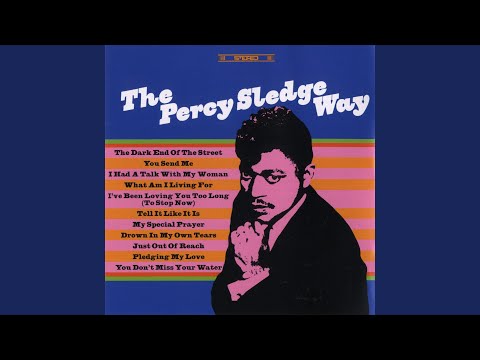
Percy Sledge and the Follow-Up Challenge of "Just Out Of Reach (Of My Two Empty Arms)" In the summer of 1966, Percy Sledge achieved one of the most striking …
01 The Story
Percy Sledge and the Follow-Up Challenge of "Just Out Of Reach (Of My Two Empty Arms)"
In the summer of 1966, Percy Sledge achieved one of the most striking debut performances in the history of the Billboard Hot 100. "When a Man Loves a Woman," recorded at Norala Sound Studio in Sheffield, Alabama, and released on Atlantic Records, climbed to number one and remained among the most celebrated soul recordings of its era. The challenge that followed for Sledge and his label was one that confronted every artist who scored a defining first hit: how to sustain commercial momentum without simply replicating what had already been done.
Several singles followed "When a Man Loves a Woman" in relatively quick succession, each finding varying degrees of success on the chart. By 1967, Sledge had accumulated a body of Atlantic recordings that demonstrated his range as a vocalist even as they inevitably invited comparison to that overwhelming debut. "Just Out Of Reach (Of My Two Empty Arms)" entered this sequence in the fall of 1967, debuting on the Billboard Hot 100 on September 2 of that year at number 79.
The chart trajectory was modest but consistent. The record moved from 79 to 67 in its second week, then reached its peak of number 66 on September 16, where it held the following week before exiting the chart. The four-week run placed it in a different commercial category than Sledge's biggest recordings, but it nonetheless confirmed his continued presence in the soul marketplace during a period when Atlantic Records was producing some of the most vital popular music in America.
The song itself was drawn from the country-soul tradition that Sledge inhabited with particular ease. His vocal style had always bridged Southern soul and country music in ways that reflected the geographic and cultural environment in which he had grown up in Leighton, Alabama. "Just Out Of Reach (Of My Two Empty Arms)" was a country standard: the original version was recorded by Bill Carlisle in 1952 and had been a significant country hit. Steel Guitarists and country vocalists had returned to the song repeatedly over the intervening years. Sledge's soul interpretation brought the material into a different register, drawing out the emotional desolation of the lyric through the kind of raw, gospel-inflected vocal delivery that had made his debut so powerful.
Producer Quin Ivy and arranger Marlin Greene, the team behind much of Sledge's Atlantic output, approached the recording in a manner consistent with the Muscle Shoals approach to soul production. The rhythm section provided a steady, understated foundation, the horns and strings offered emotional color without overwhelming the vocal, and the overall arrangement gave Sledge maximum room to inhabit the lyric. The result was a recording that felt both polished and intimate, a combination that Atlantic's Southern soul productions achieved with remarkable regularity during this period.
Atlantic Records had been distributing Sledge's recordings on its own imprint after licensing them from Ivy's Norala label, and the relationship had proven commercially productive for both parties. The label's promotional infrastructure and distribution network gave Sledge's recordings national reach that a regional label alone could not have provided, and "Just Out Of Reach" benefited from that support even if its chart performance was more limited than the company's biggest Sledge releases.
The song's full title, which specified the arms as "two empty arms," was an unusual detail that gave the lyric a striking physicality. The image of outstretched, empty arms reaching for something barely beyond grasp was a vivid physical metaphor for emotional longing, and it grounded an otherwise abstract feeling in something tangible and immediate. That kind of concrete lyrical image was a hallmark of the best country and soul songwriting of the 1960s, and its presence in "Just Out Of Reach" connected the recording to a tradition of emotionally direct writing that both genres shared.
Percy Sledge's career continued well beyond this single, with his recordings finding sustained appreciation through subsequent decades. His 1966 debut remained his commercial peak, but recordings like "Just Out Of Reach (Of My Two Empty Arms)" demonstrated that the qualities that made that debut remarkable, a wounded tenderness in the vocal and an instinctive connection to deeply felt material, were consistent features of his artistry rather than accidental achievements of a single session.
02 Song Meaning
Longing Made Physical: The Meaning of "Just Out Of Reach (Of My Two Empty Arms)"
"Just Out Of Reach (Of My Two Empty Arms)" belongs to the tradition of lost-love laments in American popular song, but its title achieves something specific and striking: it transforms an emotional state into a bodily condition. The image of two empty arms, literally extended and finding nothing to hold, makes grief into something a listener can almost feel rather than merely understand. Percy Sledge was ideally suited to inhabit this kind of material, because his vocal style communicated physical as well as emotional anguish with remarkable immediacy.
The concept of something being "just out of reach" carries a particular quality of frustration distinct from outright loss. Something unreachable is gone; something just out of reach is tantalizingly close, almost recoverable. The person being mourned in the song has not vanished but has moved to a distance just beyond the narrator's ability to reclaim them. This is a more agonizing condition than simple absence, because proximity without access sustains hope while denying fulfillment. The song's emotional territory is therefore one of suspended longing rather than concluded grief.
This distinction connected the song to a larger tradition in country and soul music that understood the interval between loss and acceptance as the most emotionally productive space for art. Songs that occupied this interval, where loss has occurred but the narrator has not yet moved through it, carried a particular kind of honest urgency. Listeners who had experienced the early stages of heartbreak, when the person lost still felt present even while being absent, found this emotional register immediately recognizable.
Sledge's interpretive gifts were particularly suited to the song's demands. He had demonstrated with "When a Man Loves a Woman" that he could sustain emotional intensity across the length of a recording without resorting to melodrama; the feeling came through in the grain of the voice and the care with which each phrase was shaped rather than through volume or histrionics. "Just Out Of Reach" required the same quality of restrained but genuine feeling, and Sledge delivered it with the same consistency that characterized his finest work.
The country standard origins of the song also shaped its meaning in Percy Sledge's soul interpretation. Country music and soul music shared a common emotional vocabulary rooted in direct expression of pain and longing, and artists like Sledge who moved between these traditions demonstrated that the apparent stylistic differences between them were more surface than substance. By applying his soul vocal approach to a country standard, Sledge revealed the shared emotional core beneath the surface differences, a demonstration that heartbreak speaks the same language regardless of which American musical tradition gives it form.
The specificity of "my two empty arms" as a phrase bears additional consideration. "Two" is not a number that needed to be included; "my empty arms" would have conveyed the same general meaning. The addition of "two" gives the image precision and makes the emptiness feel counted, as though the narrator is aware of each arm separately, each one a distinct reminder of what has been lost. This level of lyrical detail elevated the song beyond generic lament into something more particular and more affecting, a quality that Sledge's interpretation honored fully.
→ More from Percy Sledge
View all Percy Sledge hits →



→ More from the 1960s File
View all 1960s hits →




Keep digging