The 1960s File Feature
When A Man Loves A Woman
When A Man Loves A Woman: Percy Sledge's Immortal 1966 Number One "When A Man Loves A Woman" was released in February 1966 on Atlantic Records and reached nu…
01 The Story
When A Man Loves A Woman: Percy Sledge's Immortal 1966 Number One
"When A Man Loves A Woman" was released in February 1966 on Atlantic Records and reached number one on the Billboard Hot 100 on April 30, 1966, where it remained for two weeks. It simultaneously topped the R&B chart, making Percy Sledge one of the relatively rare artists of the era to achieve simultaneous crossover dominance across both pop and R&B formats. The song remains one of the most recognizable recordings in American popular music history and is widely regarded as the definitive soul ballad of its era and one of the greatest love songs ever committed to tape.
The recording was made at FAME Studios in Muscle Shoals, Alabama, one of the most storied recording facilities in American music history. The Muscle Shoals Sound, as it came to be known, was characterized by a particular warmth and organic depth that emerged from the specific acoustic properties of the studio space and the distinctive collective voice of the session musicians who worked there. Percy Sledge was a young hospital worker from Leighton, Alabama, who had been singing in local clubs when he recorded the track, and the rawness of his experience as a performer, combined with the sophistication of the Muscle Shoals production environment, created a combination that has rarely been replicated.
The song was co-written by two members of Sledge's backing band, Andrew Wright and Calvin Lewis, reportedly after Sledge began improvising a melody in rehearsal based on a real emotional experience. The story of its origin, which Sledge has described in various interviews, involves genuine heartbreak over a romantic breakup that Sledge channeled directly into the performance. The rawness of that biographical source material is audible in every aspect of the recording, from the quaver in his voice during the most exposed moments of the vocal to the determined build of his delivery through the song's chorus.
The production was handled by Quin Ivy, who had founded Norala Sound Studios in Sheffield, Alabama, where the initial recording was made before it was refined for Atlantic Records release. The session featured the Muscle Shoals rhythm section in a version of its early configuration, with the characteristic interplay between bass, drums, and electric guitar that gave the recording its steady, deeply felt rhythmic foundation. The organ that carries the harmonic backdrop of the arrangement was played with the kind of church-influenced gospel feeling that was inseparable from the best Southern soul music of the period.
Atlantic Records, under the direction of Jerry Wexler and Ahmet Ertegun, had been building its roster of Southern soul artists throughout the early 1960s and recognized immediately the commercial and artistic potential of Sledge's recording. The label invested in a significant promotional campaign behind the single, and its crossover success validated their judgment, reaching audiences across racial lines at a moment in American history when such crossover was both commercially significant and culturally complex. The mid-1960s were a period of intense civil rights activity across the American South, and the success of a Black artist's recording with white pop audiences carried social dimensions that extended beyond the music industry.
Percy Sledge was twenty-five years old when "When A Man Loves A Woman" was recorded, and the emotional authenticity of his performance reflected a combination of natural vocal gifts, genuine personal pain, and the particular spiritual depth that characterized the best soul singing of the era. He had grown up in a church singing tradition that gave him both the technical foundation for his vocal approach and the emotional vocabulary to inhabit a song about love and vulnerability with total conviction. The gospel influence on Southern soul was never merely stylistic but was rooted in a tradition of using music to express the full range of human feeling, and Sledge brought that tradition to bear on secular romantic material with extraordinary effect.
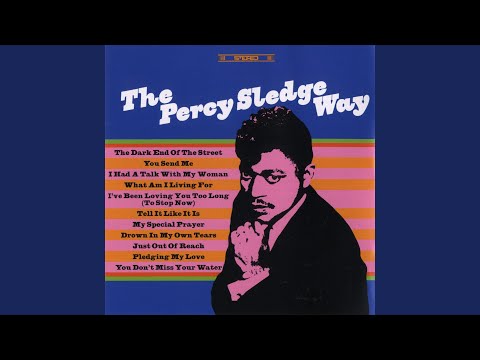
"When A Man Loves A Woman" was the title track of Sledge's debut album of the same name, also released in 1966 on Atlantic. The album confirmed that Sledge was capable of sustaining the emotional intensity of the debut single across a full-length recording, though he never again achieved quite the commercial peak of the debut. The song itself became a standard almost immediately, covered by dozens of artists in the years following its release and appearing on countless compilation albums and film soundtracks over the subsequent decades.
Michael Bolton released a cover of the song in 1991 that reached number one on the Billboard Hot 100, bringing the song to a new generation of listeners and demonstrating its enduring commercial viability across a quarter century. Bolton's version was stylistically very different from Sledge's original, leaning into the more theatrical vocal pyrotechnics of the early 1990s adult contemporary market, but its success reinforced the fundamental strength of the songwriting and arrangement. Sledge himself received renewed attention as a result of the Bolton cover, introducing him to audiences who had not encountered his original recording.
The cultural footprint of the original recording extends across a remarkable range of contexts. It has appeared in films, television programs, and advertising campaigns that span generations, and it has been cited by an enormous range of musicians and producers as a formative influence on their understanding of what recorded music could achieve. The recording is preserved in the Grammy Hall of Fame, a recognition of its significance in the history of American music. Its presence in that archive alongside recordings by Hank Williams, Louis Armstrong, and the Beatles situates it within the highest tier of American musical achievement.
For the history of Muscle Shoals and its significance in American music, "When A Man Loves A Woman" stands as the foundational recording, the track that first brought international attention to what was happening in that small Alabama town and established FAME Studios as one of the essential addresses in popular music. The subsequent success of the Muscle Shoals sound, including classic recordings by Aretha Franklin, Wilson Pickett, and many others, was in significant part enabled by the commercial and critical breakthrough that Sledge's debut single represented.
02 Song Meaning
The Meaning Behind "When A Man Loves A Woman"
"When A Man Loves A Woman" is one of the most direct and unguarded examinations of male vulnerability in American popular music. The song describes a state of love that has become so consuming that it overrides the narrator's judgment, his self-interest, and his dignity. The man in the song will overlook any flaw, endure any treatment, sacrifice any personal advantage, for the sake of the woman he loves. This is presented not as foolishness but as the natural and inevitable condition of deep romantic feeling, a state in which the usual calculations of self-protection and rational self-interest simply cease to operate.
The emotional honesty of the song is radical for its historical moment. Popular music in 1966, even the best of it, tended toward either idealized romantic expression or implicit masculine stoicism. Songs that admitted male vulnerability existed, but rarely with the total absence of qualification that Percy Sledge brought to this recording. The narrator of "When A Man Loves A Woman" does not attempt to maintain any posture of control or dignity. He is completely open, completely exposed, and the song treats this exposure as honorable rather than shameful, as the highest form of masculine love rather than a weakness to be concealed.
Percy Sledge's vocal performance is the central meaning-making element of the track. The biographical dimension of the recording, the fact that he was channeling real personal grief and longing into the performance, gives his delivery an authenticity that no amount of technical skill could have manufactured. The specific quality of pain in his voice, the moments where his control seems genuinely threatened by the emotion behind the words, communicate a truth that listeners in every subsequent decade have recognized and responded to. The song does not merely describe vulnerability; it embodies it.
The Southern soul tradition from which the song emerged gave it its specific emotional vocabulary. Gospel music, which was the artistic and spiritual foundation of virtually every Black singer working in the American South during this period, had developed a language for the expression of overwhelming feeling, of surrender before something greater than the self, that translated directly into secular romantic expression when artists like Sledge moved from the church to the recording studio. The word "loves" in the title is doing the work of a much more complex emotional description, encompassing what the song's full duration explores: adoration, dependence, sacrifice, and the particular kind of madness that complete romantic commitment produces.
The song's meaning also operates on a cultural level that goes beyond its explicit romantic content. In the American South of 1966, a Black man singing with this degree of openness and emotional vulnerability to a racially mixed national audience was making a statement that exceeded the personal. The soul music of the mid-1960s was part of a broader assertion of Black humanity and emotional depth in a cultural moment when that humanity was under sustained challenge. Songs like "When A Man Loves A Woman" argued through music that Black feeling was fully human, fully real, and fully worthy of the attention and empathy of all Americans.
The song's endurance across more than six decades reflects its capacity to communicate something fundamental about human romantic experience that does not lose relevance as cultural contexts change. Generation after generation has found in the recording an accurate expression of what it feels like to love someone completely and to recognize that complete love as both the greatest gift and the greatest vulnerability one can carry. The specific details of mid-1960s Muscle Shoals production, the organ, the rhythm section, the particular quality of the recording environment, are period markers that locate the song historically without confining its emotional address to that period.
For students of American music, "When A Man Loves A Woman" represents the moment when the Muscle Shoals sound was introduced to the world and when Southern soul's particular brand of emotional directness reached its fullest recorded expression. The combination of Sledge's voice, the FAME Studios environment, and the simple but devastating lyric produced something that has not been replicated in the sixty years since its recording, a testimony to the unrepeatable nature of great art and to the specific alignment of person, place, and moment that its creation required.
→ More from Percy Sledge
View all Percy Sledge hits →



→ More from the 1960s File
View all 1960s hits →




Keep digging