The 1960s File Feature
Moody River
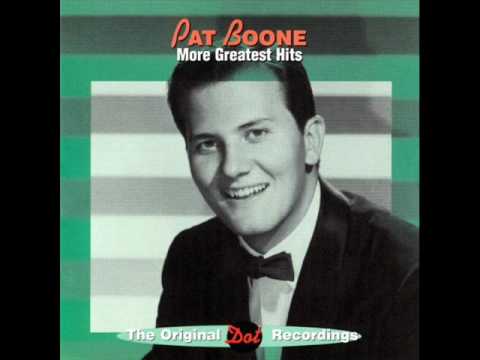
"Moody River" — Pat Boone's 1961 Number-One The early summer of 1961 was one of those periods in American pop music when the mainstream was in active negotia…
01 The Story
"Moody River" — Pat Boone's 1961 Number-One
The early summer of 1961 was one of those periods in American pop music when the mainstream was in active negotiation between its recent rock-and-roll past and the smoother, more adult-oriented sounds that would come to define the first half of the decade. Pat Boone had been one of the central figures in that negotiation since the mid-1950s, when his polished covers of rhythm-and-blues recordings had introduced Black music to white mainstream audiences while simultaneously suggesting a safer, more domestically acceptable alternative. By 1961, he had aged with his audience and was recording material that suited the adult contemporary listener rather than the teenager.
Pat Boone's Commercial Position
Pat Boone's career in the late 1950s and early 1960s occupied an interesting middle ground in the pop landscape. His early hits had made him one of the best-selling artists of the rock-and-roll era, despite (or because of) his willingness to offer cleaned-up alternatives to records that some radio stations and parents found challenging. By 1961, the rock-and-roll moment had passed its initial commercial apex, and Boone was recording material that suited his natural vocal style: lush, orchestrated pop balladry with a slight country flavor from his Tennessee roots. His commercial infrastructure, built over a decade of consistent hits, gave every release significant promotional support.
A Song of Tragedy and River Symbolism
"Moody River" is a dark piece of pop storytelling, which made it an unusual choice for a mainstream hit. The song is a narrative of loss, using the river as a symbol of both the tragic event it describes and the emotional desolation that follows. This kind of dramatic narrative pop was not unprecedented in the early 1960s, when the tradition of parlor balladry that gave popular song some of its most emotionally serious material was still accessible to mainstream audiences without irony. Boone's ability to deliver this material with straightforward emotional conviction, without the ironic distance that a later era might have required, was precisely what made him the right performer for the moment.
Number One on the Charts
The song debuted on the Billboard Hot 100 on May 1, 1961, at position 95. It climbed steadily over the following weeks: from 74 to 54 to 31 to 14, continuing its ascent before reaching the summit. The song peaked at number 1 on the week of June 19, 1961, after 15 weeks on the Hot 100. A number-one peak is the most unambiguous possible commercial result, and this one was achieved after a sustained, week-by-week climb that reflected genuine radio support and audience engagement rather than a sudden promotional spike. The fifteen-week chart run confirmed the song's durability.
The Early 1960s Adult Pop Market
The adult pop market that Pat Boone was addressing in 1961 was large and commercially significant. The baby boom generation's parents, the Americans who had grown up during the Depression and World War II, represented a massive consumer demographic, and they had not abandoned popular music when their tastes diverged from the teenagers who were driving rock and roll. Orchestrated pop balladry with adult emotional content served this audience directly, and the chart success of songs like "Moody River" demonstrates that this market could produce number-one results in competition with younger-skewing material.
Boone's Legacy in a Changed Landscape
By the mid-1960s, the British Invasion had reorganized the mainstream pop landscape in ways that made Pat Boone's commercial position much more difficult to maintain. His clean-cut image and orchestrated pop style were not well-suited to the new priorities of the post-Beatles market. "Moody River" represents the last phase of his initial commercial peak, a number-one record from an artist who was about to face commercial headwinds he would never fully overcome. The song stands as a marker of what mainstream American pop could produce in the brief period between rock-and-roll's initial impact and the British Invasion's reshaping of the landscape.
Go back to that June of 1961 and hear what a number-one record sounded like on the far side of the cultural divide the decade would create.
"Moody River" — Pat Boone's singular moment on the 1960s charts.
02 Song Meaning
Dark Water, Dark Themes: The Meaning of "Moody River"
Popular music's relationship with tragedy has always been more complex than the genre's commercial priorities might suggest. Alongside the love songs and the dance records, the mainstream has periodically accommodated songs that deal directly with death, loss, and irreversible grief. "Moody River" is one of these records, a narrative of loss organized around one of American music's most enduring symbolic landscapes: the river.
The River as American Symbol
The river in American music and literature is a symbol with extraordinary density. It flows through country music, blues, gospel, and folk; it represents the boundary between life and death, between the known and the unknown, between freedom and entrapment. When a pop song places a tragedy at the river's edge, it is drawing on this accumulated symbolic weight, whether consciously or through the unconscious inheritance of a tradition. The river in "Moody River" is doing this kind of symbolic work, serving as both the literal site of the song's tragedy and the emotional register in which that tragedy resonates.
Narrative Pop and Its Emotional Contract
Songs that tell stories make a different emotional contract with the listener than songs that express states. A narrative song asks you to follow a story and to care about its characters and outcomes; it uses the mechanics of storytelling to create investment that pure emotional expression cannot always produce. "Moody River" is built on this narrative contract, placing the listener in the position of witness to a grief that the song unfolds through its running time. The ending of the story, which the river has already determined before the song begins, gives the narrative its particular emotional coloring: this is grief after the fact, the processing of an irreversible loss.
Boone's Emotional Register
Pat Boone was not a performer known for emotional extremity; his vocal style was warm and measured rather than passionate and unbridled. On this material, that restraint becomes an asset: the controlled delivery of a tragic narrative is more bearable to the listener than a performance that tries to externalize all of the grief at once. The dignity of the underplayed performance matches the emotional situation of someone who has already absorbed a loss and is now processing it from a distance rather than in the moment of impact. That emotional intelligence in the performance is underappreciated in discussions of Boone's work.
Death in Popular Song
The early 1960s mainstream pop was more comfortable with death as a subject than later popular formats would be. The "death disc" was a recognized commercial genre in this period, with several examples reaching the top of the chart. These songs reflected a relationship with mortality that was more publicly acknowledged in American culture before the cultural changes of the 1960s began pushing death further out of mainstream discourse. Songs like "Moody River" participated in this tradition of treating death and grief as legitimate subjects for popular entertainment, a tradition that has never entirely disappeared but that has occupied different amounts of cultural space in different eras.
What Number One Reveals
A number-one record reveals something important about its moment: it was what the largest available audience chose, from all the available options, as the thing they most wanted to hear. The fact that a song as dark in its subject matter as "Moody River" reached number one in June 1961 reveals something about the early 1960s pop audience that is easy to overlook: they were not only interested in the cheerful and the romantic. They were also capable of making a chart-topper out of a song about death and grief when the song was well-made enough and the emotional territory genuine enough to justify the encounter.
→ More from Pat Boone
View all Pat Boone hits →



→ More from the 1960s File
View all 1960s hits →




Keep digging