The 1960s File Feature
I Guess The Lord Must Be In New York City
"I Guess The Lord Must Be In New York City" — Nilsson's Urban Prayer The Most Underrated Voice in Pop There is a reasonable argument to be made that Harry Ni…
01 The Story
"I Guess The Lord Must Be In New York City" — Nilsson's Urban Prayer
The Most Underrated Voice in Pop
There is a reasonable argument to be made that Harry Nilsson possessed the finest male pop voice of his generation, and an equally reasonable argument that his career's irregularity prevented him from ever quite receiving the recognition that voice deserved. By the autumn of 1969, Nilsson had already established a peculiar reputation: a songwriter who preferred to record other people's songs while others recorded his, a performer who avoided live appearances almost entirely, and a critical darling whose 1967 album Pandemonium Shadow Show had attracted extravagant praise from the Beatles, who cited him as their favorite American artist. John Lennon and Paul McCartney had publicly declared Nilsson their favorite American musician, a compliment that should have made him a superstar and instead made him a fascinating cult figure.
The late 1960s were a complicated time for artists who didn't fit neatly into the rock counter-culture template. Nilsson's music was sophisticated, literate, melodically ambitious, and emotionally nuanced in ways that didn't lend themselves to the anthemic simplicity that dominated the charts. He was making music for careful listeners in an era increasingly dominated by spectacle.
The Song and Its Context
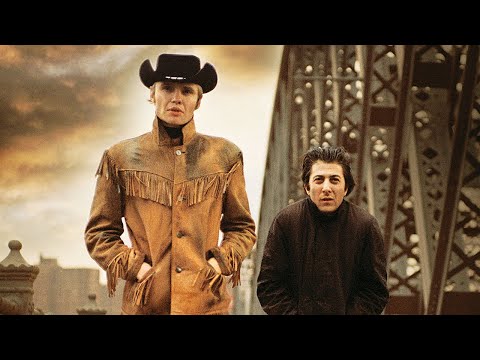
I Guess The Lord Must Be In New York City arrived as the title theme for the 1969 film Midnight Cowboy, at least in its intended form. The song was written specifically for the film as the main title theme, a commission that should have placed it on the most prominent possible platform. The film ultimately chose Harry Nilsson's recording of "Everybody's Talkin'" as its main theme, a song written by Fred Neil that Nilsson had recorded and that became far more associated with the film's melancholy aesthetic. His own composition was used more briefly, though it was still released as a commercial single and received significant radio play in late 1969.
The song itself captured something specific about New York City as a destination of dreams and spiritual seeking. The narrator's observation that God must be in New York because that's where everyone seems to be searching for redemption or transformation carried the particular tone of someone looking at urban mythology with simultaneous skepticism and wonder.
The Chart Performance
The single debuted on the Billboard Hot 100 on November 1, 1969, at number 83. It climbed quickly over the following weeks: number 65 the second week, then 44, 43, and reaching its peak of number 34 on November 29, 1969. Seven weeks on the chart represented a respectable showing for a B-list single from the Midnight Cowboy album project, particularly given that the film was dominating cultural conversation and driving listeners to both Nilsson recordings associated with it. The seven-week run and top-40 peak were consistent with the warm reception that critics had given Nilsson's work throughout this period.
The association with Midnight Cowboy was a double-edged commercial circumstance: the film's prestige was enormous, but "Everybody's Talkin'" had more thoroughly claimed that prestige for itself, leaving this companion track as a somewhat secondary piece of the soundtrack story.
Nilsson at the Crossroads
The late 1969 period was, in retrospect, the eve of Nilsson's greatest commercial success. His 1971 album Nilsson Schmilsson would deliver "Without You," a number one single and his most enduringly famous recording. But in 1969 he was still in transition, moving from cult appreciation to something approaching mainstream recognition. The Midnight Cowboy association brought him the largest audience he had yet encountered, introducing his voice and sensibility to listeners who might have missed his earlier albums entirely.
This transitional quality gives the 1969 recordings a particular interest for students of his career: they document Nilsson at the moment when his gifts were becoming visible to a genuinely wide audience, before the full commercial recognition arrived.
A Legacy of the City Dreamer
New York City has served as a metaphorical destination in American popular music since the genre's earliest days, representing ambition, escape, reinvention, spiritual hunger, and the density of human possibility. Nilsson's particular take on the city as a place where God must be present because everyone seems to be looking for something sacred gave this tradition a gentle, slightly ironic inflection that suited his sensibility perfectly. The song documents a specific late-1960s relationship to urban America, when New York City carried the full weight of both its promise and its danger in popular imagination.
As an entry in Nilsson's catalog, this track remains essential listening. His voice at this moment was extraordinary, and finding recordings where that voice had a worthy vehicle is part of the pleasure of exploring his work. Press play and hear what they were all talking about.
"I Guess The Lord Must Be In New York City" — Nilsson's singular moment on the 1960s charts.
02 Song Meaning
"I Guess The Lord Must Be In New York City" — Faith, Irony, and Urban Mythology
The Sacred City
Cities have functioned as sites of spiritual seeking throughout human history, places where the density of human longing creates something that feels, to those within it, like an approximation of the divine. New York City occupied this role in American cultural imagination with particular intensity in the late 1960s, a destination where artists, immigrants, seekers, and the dispossessed converged in search of transformation. Harry Nilsson's song approached this mythology with characteristic intelligence: not celebrating or condemning it but observing it with a kind of gentle wondering irony, as if the narrator couldn't quite decide whether the city's reputation as a place of miraculous possibility was wisdom or delusion. That ironic uncertainty is the emotional core of the song, and it gives the recording a complexity that simple celebration or simple critique would have lacked.
The title's phrasing is careful: "I guess" signals tentativeness, a hypothesis rather than a conviction. The narrator doesn't know if God is in New York; he reasons it must be so from the evidence of how many people are looking for something there. This is a theological argument built from observation of human behavior, and its modesty is part of its charm.
Nilsson's Particular Wit
The song exemplifies a quality that distinguished Harry Nilsson from most of his contemporaries: his ability to hold multiple emotional registers simultaneously without forcing them into resolution. The track is funny, in the gentle way that comes from noticing human behavior with affection rather than contempt. It is also genuinely touching, because the seekers the narrator describes are recognizable human beings whose searching is worthy of respect even when it produces no clear answers. This combination of comedy and compassion was Nilsson's signature emotional mode, and it made his music unusually satisfying for listeners who wanted to feel and think simultaneously.
Most pop songs of the era asked the listener to choose a single emotional response. Nilsson's best work made the choice unnecessary, offering complex emotional experience in accessible melodic packages.
The City as Mirror
New York in 1969 was living through profound transformation: financial pressure, social upheaval, the concentration of counterculture energy alongside its disillusionment. The city that appeared in popular imagination as a place of boundless possibility was also, for many of its residents, a place of intense difficulty. The song acknowledges this complexity without dwelling on it, choosing instead to focus on the spiritual dimension of urban concentration: so many people seeking so intensely in the same place must mean that something worth finding is present somewhere in the tangle.
For listeners who knew New York, the song offered a form of affection for a difficult place. For listeners who had never been there but carried the city's mythology in their imaginations, it offered confirmation that the mythology had substance: even a songwriter of Nilsson's sophistication found it compelling enough to address directly.
The Midnight Cowboy Connection
The song's association with Midnight Cowboy, one of the most celebrated American films of 1969, gave it a specific dramatic context. The film's story of two displaced men seeking meaning and connection in New York City resonated directly with the song's themes of spiritual seeking in an urban landscape. The film's vision of New York as simultaneously promise and threat deepened the song's meaning for listeners who knew it, adding a layer of dramatic specificity to the more general observations that the lyric contained.
The connection also placed the song in a network of cultural references that defined a particular late-1960s sensibility: skeptical of easy answers, compassionate toward human struggle, and unwilling to resolve ambiguity into either cynicism or naive optimism. These were the qualities that made the best work of that era feel authentic to its moment, and they remain what makes it feel still relevant to later listeners willing to meet it seriously.
"I Guess The Lord Must Be In New York City" — Nilsson's singular moment on the 1960s charts.
→ More from Nilsson
View all Nilsson hits →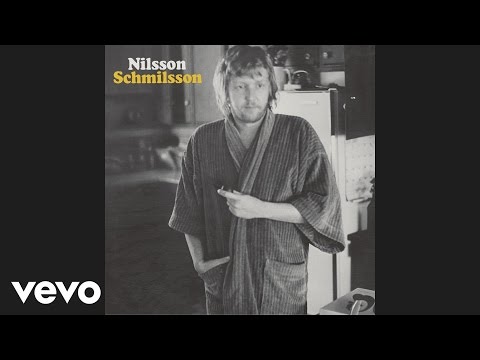
→ More from the 1960s File
View all 1960s hits →




Keep digging