The 1970s File Feature
Spaceman
"Spaceman" — Nilsson's Cosmic Meditation and a Top-25 Chart Triumph The Most Gifted Songwriter Nobody Could Categorize Harry Nilsson in 1972 occupied one of …
01 The Story
"Spaceman" — Nilsson's Cosmic Meditation and a Top-25 Chart Triumph
The Most Gifted Songwriter Nobody Could Categorize
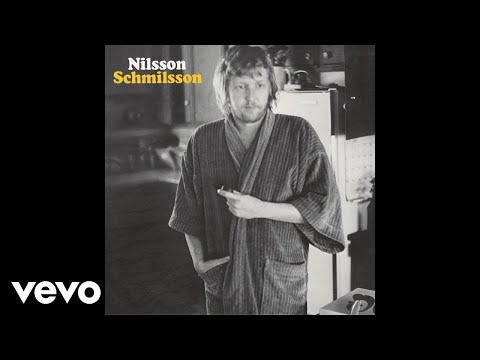
Harry Nilsson in 1972 occupied one of the strangest and most enviable positions in American popular music. He was beloved by the Beatles, who publicly declared him their favorite American musician. He had written "One" and "Everybody's Talkin'," recordings that had become cultural touchstones. His Nilsson Schmilsson album, released in late 1971, had gone gold and produced "Without You," a number-one hit that earned him two Grammy Awards. By any objective measure, Nilsson was one of the most talented and commercially successful singer-songwriters in the country.
And yet he remained, in some fundamental sense, uncategorizable. He did not fit the California singer-songwriter template. He was not a rock act. He was too witty and too strange for mainstream pop. His voice was extraordinary but he barely performed live. He existed in his own artistic universe, which made him beloved and commercially potent but perpetually difficult to place.
Son of Schmilsson and "Spaceman"
"Spaceman" appeared on Nilsson's 1972 follow-up album Son of Schmilsson, produced by Richard Perry, who had helmed the original Nilsson Schmilsson. The collaboration between Nilsson and Perry had proven exceptionally productive, combining Nilsson's melodic gift and eccentric sensibility with Perry's facility for producing recordings that could access commercial radio while retaining the artist's distinctive character.
Son of Schmilsson was a deliberately more expansive and experimental album than its predecessor, reflecting Nilsson's desire to push beyond the accessible pop framework that had made Nilsson Schmilsson such a success. "Spaceman" fit this more adventurous approach: the song took the science fiction imagery that was becoming increasingly available as cultural vocabulary in the early 1970s and turned it toward philosophical questioning rather than mere spectacle.
The Chart Journey
Released as a single in September 1972, "Spaceman" debuted on the Billboard Hot 100 on September 16, 1972, entering at number 90. The ascent was steady over the following weeks: number 68 the following week, then 49, then 43, then 39. The song eventually peaked at number 23 on the Hot 100 on November 11, 1972, spending ten weeks on the chart in total. This was a solid commercial performance for a record that was considerably stranger than the typical fare occupying the chart's higher positions that autumn.
The peak of 23 placed "Spaceman" comfortably in the top 25 of the Hot 100 at a moment when the chart was filled with some of the most diverse and memorable recordings of the early 1970s. That Nilsson could hold his own in that competition with a song as specifically peculiar as "Spaceman" reflects both the quality of the recording and the breadth of what American radio was willing to accommodate in 1972.
The Sound of the Cosmos on Vinyl
Richard Perry's production of "Spaceman" drew on the sonic vocabulary of the early 1970s with characteristic skill. The arrangement created a sense of space and distance appropriate to the song's subject, using studio texture to evoke the alienation and wonder that the lyrical content addressed. Nilsson's voice, one of the most technically accomplished instruments in popular music at the time, navigated the song's emotional terrain with the ease that always characterized his recorded work.
The production achieved the unusual feat of making a song about cosmic loneliness feel immediate and intimate, which was precisely the right approach for a radio single. The listener could feel the vastness being described without being overwhelmed by it, because Nilsson's voice kept the emotional temperature human and accessible throughout.
Nilsson's Arc and the Legacy of "Spaceman"
The years following Son of Schmilsson would prove complicated for Nilsson. His friendship with John Lennon during the famous "Lost Weekend" period produced some of his most chaotic and also some of his most interesting work. His vocal health suffered, and his commercial trajectory became less consistent. But in the autumn of 1972, with "Spaceman" climbing the charts, he was at the height of his creative powers, producing music that was simultaneously popular and genuinely strange.
Nilsson deserves more listeners than he has in any era. "Spaceman" is as good a place as any to start the journey. Let the voice take you somewhere else entirely.
"Spaceman" — Nilsson's singular moment on the 1970s charts.
02 Song Meaning
"Spaceman" — Alienation, Wonder, and the Cosmic Absurd in Nilsson's Art
The Spaceman as Modern Everyman
The figure of the astronaut or spaceman in early 1970s popular culture carried a double weight. On one hand, the space program had made astronauts genuine national heroes, figures of technological achievement and human courage. On the other hand, the image of a solitary human being floating in the void of space carried obvious metaphorical potential for anyone thinking about modern loneliness, disconnection, or the feeling of being lost in systems too large to comprehend.
Nilsson's "Spaceman" drew on both dimensions of this figure simultaneously. The song used the literal imagery of a spaceman returning from a mission as a vehicle for examining questions about meaning, purpose, and the strange disorientation that comes from having seen too much, from having acquired a perspective too large for ordinary life to accommodate.
The Early 1970s and Questions of Meaning
The cultural moment of 1972 was one in which large questions about meaning were circulating with unusual urgency. The idealism of the 1960s had encountered various forms of disappointment: political assassinations, the collapse of countercultural communities, the persistence of the Vietnam War, the evidence that systemic change was considerably harder to achieve than the optimism of the previous decade had suggested. Many artists and thinkers of the early 1970s were processing this transition from hope to something more complicated.
Nilsson's characteristic approach to this kind of cultural weight was oblique and ironic rather than direct. He did not write protest songs or explicit social commentary. Instead, he used absurdist humor, philosophical deflection, and unexpected tonal combinations to approach serious subjects sideways. "Spaceman" is a product of this approach, taking a genuinely strange premise and using it to ask questions that a more conventional song might not have found room for.
Nilsson's Gift for the Cosmic and the Domestic
One of the more remarkable qualities of Harry Nilsson's songwriting was his ability to move without apparent effort between the cosmic and the domestic, the expansive and the intimate. His best songs operated in both registers simultaneously, using one to illuminate the other. "Spaceman" occupied the cosmic end of this spectrum while retaining the personal, human quality that made even his most unconventional material emotionally accessible.
This balance was an artistic achievement that very few songwriters of any era managed consistently. Songs about large abstract subjects tend either to remain at the level of abstraction, losing their emotional grip, or to collapse into sentimentality as they reach for human feeling. Nilsson's gift was for the middle path, the song that took a genuinely large subject seriously while keeping the human being at its center visible and felt.
Science Fiction as Emotional Language
By 1972, science fiction imagery had become available as a shared cultural vocabulary in ways that would accelerate over the following years. The moon landings had made space travel real rather than fantastical, and the cultural imagination was expanding to accommodate this new geography. Songwriters, filmmakers, and novelists were all reaching for this new imagery to express things that felt too large for the existing vocabulary of realism.
"Spaceman" participates in this expansion, using the literal facts of space travel as a lens through which to examine psychological and philosophical states that would have been harder to approach through direct description. The distance of the cosmic metaphor allowed Nilsson to say things about isolation, purpose, and the difficulty of returning to ordinary life after extraordinary experience that might have felt too raw in more directly autobiographical form.
The Enduring Resonance of a Strange Song
The particular quality that makes "Spaceman" continue to reward listening is the way Nilsson kept the strange and the moving in productive tension throughout the recording. The song never resolves its fundamental tension between the grandeur of the spaceman's perspective and the smallness of what he returns to. That irresolution is the point, and Nilsson had the artistic confidence to leave it unresolved, trusting the listener to hold the complexity without demanding a tidier conclusion.
That confidence in the listener's capacity for ambiguity is one of the things that makes Nilsson's best work feel permanently modern, regardless of when it was recorded.
→ More from Nilsson
View all Nilsson hits →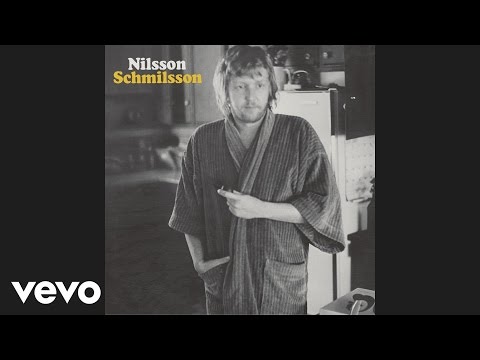

→ More from the 1970s File
View all 1970s hits →




Keep digging