The 1960s File Feature
Everybody's Talkin'
Everybody's Talkin': How a Fred Neil Folk Song Became the Voice of a Generation Fred Neil wrote "Everybody's Talkin'" sometime in the mid-1960s, and he recor…
01 The Story
Everybody's Talkin': How a Fred Neil Folk Song Became the Voice of a Generation
Fred Neil wrote "Everybody's Talkin'" sometime in the mid-1960s, and he recorded it for his 1966 album "Fred Neil" on Elektra Records. Neil was a Florida-born singer-songwriter who had spent years in Greenwich Village's folk scene, playing coffeehouses and writing songs for other artists before releasing records under his own name. The song he wrote was a quietly devastating portrait of alienation, of feeling so out of step with the world around you that the only logical response is to leave it behind and find a place where the noise of other people's judgment cannot reach. In its original form, it was a folk-blues number, spare and contemplative, with Neil's rich baritone carrying most of the emotional weight. It received relatively little attention upon its initial release.
The song's transformation into a cultural landmark came through a combination of circumstances that illustrate how the right placement can permanently alter a piece of music's trajectory. Director John Schlesinger was making "Midnight Cowboy," an adaptation of James Leo Herlihy's novel about a Texas drifter named Joe Buck who travels to New York City expecting to prosper as a male escort and instead finds destitution, unlikely friendship, and a kind of redemption that arrives too late to do the protagonist much good. The film needed a musical theme that could carry the emotional weight of displacement and longing, and the original plan was to use a song written specifically for the film.
Bob Dylan had contributed "Lay Lady Lay" to the project, but when that track was not available in time, music supervisor did a search and landed on Neil's recording. The fit was almost uncannily perfect. The song's imagery of turning away from crowds and voices, of heading toward sun and open water, echoed Joe Buck's original impulse and his eventual fate. "Midnight Cowboy" won the Academy Award for Best Picture in 1970, one of only two X-rated films ever to receive that honor, and its soundtrack brought "Everybody's Talkin'" to an audience that dwarfed anything the original album had reached.
Harry Nilsson's version was the one used in the film. Nilsson was a Swedish-American singer-songwriter from Brooklyn who had been working as a bank computer operator while writing songs on the side, and his talent had already earned the admiration of John Lennon and Paul McCartney, who cited him as their favorite American artist in 1968. Nilsson's recording of "Everybody's Talkin'" was released as a single in 1969 on RCA Victor Records, riding the film's success directly onto the charts. It reached number six on the Billboard Hot 100, an impressive commercial showing for a song that had originally belonged to the folk underground.
The single won Nilsson the Grammy Award for Best Male Pop Vocal Performance in 1970, recognizing a performance that had achieved the difficult task of making a song already associated with another artist feel definitive in a new rendering. Nilsson's approach was less austere than Neil's original; his arrangement wrapped the song in a warmer production, with his falsetto passages adding a quality of yearning that complemented the lyrical imagery particularly well.
The film's release and the song's chart success occurred during a period when American popular culture was grappling with profound disillusionment. The optimism of the early 1960s had been systematically dismantled by assassination, urban unrest, and the grinding continuation of the Vietnam War, and a significant portion of the American public had developed a deeply ambivalent relationship with mainstream society. A song about turning away from the noise and seeking open horizons carried enormous resonance in that climate.
Fred Neil himself largely withdrew from the music industry after the early 1970s, relocating to Coconut Grove, Florida, and devoting himself to marine mammal conservation. He made only occasional public appearances and released no new recordings for the final three decades of his life. The enormous commercial success of Nilsson's version of his song reportedly provided sufficient royalty income to support this quiet retirement. Neil died in 2001, having achieved a level of influence on American popular music that bore no proportion to his public profile during his active years.
Nilsson himself went on to achieve further commercial success and critical recognition, but "Everybody's Talkin'" remained the song most casual listeners associated with his name. Its placement in "Midnight Cowboy" ensured that it would be revisited every time the film was screened, studied, or discussed, giving it a kind of cultural permanence that purely chart-driven hits rarely achieve. It continues to appear in film retrospectives, music history courses, and lists of the most emotionally resonant songs in American popular music.
02 Song Meaning
Turning Away From the Noise: The Meaning of "Everybody's Talkin'"
At its core, "Everybody's Talkin'" is a song about the psychic exhaustion of feeling fundamentally out of place in the world you inhabit. The speaker describes a condition in which other people's voices have become incomprehensible, not because of any failure of hearing or language, but because the values and concerns those voices express no longer make sense to him. He cannot hear what they are saying, or rather, he can hear the words perfectly well but has stopped being able to find meaning in them. The decision to leave, to head toward the sun and the open sea and the warmth of a place where nobody knows him, is framed not as defeat but as a kind of liberation.
Fred Neil wrote the song from a position of genuine personal alienation. He was temperamentally unsuited to the music industry machinery that was beginning to dominate even the folk and rock scenes he had helped build, and his eventual withdrawal from public life was not a sudden decision but the culmination of tendencies that had been present throughout his career. The song captures the moment before that withdrawal, the recognition that departure is not just desirable but necessary for psychological survival.
The nautical imagery that runs through the lyric gives the song a specific emotional geography. Water, sun, and open sky are classical symbols of freedom and renewal, and the speaker's movement toward them implies a movement away from something closed and dark, a city, a crowd, a set of social obligations that have begun to feel like confinement. The contrast between where he is and where he is going is the emotional engine of the song, and it operates without the lyric needing to specify what exactly he is escaping from. That vagueness is part of the song's genius: listeners can populate the absent half of the picture with their own experiences of feeling out of step.
When the song was placed in "Midnight Cowboy," its meaning acquired additional layers. Joe Buck, the film's protagonist, is himself a man who has misread the world, who arrived in New York expecting it to reward his particular form of self-presentation and instead found himself systematically disabused of every illusion he carried. The song's promise of departure toward warmth and sun is heard in the film partly as an ironic counterpoint to Joe Buck's actual circumstances and partly as a genuine expression of the longing that drives him, the belief that somewhere out there the world will make sense in a way it currently does not.
Harry Nilsson's vocal performance added a dimension of vulnerability to the material that sharpened its emotional impact. His falsetto passages in particular carried a quality of reaching, of straining toward something just out of grasp, that suited the lyric's themes of yearning and anticipated release. The production surrounding his voice was warmer and more enveloping than Fred Neil's sparse original arrangement, which had the effect of making the promised destination feel more real and more desirable.
For Nilsson's catalog, "Everybody's Talkin'" served as an introduction to his particular emotional register: tender, a little melancholy, capable of finding genuine feeling in material that a less sensitive performer might have made merely pretty. It established an audience for his subsequent work and demonstrated that he could inhabit another writer's song so completely that the cover felt original.
The song's durability across more than five decades comes from the universality of the feeling it articulates. The desire to find a place where the noise stops and the sun is warm and nobody knows your history is not unique to any particular era or demographic. Every generation produces listeners who recognize immediately what the speaker is describing, and for those listeners, "Everybody's Talkin'" becomes not just a song but a statement of what they already know.
→ More from Nilsson
View all Nilsson hits →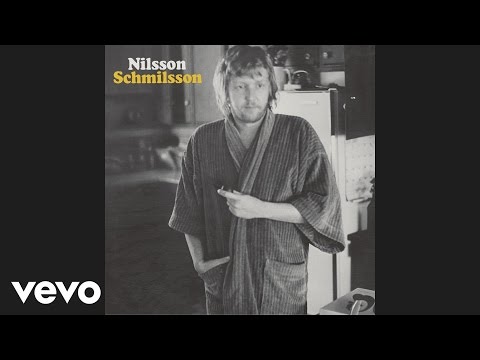

→ More from the 1960s File
View all 1960s hits →




Keep digging