The 1960s File Feature
Hold Me, Thrill Me, Kiss Me
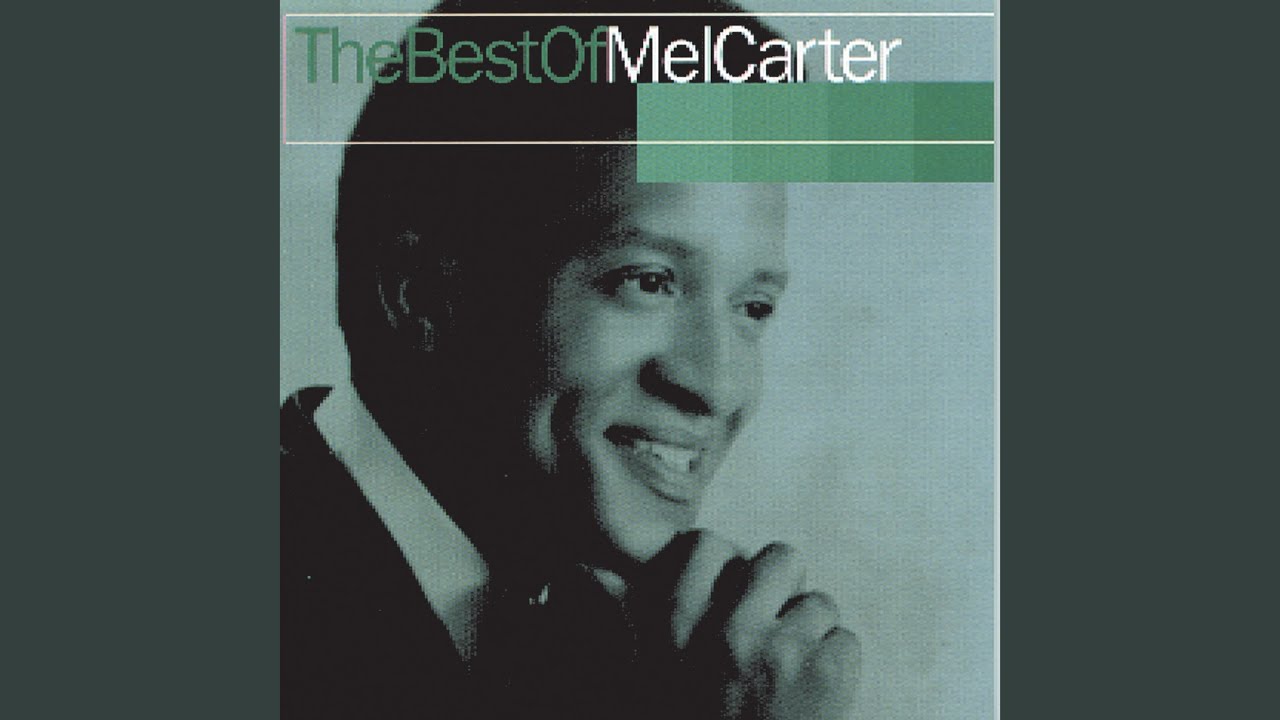
Hold Me, Thrill Me, Kiss Me — Mel Carter and the Art of the Swoon Rediscovering a Standard in 1965 Some songs refuse to age. Hold Me, Thrill Me, Kiss Me had …
01 The Story
Hold Me, Thrill Me, Kiss Me — Mel Carter and the Art of the Swoon
Rediscovering a Standard in 1965
Some songs refuse to age. Hold Me, Thrill Me, Kiss Me had already lived several lives before Mel Carter got his hands on it in 1965. Written in 1952 and recorded by multiple artists in the years that followed, it was the kind of romantic ballad that defined a certain era of popular music: lush, direct, and built entirely around the physical and emotional need for closeness with another person. By the mid-1960s, with British Invasion acts and soul music reshaping the pop landscape, material like this could have felt dated. In Carter's hands, it felt timeless instead.
Mel Carter had been performing since childhood, honing a vocal instrument that could move between gospel-inflected soul and smooth pop romanticism with uncommon ease. His voice carried a warmth that was particularly well-suited to ballad material, and when he found himself recording for Imperial Records in 1965, he had the repertoire instincts to recognize that a well-chosen standard could be a breakthrough vehicle for the right singer.
A Voice Built for Romance
Carter's recording of the song was produced with a lush orchestral sensibility that placed it squarely in the soft pop tradition, with string arrangements that cushioned his vocals and gave the whole production a quality of enveloping warmth. His vocal performance was controlled, intimate, and technically impressive, capable of drawing out the song's emotional weight without pushing into the melodrama that lesser interpreters might have favored. The arrangement served the voice rather than competing with it, which was exactly the right decision for material this direct in its romantic intentions.
The song's structure was uncomplicated. Its power derived entirely from performance and feel rather than compositional complexity or lyrical sophistication. Carter understood that, and he delivered it as something to be inhabited rather than demonstrated. Every phrase carried the specific quality of someone meaning exactly what they were singing.
Fifteen Weeks and a Top Ten Finish
The commercial response validated Carter's instincts completely. Released in the summer of 1965, Hold Me, Thrill Me, Kiss Me debuted on the Billboard Hot 100 on June 26, 1965, entering at number 77. From there it climbed week by week through the summer months, gaining momentum with each chart cycle. The single reached its peak of number 8 during the week of August 28, 1965, placing Carter firmly in the upper tier of the Hot 100 and establishing him as a legitimate pop force. The record spent an impressive 15 weeks on the chart, a run that reflected sustained radio support and genuine listener engagement over an extended period.
That kind of chart longevity was not accidental. It typically indicated a record that people kept requesting and buying over time, adding it to their collections rather than simply hearing it once and moving on. The song had genuine staying power within the context of its original release, not just in retrospect.
Imperial Records and the Mid-1960s Ballad Market
Imperial Records had a long history of nurturing artists who combined pop accessibility with deeper musical roots, and Carter's signing with the label reflected their recognition of his crossover potential. The success of his version of Hold Me, Thrill Me, Kiss Me positioned him as a viable pop star at a moment when the charts were crowded with British acts and the Motown machine. His approach, rooted in a more traditional American pop and soul sensibility, carved out a distinct identity in a competitive marketplace.
He followed the single with additional releases, though none would replicate the chart performance of this breakthrough. In the pattern that defined many careers of the era, the combination of the right song, the right arrangement, and the right moment proved difficult to duplicate, even for a singer of Carter's considerable ability.
A Record That Endures Quietly
Mel Carter never became a pop superstar on the level of his contemporaries who dominated the decade, but Hold Me, Thrill Me, Kiss Me gave him something more durable: a genuine artistic statement that has outlasted many more commercially successful recordings. The song appears in 1960s soft pop compilations and streaming playlists consistently, discovered and rediscovered by listeners drawn to the specific warmth of the era's best ballad recordings. Carter's performance stands as a reminder that vocal technique in service of genuine feeling is its own form of artistry, one that needs no additional decoration. Press play and let the strings carry you back to the summer of 1965.
"Hold Me, Thrill Me, Kiss Me" — Mel Carter's singular moment on the 1960s charts.
02 Song Meaning
Hold Me, Thrill Me, Kiss Me — The Timeless Grammar of Longing
Desire Reduced to Its Essentials
There is something almost architectural about the emotional structure of Hold Me, Thrill Me, Kiss Me. The title itself, that sequence of three requests arranged in ascending emotional intensity, maps a progression from comfort to excitement to intimacy that functions as a kind of blueprint for romantic longing. The song's emotional argument is built from the simplest possible materials: a direct request, physical specificity, and the implicit acknowledgment that what the narrator needs is another person's presence and attention. No metaphor, no indirection, no ornamentation. Just want, stated plainly.
That plainness was part of what made the song adaptable across different eras and different performers. Written in 1952, it predated rock and roll, predated soul music as a named genre, and predated the cultural upheavals of the 1960s that reshaped what popular songs were expected to do. Yet Mel Carter's 1965 recording proved that its emotional grammar remained fully legible to a generation raised on different musical values.
The Ballad Tradition and Its 1960s Survival
By 1965, the conventional American pop ballad was under pressure from multiple directions. The British Invasion had shifted the center of gravity toward guitar-driven rock, and Motown and Atlantic soul were redefining how Black American music engaged with mainstream pop. The lush-string, smooth-vocal ballad tradition represented by Carter's recording had to fight for radio space in a way that it never had in the previous decade. The fact that it succeeded, reaching the top ten and spending four months on the chart, suggested that the emotional territory the ballad tradition occupied had not been vacated by the new sounds, just temporarily crowded.
Listeners who were excited by the Beatles and Wilson Pickett were the same listeners who responded to Mel Carter's warm romanticism. The emotional needs that ballads addressed did not change because the musical landscape changed. They simply needed a performer capable of articulating them with enough conviction to compete for attention.
Physical Longing and Its Cultural Moment
The song's three-part request carries an interesting cultural specificity. To hold, to thrill, and to kiss: the progression moves from the protective to the exciting to the intimate without ever pushing into territory that would have been considered explicit in 1965. This careful negotiation of physical desire through coded language was characteristic of mid-century popular song, operating within understood conventions that allowed genuine romantic and sexual feeling to be expressed in socially acceptable form. Carter's delivery gave the requests urgency and weight without transgressing those conventions, which was precisely what the moment required.
Why the Song Still Works
Decades after its 1965 release, the Mel Carter recording continues to appear in compilation albums and streaming playlists because the specific warmth of his vocal performance has not lost its capacity to communicate. The orchestral arrangement, which might have seemed luxurious in 1965 and dated by 1975, has cycled back to feeling like a marker of craft and care rather than excess. Contemporary listeners who discover the track through nostalgia playlists often find themselves genuinely moved, not simply charmed by its vintage quality but actually affected by its directness and the sincerity of Carter's performance. That is the real achievement: a record that continues to do the thing it was designed to do, fifty-plus years after anyone expected it to be doing anything at all.
→ More from Mel Carter
View all Mel Carter hits →


→ More from the 1960s File
View all 1960s hits →




Keep digging