The 1960s File Feature
Get Rhythm
Get Rhythm: Johnny Cash, Sun Records, and the Long Journey of a Rockabilly Classic "Get Rhythm" is one of the most enduringly vital recordings associated wit…
01 The Story
Get Rhythm: Johnny Cash, Sun Records, and the Long Journey of a Rockabilly Classic
"Get Rhythm" is one of the most enduringly vital recordings associated with Johnny Cash, a track that captures the raw, percussive energy of the Sun Records era and has continued to find new audiences across more than six decades. The song was written by Cash himself and recorded at Sun Studio in Memphis, Tennessee, in 1956, during the period when he was establishing himself as one of the foundational figures of rockabilly and country music. The recording was originally released as the B-side of "I Walk the Line" on Sun Records in 1956, a placement that might have consigned it to obscurity had it not been for the song's exceptional quality and Cash's growing star power.
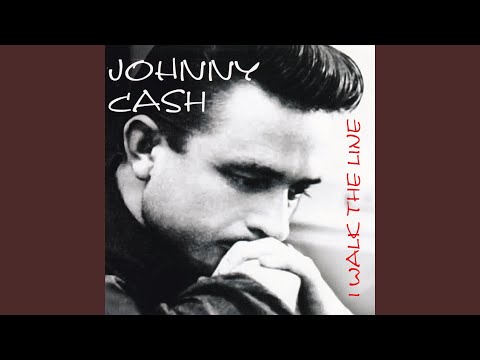
"I Walk the Line" was the A-side and became one of Cash's signature songs, reaching number one on the country charts and crossing over to substantial pop success. But the B-side generated its own following, particularly among musicians who recognized in its rhythm section and vocal delivery something that pointed toward what rock and roll was becoming. Cash's guitar playing on the track was percussive and driving, the boom-chicka-boom pattern he had developed with Luther Perkins on lead guitar and Marshall Grant on bass, and that pattern was already distinctive enough to be recognized as a Cash signature.
The song's subject matter was drawn from observation of street life: a young shoeshine boy working with energy and rhythm, turning the physical act of his labor into a kind of music. Cash had a gift for finding dignity and character in working-class figures, and the shoeshine boy of the lyric is depicted with genuine affection and respect, his rhythmic labor presented as a model of positive engagement with circumstances that might otherwise be discouraging. This humanist impulse was already characteristic of Cash's writing in 1956, anticipating the social sympathies that would define his later work.
Cash's relationship with Sun Records ended in 1958 when he moved to Columbia, but the Sun catalog continued to be managed and reissued throughout the following decades. A live version of "Get Rhythm" gained chart attention in 1969, reflecting both the renewed interest in Cash generated by his 1968-1969 television series and the enduring appeal of the Sun recordings. The 1969 chart appearance was thus a reissue and live-era phenomenon rather than a new studio recording, an important distinction that reflects Cash's unusual position in popular music at the time: he was simultaneously a legacy artist revisiting foundational material and a current commercial force at the height of his powers.
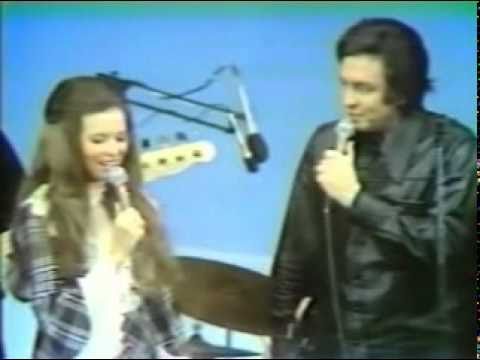
The Johnny Cash Show, which premiered on ABC in 1969, was one of the most significant television programs in country music history. It brought Cash into millions of American homes every week and provided a platform for an extraordinarily diverse range of musical guests, from Bob Dylan to Neil Young to the Carter Family. The show ran for two seasons and introduced Cash's catalog to audiences who had not followed his career from its Sun Records origins, creating a new generation of listeners for whom songs like "Get Rhythm" became associated with the television-era Cash rather than the 1950s original.
Sun Records founder Sam Phillips had recognized something essential in Cash from their earliest sessions together: a seriousness of purpose and an emotional directness that set Cash apart from the more playful energy of artists like Elvis Presley and Jerry Lee Lewis. Cash's voice was darker and more austere than theirs, and his songwriting was more concerned with character and consequence. But "Get Rhythm" showed that he could generate pure rhythmic joy with the best of them, that the seriousness was not a limitation but a foundation from which he could move in any direction.
The recording's legacy extends well beyond its chart appearances. It became one of the tracks most associated with Cash in live performance, a crowd-pleasing showcase for the boom-chicka-boom sound that was as much a visual as an audio experience when seen in person. The simple power of the arrangement, just guitar, bass, and Cash's voice at its most propulsive, made it an ideal vehicle for demonstrating the distinctive quality of his musical approach. The song was covered by numerous artists across multiple decades, testimony to the quality of the original songwriting and to the adaptability of a melody and lyric that proved equally at home in country, rock, and pop settings. Cash himself returned to it repeatedly throughout his career, recording and performing it in multiple contexts from the 1960s through the 1990s.
The track's enduring presence in Cash's legacy was confirmed when it was included in major retrospective collections and film soundtracks celebrating his work. The 2005 biopic Walk the Line, which dramatized Cash's early career and Sun Records period, brought renewed attention to the catalog of recordings from that era, and "Get Rhythm" benefited from this renewed interest. For new listeners encountering Cash through the film, the track served as an introduction to the raw energy of his earliest work, before the production sophistication of the Columbia years softened the edges of his sound. In that rawness lay the record's lasting power.
02 Song Meaning
Rhythm as Remedy: The Meaning of "Get Rhythm"
"Get Rhythm" is built around one of the simplest and most durable propositions in popular music: that rhythm is a resource available to anyone, in any circumstances, and that accessing it can transform the experience of difficulty into something manageable and even joyful. The shoeshine boy at the center of the lyric is not a wealthy figure or a powerful one. He is a working child, engaged in physical labor that might easily be characterized as drudgery. Cash's lyric refuses that characterization by showing how the boy converts his labor into music, using the rhythmic physical act of his work as the foundation of a personal vitality that the narrator finds both instructive and inspiring.
The moral of the song is delivered with Cash's characteristic directness: when the blues threaten to overwhelm you, find a rhythm and let it carry you through. This is not a sophisticated philosophical position, but it is a deeply human one, rooted in an understanding of how music and movement function in the lives of ordinary people. The proposition is not that rhythm solves problems or removes obstacles. It is that rhythm provides a way through them, a mode of engagement with difficulty that preserves the spirit while the body works.
Cash's choice of subject reflects the democratic sympathies that run through his body of work from its earliest days. He wrote about prisoners, railroad workers, Native Americans, and poor rural communities throughout his career, consistently finding the human dignity in figures that mainstream culture overlooked or demeaned. The shoeshine boy is an early instance of this tendency, a child at the bottom of the economic ladder being held up as an example not of deprivation but of resourcefulness and joy. The lyric does not sentimentalize poverty, but it does find genuine value in the coping strategies of the poor.
The self-referential dimension of the song is also worth noting. When Cash tells the listener to get rhythm, he is also demonstrating what he means through the music itself. The boom-chicka-boom rhythm that Cash and his Tennessee Two had developed was the sonic embodiment of the lyric's argument: a simple, driving pattern that generated momentum and pleasure through sheer rhythmic insistence. The song performs its own meaning, which is why it is more convincing as a live performance piece than as a reading experience. The listener cannot really understand what the lyric is advocating until they feel the rhythm it is describing.
For Cash's catalog, "Get Rhythm" occupies a revealing position as an early statement of themes and values that would extend through his entire career. The concern with working people, the belief in music as a form of practical wisdom, the narrative focus on a specific individual rather than a generalized situation: these are all qualities that distinguish Cash's best writing and that were already present in fully developed form at the very beginning of his recording career.
The song also demonstrates the influence of gospel music on Cash's sensibility, the sense that rhythm and communal singing serve not merely aesthetic but genuinely restorative functions in human life. The shoeshine boy is not merely entertaining himself. He is sustaining himself, using rhythm as a form of self-renewal against the pressures of his circumstances. That is a deeply Protestant and specifically Southern conception of music's role in life, and Cash brought it to the secular pop world without diminishing its spiritual dimensions. The result is a song that sounds simple and feels joyful but carries more weight than its three minutes might suggest.
→ More from Johnny Cash
View all Johnny Cash hits →

→ More from the 1960s File
View all 1960s hits →




Keep digging